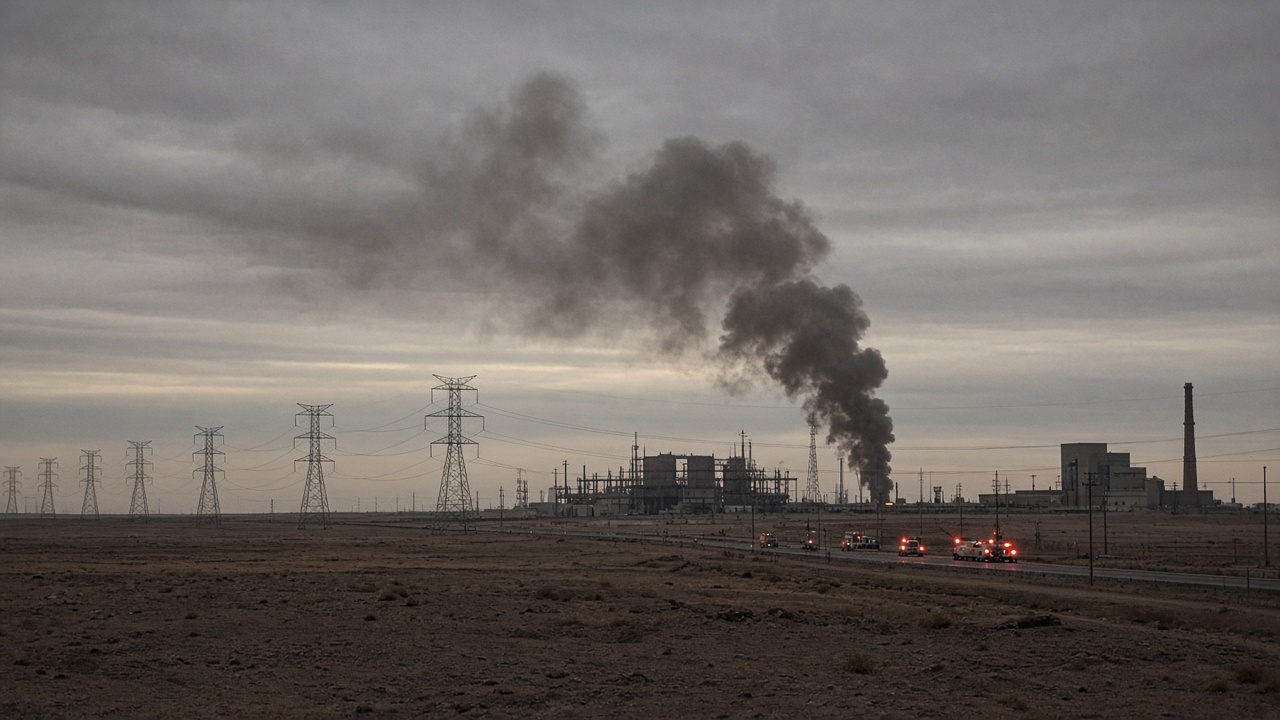
A gas pipeline feeding the Hartha thermal power station north of Basra ruptured and caught fire on Saturday, killing two people and injuring 44 others, according to Basra health director Abbas Al-Tamimi. Civil defense crews contained blazes that jumped to nearby homes and vehicles, halting generation at a plant that had been supplying roughly 400 megawatts before the blast.
Prime Minister Ali Al-Zaidi ordered an urgent investigation to determine the cause and assign responsibility, the Iraqi News Agency reported, while directing hospitals to mobilize care for the wounded. Parliamentary delegations reached the site on Sunday as Iraq’s Electricity and Energy Committee opened its own review of aging infrastructure in the oil-rich province.
What broke at Hartha
The Hartha complex sits north of Basra city and has an installed capacity of about 800 megawatts. Plant director Qais Ali Al-Ahmad told Shafaq News the explosion occurred outside the station fence and that the damaged pipeline is not administered by the plant itself. He said the facility sustained no damage that would block a restart and that crews were ready to resume output once safety checks clear.
Committee chairman Falah Saeed told reporters the thermal station and its gas feed date to the 1970s. He noted that some houses damaged in the fire had been built inside the pipeline’s legal right-of-way, a pattern officials have pledged to address nationwide. Deputy governor Zaid Al-Imara blamed deteriorating infrastructure across oil, electricity and industrial sites for a string of recent accidents in Basra, which contributes the bulk of Iraq’s federal oil revenue.
Casualties and compensation
Al-Tamimi said 25 injured people had been discharged after treatment by Sunday while 19 remained hospitalized. Residents near the plant told journalists they had complained about gas odors before the blast; The National quoted neighbors who said civil defense arrived hours after the explosion and that families fought flames with garden hoses. A local judge told the outlet more than 26 homes and a dozen vehicles were damaged.
Al-Zaidi’s office said affected families would receive compensation and could be included in a federal housing-land initiative. Lawmakers said the committee would seek damages for killed and injured residents and recommend steps to stop housing encroachment on pipeline corridors.
Power and politics in Basra
Southern Iraq’s summer peak demand routinely strains a grid that mixes legacy fossil plants with intermittent imports and repairs. Losing 400 megawatts at Hartha during repairs would tighten supply across Basra governorate unless backup units ramp quickly. Energy ministry officials who toured the site Sunday were told to produce technical reports within days.
Parliament speaker Haibet Al-Halbousi tasked the energy committee with assessing safety procedures at Hartha and meeting victims’ families. Basra officials used the joint press conference to press Baghdad for more maintenance spending, arguing that export earnings should translate into safer plants and neighborhoods. Investigators have not issued a final determination on whether corrosion, pressure failure or third-party construction triggered the rupture.