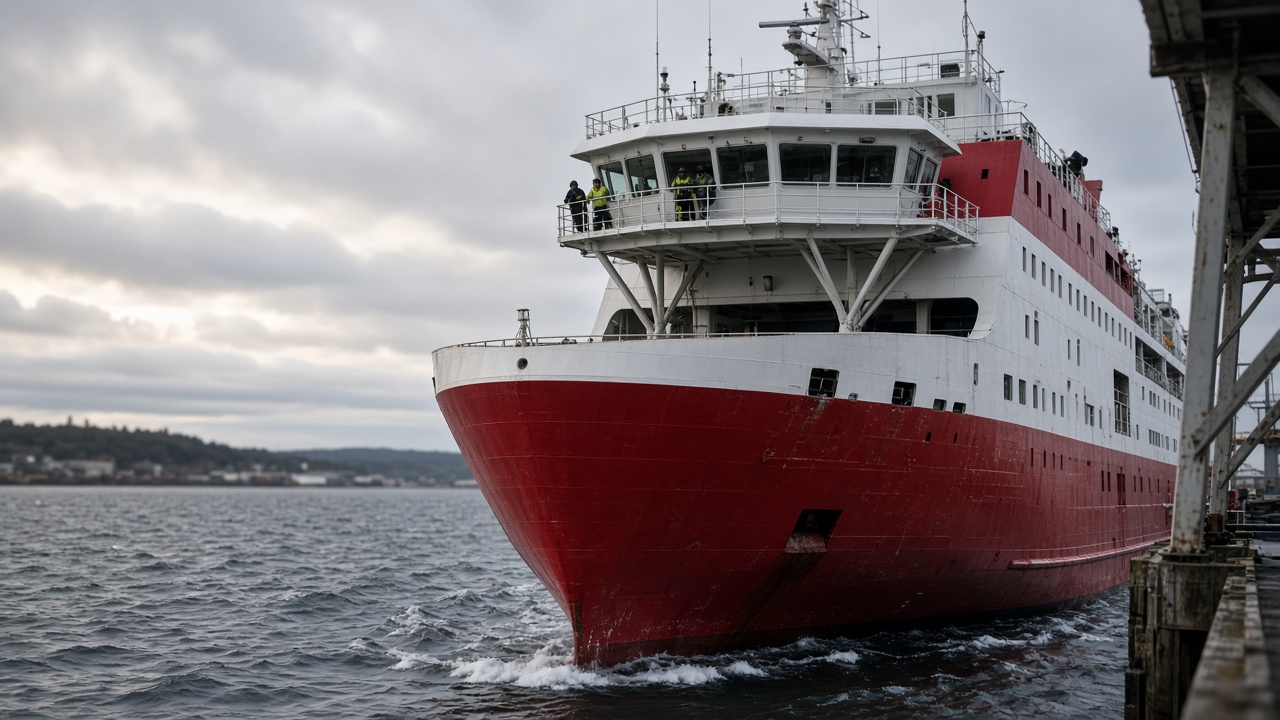
Australia’s maritime regulator has barred the new Spirit of Tasmania ferries from using autopilot for entire Bass Strait crossings, expanding a Port Phillip Bay restriction after an intermittent steering fault on Spirit IV. The Australian Maritime Safety Authority directive took effect on Saturday as investigators probe a failure that occurred when crew shifted from automatic to manual steering.
State-owned TT-Line said both vessels must “stay in hand steering” for the full voyage until AMSA clears the systems. A spokesperson said a backup primary steering circuit and additional redundancies remain available, and that crews are trained on manual operation. Travel times should not change, the company added, but each sailing will carry two extra deck officers to handle workload.
What failed on Spirit IV
The trouble surfaced after Spirit IV entered passenger service late last month. TT-Line first limited autopilot inside Port Phillip Bay when the primary steering system did not behave during a manual takeover. AMSA then widened the ban to the 10-hour Melbourne–Devonport route once engineers classified the defect as intermittent rather than isolated.
Spirit V has not shown the same fault, but the regulator applied the order to both ships until Kongsberg Maritime, the Norwegian supplier, verifies the electronic control package. Technicians were scheduled to board on Sunday to trace whether vibration in the marine environment is corrupting autopilot inputs. The Australian Transport Safety Bureau is running a separate investigation into Spirit IV’s steering as well as an October trial-voyage incident on Spirit V.
Passengers and political scrutiny
The AUD 1.2 billion replacement program was meant to end decades of reliability complaints on the Melbourne–Devonport lifeline. Spirit IV has already arrived hours late in Geelong on multiple sailings, including November 5 and November 21, because of technical gremlins. TT-Line calls the steering issue part of expected “teething problems” for ships of this size.
Tasmanian minister Bridget Archer said some early faults were inevitable given the scale of the vessels. State Labor MP Sarah Lovell countered that the government must keep the public informed about causes and repair timelines. Marine engineer Martin Byrne told the ABC that reverting to manual helm is safe but taxing for officers on long watches, noting that electronic gear faces constant vibration at sea.
What happens next
TT-Line has contacted Kongsberg about warranty coverage; the company said funding responsibility for the repair was “to be determined.” AMSA will lift the hand-steering requirement once tests show the autopilot can engage and disengage without jeopardising control.
Until then, Bass Strait sailings continue with larger bridge teams and without automatic track-keeping. Freight operators and summer holidaymakers face no cancellations, but repeated mechanical setbacks keep political pressure on Tasmania’s subsidised operator to prove the new hulls can match airline competition on price and punctuality.