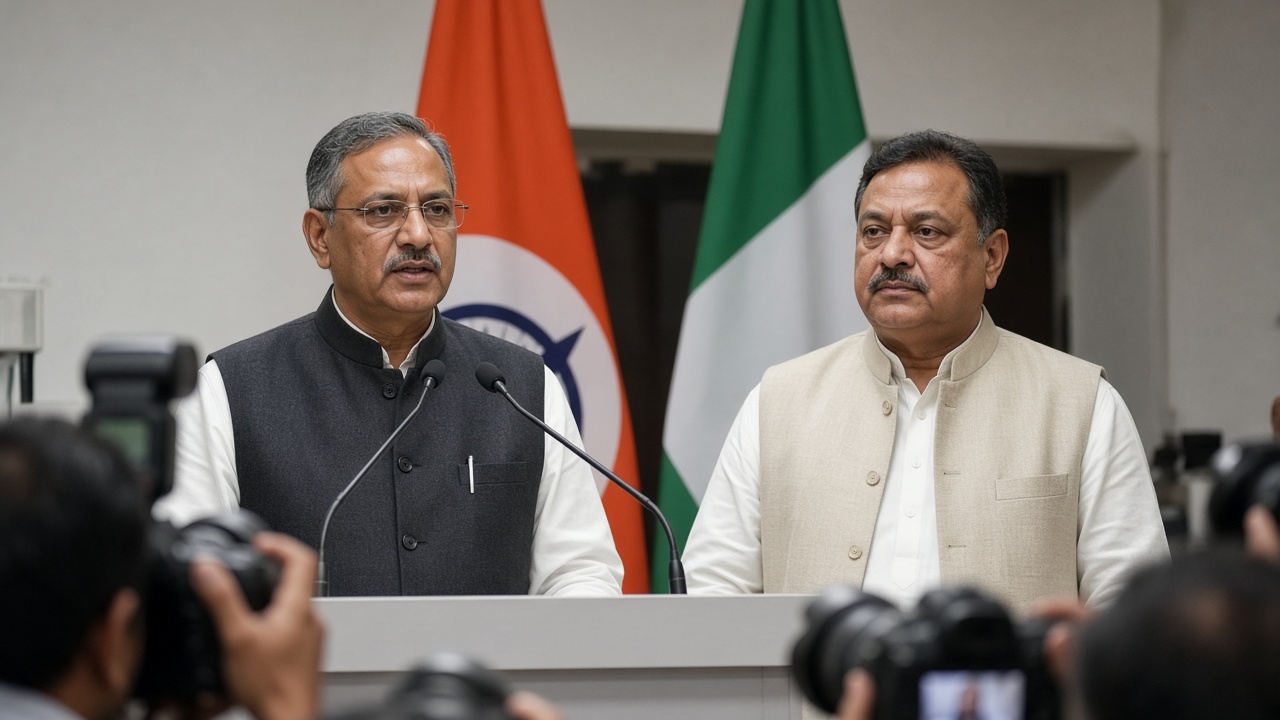
Union Home Minister Amit Shah announced Tuesday that the Bharatiya Janata Party and Shiromani Akali Dal will fight Punjab's next Assembly election as a reunited National Democratic Alliance, with the Akali Dal receiving the chief minister's post as the "big brother" partner in a coalition that will contest all 117 seats.
Prime Minister Narendra Modi welcomed the Akali Dal back to the NDA on social media, calling the tie-up a "natural alliance" that would deliver pro-people governance. The parties ended their partnership in 2020 when the Akali Dal quit the bloc over three farm laws Parliament later repealed. Tuesday's announcement resets the contest ahead of the 2027 state poll, with seat-sharing talks still to come.
What leaders promised
Shah stood alongside Akali Dal president Sukhbir Singh Badal in New Delhi for the announcement. Badal predicted the alliance would win more than 100 seats and reduce the Aam Aadmi Party to single digits, arguing that both the BJP and Akali Dal fared poorly when they ran separately in the 2022 state election and 2024 general election. Shah framed the partnership around combating narcotics trafficking, protecting farmers and preserving Hindu-Sikh unity in a border state where agriculture and diaspora politics dominate the agenda.
Farm unions that opposed the withdrawn laws are now a courtship target for every major party. Several union leaders affiliated with the Samyukta Kisan Morcha have signaled that constituent groups may back political parties under amended umbrella rules, opening space for Opposition recruitment even as the NDA presents itself as healed.
Electoral math and risks
Punjab's 117-seat map rewards strong regional brands. The Akali Dal's claim to the chief minister's chair tests whether the BJP's national machine can accept a junior role in a state where it has never held the top office on its own. Conversely, the BJP brings national resources and a counterweight to AAP, which captured the government in 2022 on an anti-incumbency wave.
Congress remains the third pole, while smaller parties and independents could matter in rural belts where water-sharing, procurement prices and canal irrigation still drive turnout. Shah did not announce a candidate name Tuesday, leaving Badal and his faction room to negotiate succession inside the Akali Dal before nominations firm up.
What happens before 2027
Seat allocation meetings will determine how many constituencies each party carries and whether BJP legislators would serve in a Badal-led cabinet. Law-and-order messaging on cross-border smuggling and synthetic drugs is likely to intensify, given Shah's portfolio. Centre-state fiscal fights over Punjab's debt load and farm input costs may also surface in campaign debates even if the alliance platform stays broad.
For voters, the immediate change is structural: two parties that split over farm legislation now ask for a joint mandate with the Akali Dal atop the ticket. The 2027 result will show whether that reconciliation outweighs memories of the 2020 break and whether AAP can defend a state government built on outsider credibility against an older regional heavyweight returning with national backing.