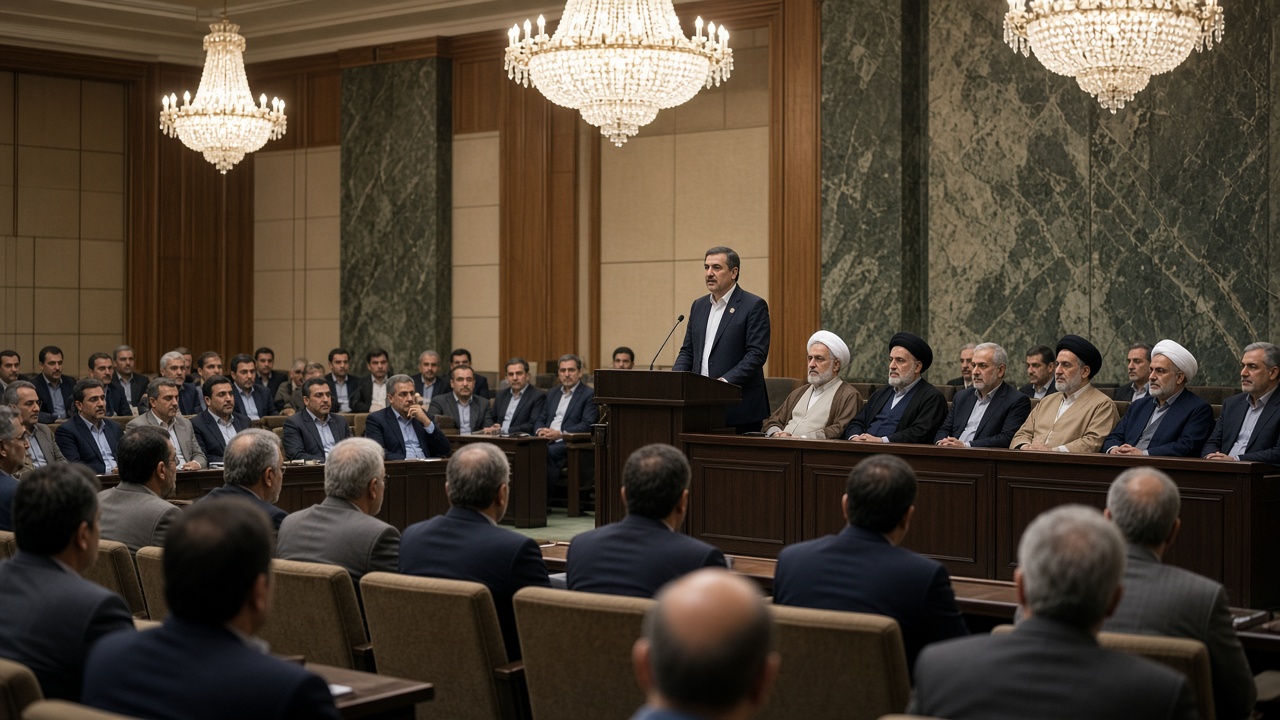
Iranian Parliament Speaker Mohammad Bagher Qalibaf said Tuesday that Tehran will not negotiate with the United States to end the widening regional war until what he called Iran's "seven conditions" are satisfied, state television reported, hardening Tehran's public line at a moment when U.S. military strikes, Hormuz shipping disruptions and Gaza fighting are running in parallel.
Qalibaf, who also serves as Iran's chief negotiator in earlier rounds of diplomacy, did not read out the full list on air. Iranian authorities have referenced the conditions in recent weeks without publishing a single authoritative text, leaving diplomats to infer demands that are widely understood to center on halting U.S. attacks, easing sanctions and securing recognition of Iranian security red lines. His Tuesday statement nonetheless closed the door on any near-term bilateral channel just hours after the Islamic Revolutionary Guard Corps navy accused hostile mines of setting three oil tankers ablaze in the Strait of Hormuz.
Mine strikes and Hormuz closure
In a separate overnight bulletin, the IRGC navy said two tankers struck naval mines in the eastern stretch of the strait and that explosions ignited fires aboard all three vessels involved. The force claimed that U.S. air cover had failed to stop the incidents and warned merchant crews against ignoring maritime notices or taking unauthorized routes. Iran declared the strait closed to traffic it considers unlawful after Washington resumed large-scale strikes in July, and Monday night's tanker damage extended a pattern of attacks that have kept insurers and charterers on high alert across the Gulf.
Qalibaf's negotiator role means his wording carries more weight than a routine Foreign Ministry statement. By tying any U.S. dialogue to a numbered checklist that parliament has not formally released, he gives hard-line factions room to block back-channel contacts while shifting blame to Washington for "refusing" terms Tehran has yet to detail in full.
What Washington faces next
The dual messaging complicates any U.S. effort to separate a ceasefire track from energy security. The Biden and Trump administrations both treated Hormuz passage as a core American interest; the mine claims add negotiating pressure even while it publicly rejects talks. Gulf producers and European capitals that depend on stable flows through Hormuz now must weigh whether renewed diplomacy is possible without a published Iranian list and without independent confirmation of what damaged the tankers.
Israeli strikes in Gaza continued on a separate track Tuesday, with medical officials reporting at least eight Palestinian deaths in three attacks, according to regional news agencies. Gaza's Health Ministry has attributed more than 1,600 fatalities to Israeli ceasefire violations since October 2025. Iran's leadership often links Gaza, Lebanon and Hormuz in the same speeches, but Qalibaf's Tuesday remarks focused on the U.S. bilateral file rather than an immediate Gaza bargain.
Timing for capitals watching Tehran
For European and Gulf mediators, the practical question is whether the seven conditions are a movable negotiating brief or a parliamentary veto. Past rounds, including indirect exchanges in Oman, moved forward only when Supreme Leader Ayatollah Ali Khamenei's office signed off on discrete trade-offs. Qalibaf's televised line suggests parliament wants any future deal pre-cleared against the unpublished list, which could delay even technical talks on prisoner releases or deconfliction in the Gulf.
Until Iran publishes those conditions—or Washington signals it will meet them without saying so publicly—diplomats are left parsing mine alerts, tanker fires and a speaker who says negotiation is off the table. The next visible test is whether merchant traffic through Hormuz adjusts routes again and whether either capital opens a quieter channel below Qalibaf's headline refusal.