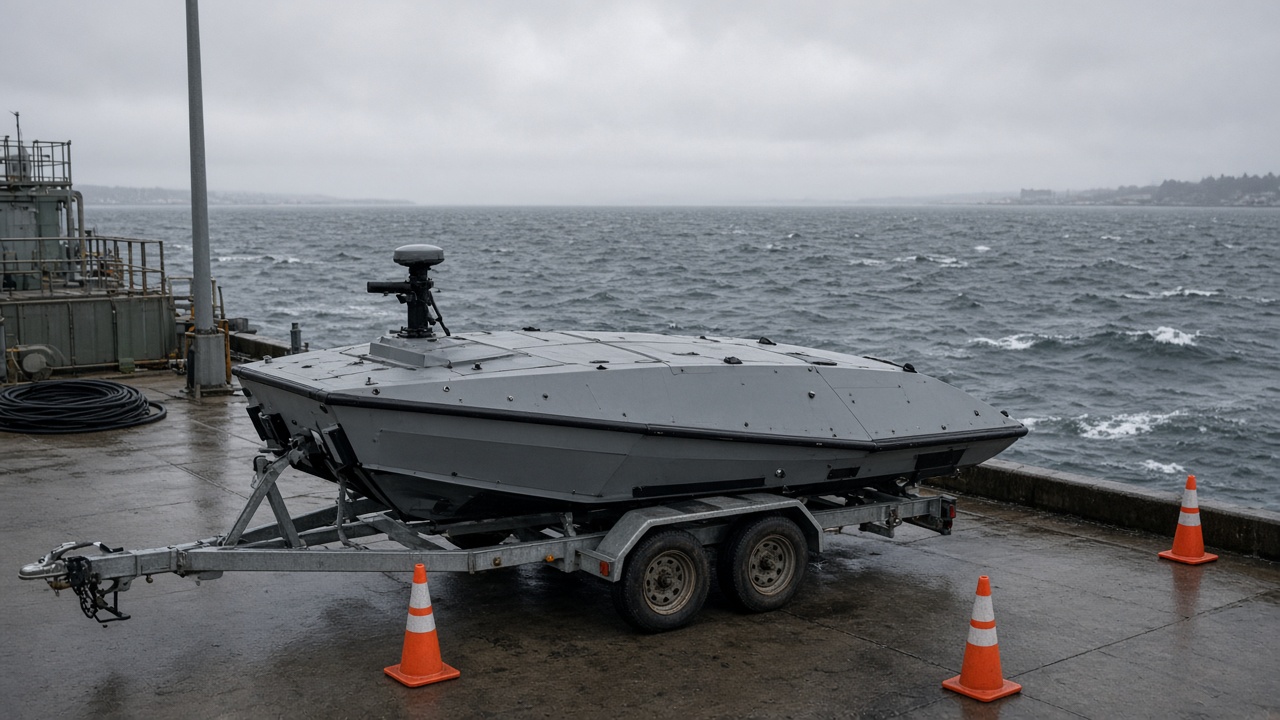
Japan will begin research and development on unmanned patrol boats for the coast guard starting in the next fiscal year, letting the service keep eyes on remote sea lanes while crewed cutters rush to incidents near the Senkaku Islands, government officials told Yomiuri Shimbun.
The program joins a December revision of the coast-guard capability guidelines, the first update since 2022, when China’s near-daily deployments around the Senkakus forced Tokyo to rethink how it allocates hulls across thousands of kilometers of exclusive economic zone.
Why unmanned hulls now
Current drones cover airspace but cannot loiter for days or nudge suspicious trawlers. An unmanned surface vessel could patrol fisheries zones west of Kyushu while manned 1,000-ton cutters redeploy to Okinawa. Officials said domestic shipyards would co-develop steering, radar, and non-lethal stop procedures, with model tests targeted around 2032 when International Maritime Organization rules on autonomous shipping take effect.
The coast guard faces a structural hiring problem: authorized strength is 14,788 officers, but filled posts trailed by 665 at the end of fiscal 2024. Young applicants shy away from month-long sea tours; veterans cite Starlink installations on large cutters as morale improvements but not full substitutes for shore leave.
Risk and rules of engagement
Unmanned craft cannot board smugglers without legal clarity on use of force. Policy staff told reporters that early prototypes will focus on surveillance and may later test loudhailers or water cannons under strict human oversight from operations centers. Any export of the technology would run through the same Three Principles on Transfer of Defense Equipment reviews that govern manned patrol ship sales to Southeast Asia.
Opposition lawmakers asked whether relying on robots normalizes chronic understaffing rather than fixing pay scales. The coast guard countered that combined drone, unmanned boat, and satellite feeds are the only scalable way to monitor EEZ entry without doubling headcount amid a shrinking youth cohort.
Implications for industry
Shipbuilders such as Japan Marine United and Mitsui E&S Shipbuilding could see development contracts similar to the large patrol vessel program worth 224 billion yen this year. Insurers must price collision liability when unmanned and manned traffic mix near chokepoints like Kanmon Strait. For residents in Kagoshima or Ishigaki, the practical change is more sensor hours, not fewer uniforms — at least until prototypes prove they can survive typhoon seasons.
Industry consortium structure
Officials expect bids from shipyards already building 3,500-ton patrol cutters scheduled for fiscal 2029 commissioning. Prototype hulls would likely launch from proving grounds in Hiroshima or Kure, where builders have experience with remote-controlled mine-countermeasure boats developed for the Maritime Self-Defense Force.