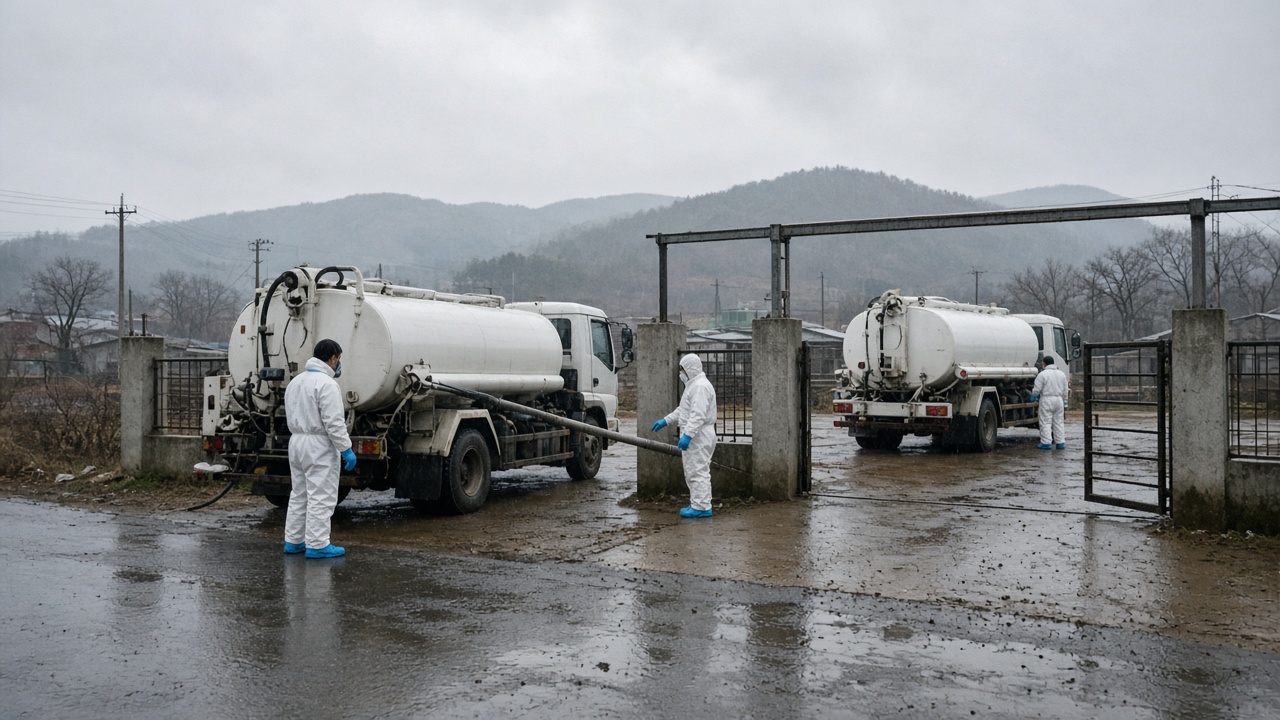
South Korea raised its national African swine fever alert to the highest "serious" level on Tuesday after confirming an outbreak at a commercial pig farm in Dangjin, South Chungcheong Province, prompting the culling of 1,423 animals and a 48-hour standstill across the country's pig and livestock facilities.
The case marks the sixth isolated ASF detection in South Korea this year, but the first in Chungcheong, the country's largest pig-breeding region. Until now, authorities had kept the virus out of that belt, which feeds both domestic pork demand and export-linked processing chains.
What officials ordered immediately
The agriculture ministry said it issued a nationwide 48-hour standstill preventing the movement of pigs, feed trucks and related equipment while epidemiologists trace contacts. About 140 farms with epidemiological links to the Dangjin site are under intensified monitoring, according to the ministry's statement reported by Reuters.
Veterinary teams began disinfection runs on access roads and loading bays at neighbouring farms within hours of the confirmation. Quick-response units that handled prior outbreaks in Gyeonggi and Gangwon provinces were redeployed southward, ministry officials told reporters.
Why Chungcheong matters to pork supply
South Chungcheong hosts dense clusters of finishing barns that supply slaughterhouses around Cheonan and Dangjin itself. A spread beyond the index farm would raise costs for processors already coping with thin margins after prior culls earlier in the year.
Unlike wild-boar routes that seeded some past cases, ministry briefings focused on farm-to-farm biosecurity breaches as the likely transmission path, though genetic sequencing results were pending. Farmers' associations urged members to halt non-essential visits and log every vehicle entering premises during the standstill window.
Trade and consumer outlook
Retail pork prices had stabilised after spring outbreaks, and agriculture minister briefings in recent weeks had stressed improved perimeter fencing around high-risk zones. Tuesday's escalation revives questions about whether breeding stock imports will face extra quarantine days and whether school-meal suppliers must certify ASF-free sourcing for December contracts.
The standstill does not ban supermarket sales of already slaughtered meat, but cold-chain distributors must show paperwork tracing carcasses to pre-outbreak herds. Export regulators said they would notify trading partners if the virus spreads beyond the index farm, though no border closures were announced Tuesday afternoon.
Authorities promised daily updates while the 48-hour movement ban remains in force. Farmers in Chungcheong said they were bracing for further culls if PCR tests return positive on any of the linked 140 sites, a scenario that would test Seoul's contingency pork reserves for the winter holiday season.