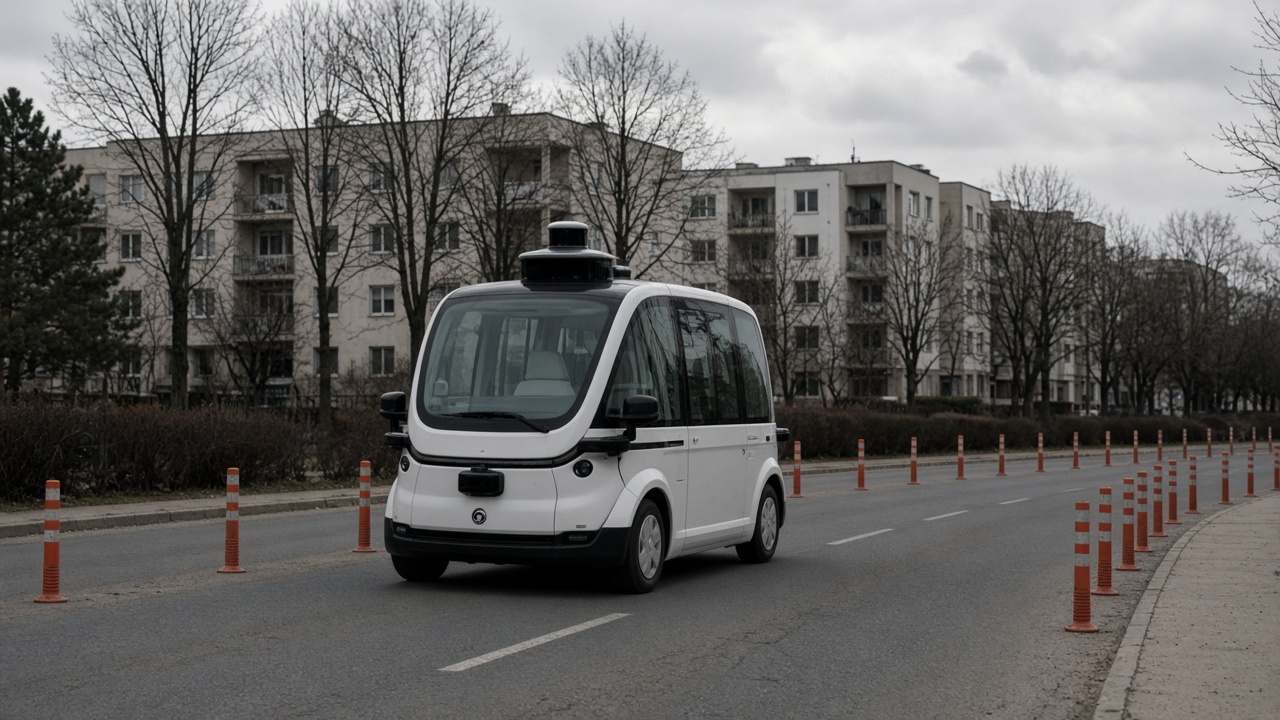
Kakao Mobility opened a robotaxi pilot lane in Sejong’s national smart-city district on Tuesday, running a 4.2-kilometre loop with safety drivers aboard and traffic signals linked to its fleet operations center. The service is invitation-only for civil servants and residents who preregistered during a municipal lottery, marking the first time Kakao’s autonomy unit charges fares—albeit subsidized—inside a government master-planned zone built to test connected infrastructure.
How the route works
Vehicles are battery-electric minivans fitted with lidar, radar and camera stacks approved under Korea’s regulatory sandbox for autonomous mobility. The loop connects a government complex, a residential tower cluster and a transit hub, with dedicated curb paint and wireless priority requests at three intersections. Kakao’s control room can slow the fleet remotely when school-hour pedestrian volumes spike, a city transport official said.
Fares are capped at 2,000 won per trip during the six-month pilot, with Sejong subsidizing the gap between operating cost and ticket revenue. Kakao declined to disclose fleet size beyond saying “under ten” units are active on weekdays.
Why Sejong
The city was purpose-built with underground logistics tunnels and sensor-ready street furniture, reducing the retrofit cost that plagues older Korean downtowns. National ministries colocated in Sejong provide a captive daytime rider pool, while relatively wide arterials simplify perception challenges compared with Seoul’s alley density. Competitors including Hyundai Motor Group and local startup RideFlux have tested in other provinces, but Kakao’s integration with the Kakao T super-app gives it a dispatch advantage if regulators expand geofences.
Data and privacy
Rider phone numbers sync through Kakao accounts; trip video is stored for 30 days unless an incident flag extends retention. The Ministry of Land, Infrastructure and Transport receives weekly disengagement logs—moments when safety drivers grab the wheel—with reasons coded to national taxonomy. Personal Mobility Regulation Act amendments pending in the National Assembly could require anonymization before third-party researchers access logs.
Commercial path
Analysts said the pilot is unlikely to move Kakao’s consolidated earnings near-term, but it supports a narrative that mobility revenue can diversify beyond ride-hailing commissions. Insurance partners priced policies with a 50-million-won per-incident liability cap, underwritten collectively by domestic carriers experimenting with usage-based autonomy premiums.
Risks on the ground
Rain and construction detours have been the main causes of early disengagements during night testing, engineers told municipal reviewers. Residents worried about noise have not raised formal objections, but bike advocates asked for clearer lane markings where the loop crosses a riverside path. If disengagement rates stay below ministry thresholds through February, Kakao and Sejong will discuss removing one safety driver seat on overnight freight runs—a step still barred for passenger service under current law.