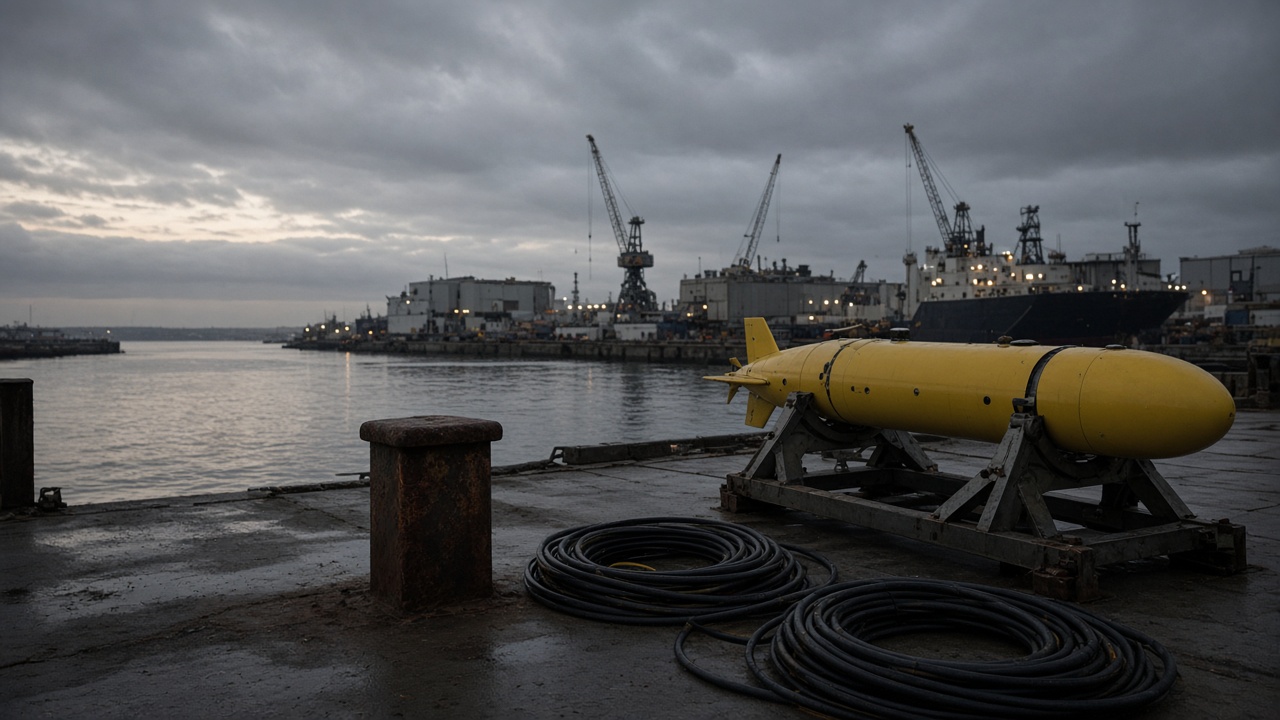
Kawasaki Heavy Industries will run a Cabinet Office-funded trial that parks an autonomous underwater vehicle on a simulated seabed station off Nagasaki, part of a national push to inspect floating offshore wind farms without dispatching crews each time a mooring line or export cable needs a camera pass.
The company's SPICE-1 vehicle, already used in tethered trials, will practice a full duty cycle: undock, survey a grid pattern, return, mate with the station, recharge, and offload data. Engineers plan shore-side trials in late November before moving to a 30-meter-deep site near Iojima in January 2027, according to briefing materials filed with the ocean-policy secretariat.
Why resident AUVs matter for wind
Japan's draft marine energy roadmaps assume dozens of floating turbines moored in deep water, each with chains, anchors, and dynamic cables that salt water and typhoon seasons punish. Sending a support vessel every quarter is expensive and weather-dependent. A resident vehicle that sleeps on the seabed could inspect hardware weekly while technicians review video from Kobe or Tokyo control rooms.
Cabinet Office selectors picked Kawasaki's proposal in October alongside two other "strategic technology" demos, including Kyushu Institute of Technology work on through-water radio links. A parallel "basic plan" track tasks Kawasaki with drafting a commercial service model with Horizon Ocean Management for long-term operations and maintenance contracts.
Metrics the trial must hit
Program managers will score success by the share of cycles completed without human intervention. Docking alignment, inductive charging, and optical data offload are known friction points; Kawasaki's slides list retrofit work on the docking frame before the vehicle sleeps on the bottom unattended.
If the demo works, policymakers hope to cut charter costs and carbon from inspection boats, while giving domestic yards a product they can export to Taiwan or Scotland, where floating wind auctions are accelerating. Failure modes include biofouling on connectors and typhoon debris blocking the station — risks the trial will log in open reports due in February 2027.
Employment effects at home
The project does not replace every diver; cable burial surveys will still need human sign-off for insurance. It does shift skilled jobs toward software-defined maintenance, aligning with METI's push to keep heavy-industry wages in Hyogo and Nagasaki prefectures as shipbuilding volumes flatten. For investors, the near-term read is R&D milestone risk: capital spending stays modest until the Cabinet Office releases cycle-success rates next spring.
Offshore wind developers such as the consortium behind Goto City floating turbines are watching the trial because O&M contracts signed today still assume quarterly diver visits. If seabed stations cut inspection costs by double-digit percentages, auction bidding could shift toward operators with longer maintenance horizons rather than the lowest capital expenditure alone.