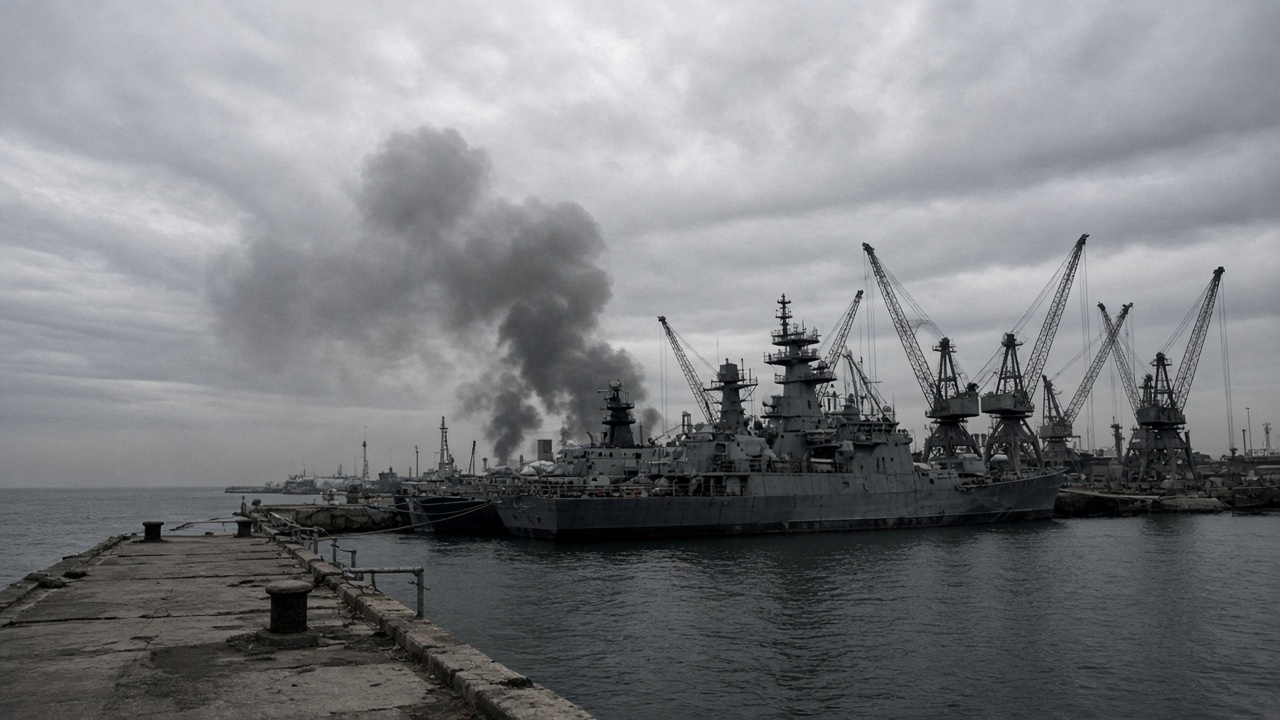
Two Libyan naval officers died Tuesday from wounds they suffered when drone strikes hit vessels tied to Russia at the Benghazi naval base, the eastern-based Libyan Arab Armed Forces said, turning a weekend attack that Kyiv had already claimed into the first confirmed Libyan fatalities of the widening Ukraine war at sea.
Who died, and what the command said
The General Command named the men as Sergeant Major Al-Taher Abdullah Al-Sadiq and Lieutenant Ali Mohamed Al-Said, both assigned to naval forces staff. The command said they were hurt during the assault early on 22 November and by explosions aboard a targeted ship afterward, then died of those injuries on 24 November.
In a condolence statement, the command promised retaliation "at the appropriate time and place," and Deputy Commander-in-Chief Saddam Haftar called them martyrs on social media. The wording matters for diplomacy: eastern Libya's forces have hosted Russian warships for years, and Benghazi is firmly in Haftar's sphere even as a UN-backed administration still governs western Libya from Tripoli.
What Ukraine confirmed, and what hit the port
Ukrainian President Volodymyr Zelenskyy said Monday that Ukrainian forces struck the Russian corvette Merkuriy and the cargo ship MV Angara near Benghazi, using domestically made sea drones. Security Service of Ukraine video distributed to news agencies showed a Sea Baby-class uncrewed boat closing on a moored hull before detonation. Zelenskyy alleged Moscow used the cargo ship to move weapons; Russia has not detailed the vessels' cargoes in public statements reviewed by wire services.
Eastern officials said the Sunday strikes left 10 people wounded at the base and that a second attack the same day targeted another hull off Benghazi's coast. French Foreign Minister Jean-Noel Barrot defended Kyiv's right to self-defense in a broadcast interview on 25 November, a stance Tripoli's foreign ministry has sharply rejected.
How Libya's split governments responded
The Tripoli-based Government of National Unity condemned the use of Libyan territory for foreign military operations and demanded an explanation from Ukraine. The eastern administration filed a complaint with the United Nations demanding an international investigation. Ukraine's foreign minister, Andrii Sybiha, called the strikes legitimate self-defense after the Tripoli criticism.
For NATO planners watching the Mediterranean, the sequence is less about Benghazi's docks than about proof that Ukrainian long-range strike networks can reach Russian logistics thousands of miles from the Black Sea. For families of the dead officers, the immediate question is whether eastern commanders treat the deaths as a purely bilateral grievance with Kyiv or as a reason to harden Russia's beachhead inside Libya.
What commanders and diplomats watch next
Repair timelines for whatever remains of the targeted hulls are unknown, and independent inspectors have not reached the pier. Maritime insurers were already widening war-risk premiums for vessels loitering off Libya before the fatal toll emerged.
Western capitals will watch whether Haftar's circle stages a visible response—additional air defenses, restricted anchorage rules, or a pause in port calls—or channels anger through UN channels only. Kyiv, meanwhile, has telegraphed that Russian supply lines beyond Crimea are fair game, even when third-country sailors are caught in the blast radius.