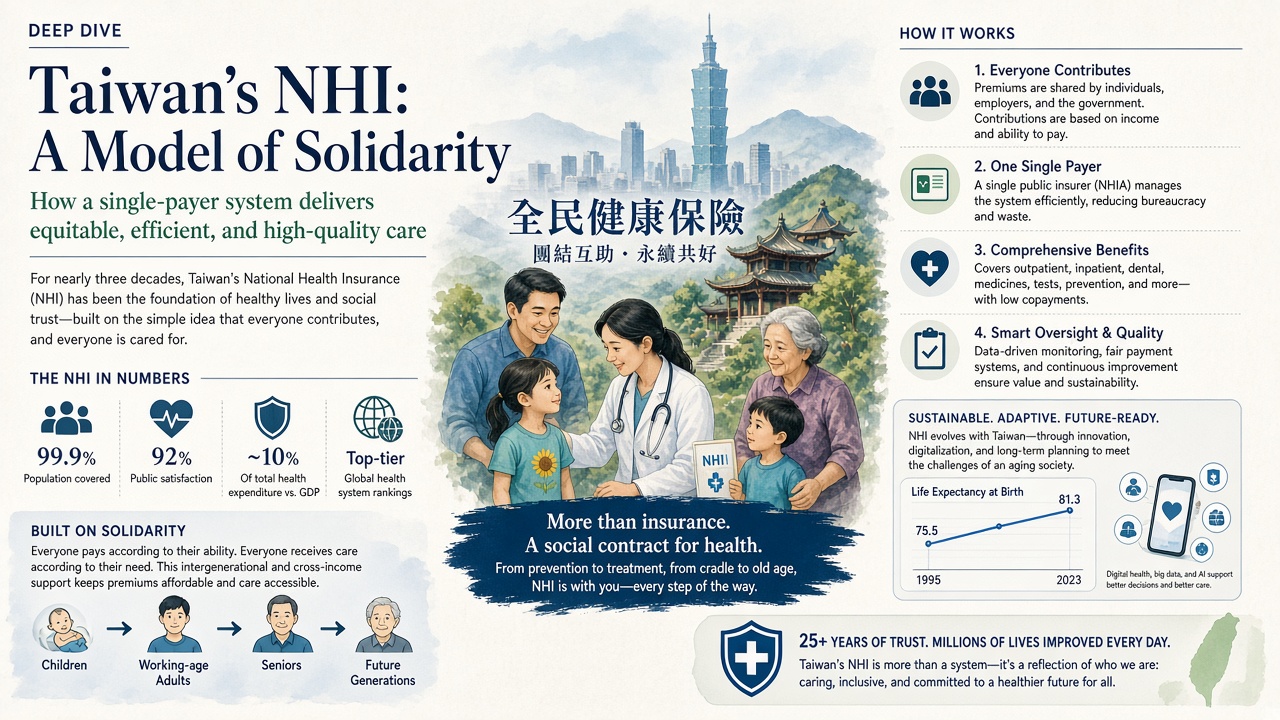
On 15 April 2017, every National Health Insurance outpatient desk in Taiwan reprogrammed the same number. If you entered a medical center without a referral, the basic copayment jumped from NT$360 to NT$420, an increase of NT$60 overnight, reported that morning by Central News Agency health reporter Chen Wei-ting in Taipei. The same article noted that a referred visit to the same medical center would cost NT$170. Neighborhood clinics still charged NT$50.
Most patients treat that NT$420 figure as a hospital service charge, as if the bigger building billed for air conditioning and lobby space. Under Taiwan's single-payer rules, the gap is a policy signal baked into the National Health Insurance Act, converted into flat New Taiwan dollars at the register.
Two doors, two prices
The National Health Insurance Administration publishes a grid of outpatient "partial burdens" that every contracted hospital and clinic must use. Western medicine at a community clinic costs NT$50 whether you arrived with a referral or not. Walk into a medical center on your own and the basic line item is NT$420. Arrive with a valid referral to the same medical center and the basic fee drops to NT$170.
Regional hospitals sit between those poles: NT$240 without a referral and NT$100 with one. District hospitals charge NT$80 if you skip the referral ladder and NT$50 if you follow it. Dentistry and traditional Chinese medicine stay flat at NT$50 at every level, so the NT$420 shock is specific to western-medicine visits at the top of the hospital pyramid.
Central News Agency cited National Health Insurance Administration statistics that Taiwan handles about one million outpatient visits per day. The NT$420 line therefore shows up constantly, not only in emergency stories but in routine complaints about weekend congestion at major teaching hospitals.
The same Central News Agency story warned that if outpatient growth continued along the trends the health agency warned about when the referral split began, medical centers and regional hospitals would absorb more than one quarter of daily visits while primary clinics shrank. Policymakers designed the copayment ladder to push against that gravity before teaching hospitals became default family doctors for minor complaints.
What the law actually sets
The statute does not name NT$420. Article 43 of the National Health Insurance Act sets percentages. Insured patients normally pay 20 percent of outpatient or emergency bills. If they enter a district hospital, regional hospital, or medical center without a referral, those shares rise to 30 percent, 40 percent, and 50 percent respectively.
但不經轉診,於地區醫院、區域醫院、醫學中心門診就診就醫者,應分別負擔其百分之三十、百分之四十及百分之五十。
A second paragraph of the same article authorizes the Ministry of Health and Welfare to abandon pure percentages and collect fixed amounts instead. Those flat fees are derived from each facility type's average outpatient cost in the prior year multiplied by the statutory percentages, then announced annually. That is how a 50 percent legal ceiling becomes a round NT$420 bill at the cashier.
Low-income households receive budget subsidies for required copayments, but the law withholds that help when members visit hospital outpatient departments without referrals except in special circumstances. The NT$420 lane is deliberately expensive even for patients who qualify for other assistance.
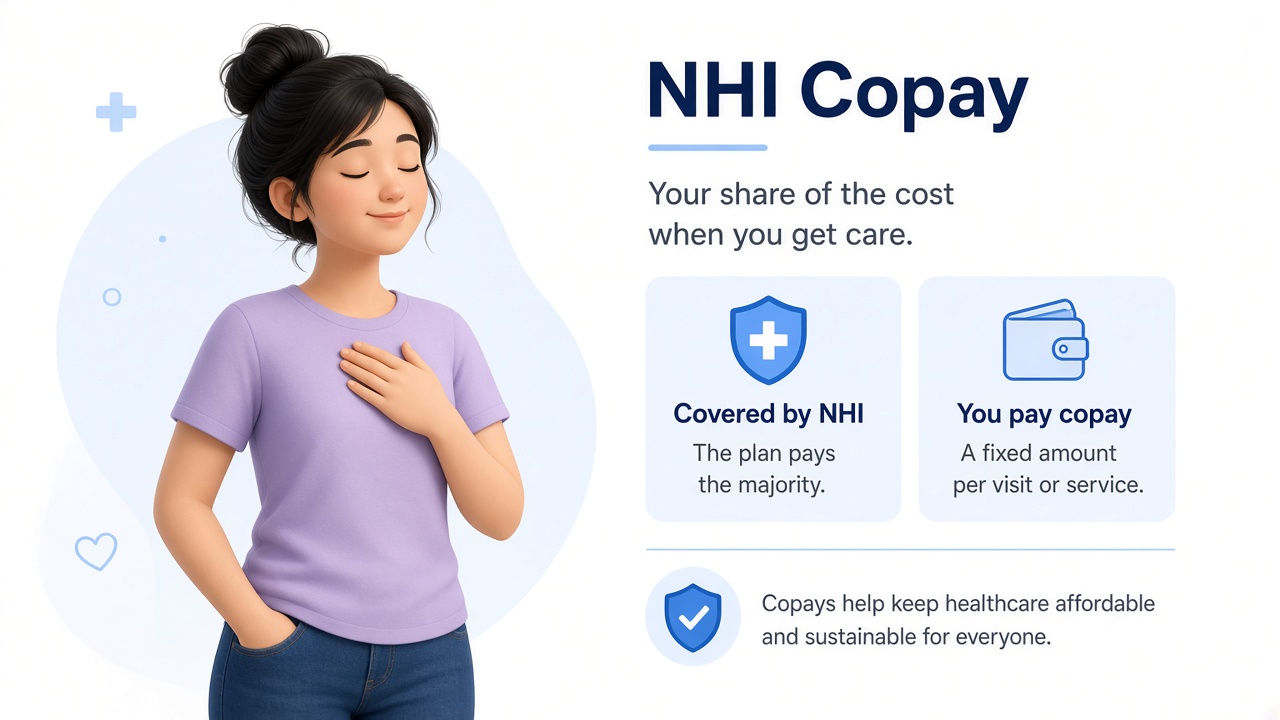
The English-language NHIA annual report states that copayments are not meant to prevent people from receiving care they truly need. They still discipline casual use. That framing matters when comparing Taiwan to systems that allow hospitals to set retail prices. Here the ministry sets both the insurer payment and the patient's share using published tables tied back to statute.
Referral on, referral off
Percentages alone did not persuade patients to start at clinics. On 15 July 2005 the National Health Insurance Administration split western-medicine outpatient copayments into "referred" and "not referred" tracks so that cooperating with the referral ladder kept the lower fee. The NHIA's 2023 annual report describes the change as encouraging clinic-first care before sending patients who need more services to regional hospitals and medical centers.
Administrative systems express the distinction through copayment codes. A 2023 NHIA question-and-answer booklet on copayment adjustments explains that the first digit of the code records hospital tier, with letter A for medical centers, B for regional hospitals, C for district hospitals, and D for primary clinics. Cashiers and claim software read that code to decide whether you pay the referred or walk-in column.
Follow-up rules widen the cheaper column more than many patients expect. Ministry tables treat up to four return visits within one month of a referred appointment as referred visits, along with several surgical and postpartum exceptions. A specialist course can therefore stay on the NT$170 track without a fresh paper slip each time, provided the hospital documents the chain correctly.
People with disability certificates always pay the NT$50 clinic rate at outpatient desks, regardless of hospital size. That exception sits beside the NT$420 walk-in tier as a reminder that the ladder is a policy choice, not a market price list.
Ministry referral rules treat the paper or electronic slip as a time-limited pass. Revisions publicized alongside the 2017 package set a maximum validity of ninety calendar days from the issue date. Within that window patients must enter through the referred lane at the accepting hospital's referral counter. Miss the deadline and the software falls back to the walk-in column even if the clinical need has not changed.
The same April 2017 press cycle described an electronic referral exchange that started in March so clinics could transmit documents instead of handing patients folded forms. Central News Agency noted that four related return visits within a month could ride on one referral for copayment purposes. Those operational details rarely appear on waiting-room posters, yet they decide whether the screen shows NT$170 or NT$420.
Has the pricing ladder moved patients? Outpatient share data show only gradual change. Central News Agency reported that medical-center visits accounted for 8.4 percent of outpatient volume in 2006. Figure 5-18 in the 2020 National Health Insurance Conference annual report plots western-medicine shares for medical centers at 11.5 percent in 2007, hovering near 10.7 percent around 2017, and easing to 9.6 percent by 2021. A legislated report covering January through September 2019 recorded medical-center share falling from 10.69 percent to 10.10 percent year over year.
Turning percentages into dollars
The NT$420 amount froze in public attention on 15 April 2017. The Ministry of Health and Welfare bulletin implementing the sixth tiered-care package increased the no-referral medical-center copayment from NT$360 to NT$420 while cutting the referred medical-center copayment from NT$210 to NT$170. Regional hospitals saw parallel moves: NT$240 without referral and NT$100 with referral. District hospitals remained at NT$80 and NT$50.
The ministry stated that the package aimed to steer habits, not to maximize collections. The same bulletin describes tiered care as guiding patients toward differentiated services and cooperation between facilities. Taiwan Hospital Association, National Taiwan University Hospital, and the Healthcare Reform Foundation all commented during the preview period named in the bulletin.
That bulletin situates the copayment shift inside six ministry strategies that include strengthening primary-care capacity, paying hospitals more for severe cases, and contracting for integrated home care. The NT$420 line is one lever among dozens. Patients feel only the register, but hospitals see parallel incentives on the insurer side such as outpatient volume caps for regional hospitals and higher payments for intensive services.
Legislative Yuan health reports from 2019 repeat the MOHW language that hospitals failing outpatient reduction targets could lose insurance payment on excess visits. Those administrative sticks operate in parallel with the NT$420 stick at the cashier, which means a patient can pay the premium price even while hospital managers face separate financial pressure to divert mild cases downward.
Drug copayments follow the prescriber's tier even at an outside pharmacy. NHIA guidance from 2023 confirms that a prescription written at a medical center triggers medical-center drug partial burdens when filled elsewhere. The July 2023 copayment reform raised the maximum drug copayment at medical centers and regional hospitals from NT$200 to NT$300 and tightened rules on first fills of chronic prescriptions from hospitals, while leaving clinic outpatient basics untouched.
Emergency partial burdens moved on a separate track. Since 1 July 2023, general patients pay NT$750 for medical-center emergency care under ministry tables, with lower amounts at smaller facilities. That figure is unrelated to the NT$420 outpatient register fee but reinforces the same pattern of higher cost-sharing at the highest hospital tier.
Did the nudge work?
One year after the July 2023 drug and emergency adjustments, the NHIA reported measurable but modest shifts. Primary-care clinic outpatient visits rose from 70.17 percent of volume to 70.39 percent, a gain of 0.22 percentage points. Chronic-disease patients treated at primary clinics increased from 38.85 percent to 43.46 percent, a larger 4.61-point jump. Copayments overall added NT$52.7 billion in health insurance revenue in that evaluation year, reflecting higher drug and emergency collections as well as stable NT$420 outpatient basics.
Advocates argue the outpatient signal is still too weak. In October 2018, Taiwan Healthcare Reform Foundation researcher and spokesperson Chu Hsien-kuang criticized NHIA press releases highlighting medical-center share falling from 11.17 percent to 10.70 percent during the first eight months of tiered-care enforcement.
大水庫式的就醫人次占率分析變化太小,似無統計意義的變化!
The foundation's point is statistical, not moral: when a million visits occur daily, a few tenths of a percent can represent large absolute numbers yet still feel invisible to patients who only experience one queue. NHIA Director-General Lee Po-chang told Central News Agency on the April 2017 rollout that the intent was to build referral discipline rather than chase revenue.
The queue you choose
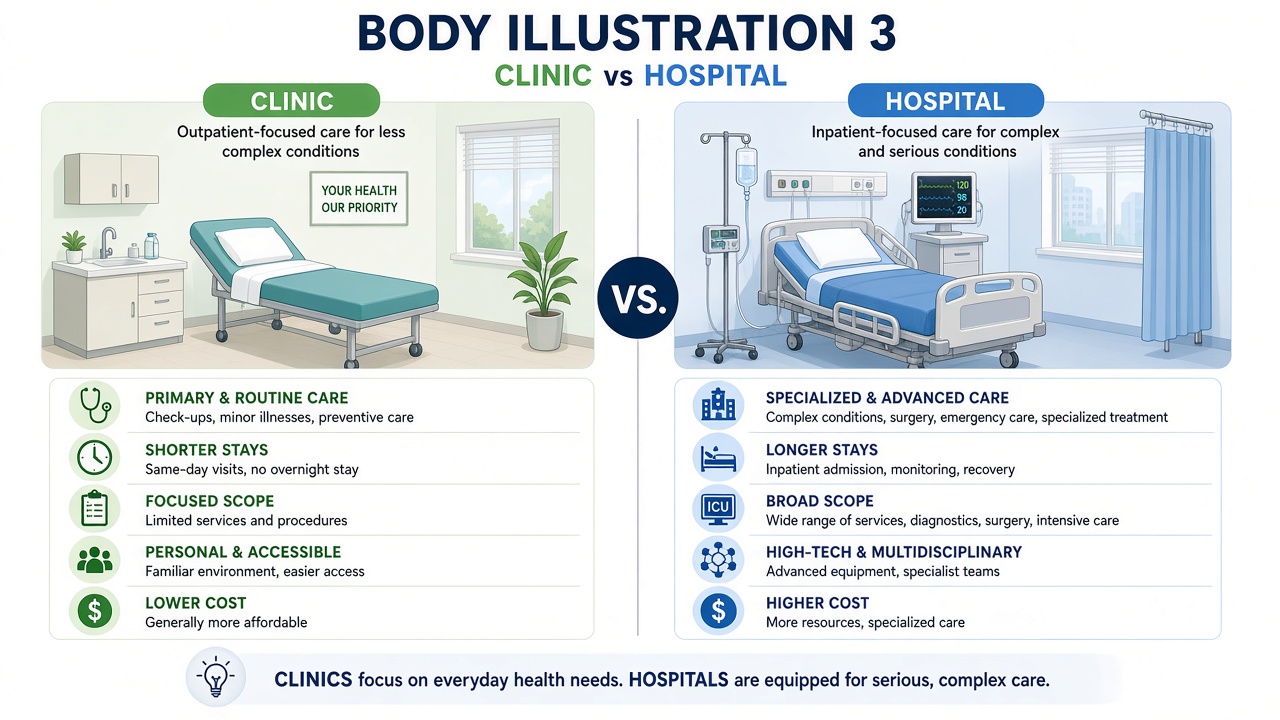
The NT$420 copayment therefore is not a surprise markup invented by a greedy hospital finance team. It is the monetary face of a 50 percent statutory surcharge for entering a medical center without a referral, updated whenever the ministry recalculates flat fees from average outpatient spending. The register charges NT$170 if the referral code says you followed the ladder and NT$420 if the code says you did not.
Insurer payment formulas do not appear on the receipt, but they explain why hospitals still want complex patients even as managers try to shed routine visits. The NT$420 line punishes the walk-in financially without revealing how much the insurer pays the hospital for the same appointment. Patients experience only the partial burden column, which is why the number feels arbitrary even when it is years in the making.
Whether that eightfold gap against the NT$50 clinic rate is large enough to change Taiwan's million-daily-outpatient habit remains contested. The law's answer is already printed on the payment screen: walk past the clinic door straight into a medical center, and you are buying the no-referral tier. The paperwork, not the diagnosis, sets the price.