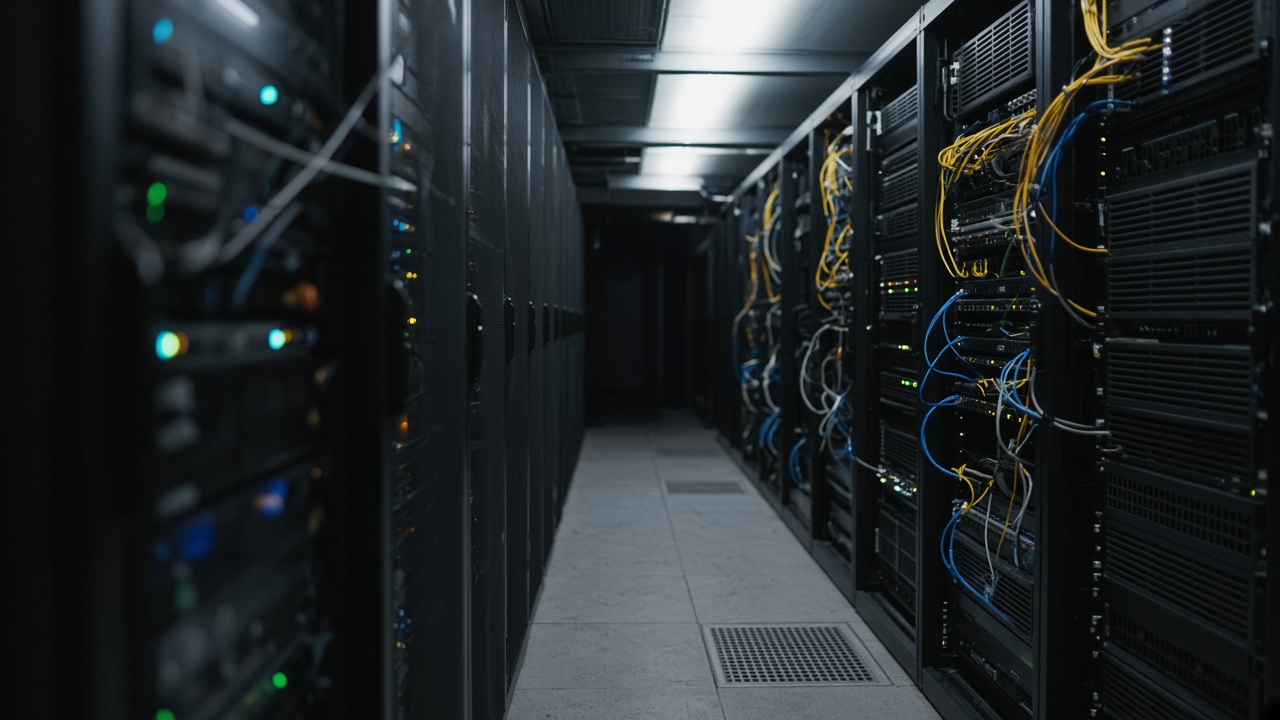
Sunil Gupta, chief executive of Yotta Data Services, told industry forums this week that nearly every large-language model training job inside India's public AI compute pool still runs on Nvidia graphics processors, even as Meta Platforms negotiates to buy Google tensor processing units for United States data centres starting in 2027.
Where India trains models
The IndiaAI Mission has expanded shared GPU capacity to more than 34,000 units, according to government updates, with tenders favouring Nvidia, AMD, and Intel accelerators. Startups access time on those clusters at auctioned rupee rates designed to undercut commercial cloud quotes. Gupta said Yotta's Narendra Modi data centre campus in Navi Mumbai is installing Blackwell-generation servers because they cut energy use per floating-point operation versus prior Hopper racks.
That matters for founders building Indic-language models who need weeks of uninterrupted training on trillion-token corpora scraped from Indian newspapers, court filings, and parliamentary debates.
Why Google's TPU headline still ripple here
Reports that Meta may spend billions on Google chips for its own facilities do not instantly reroute Indian workloads, but they change long-run price curves. Tensor processing units excel at high-volume inference and at some large training recipes Google has tuned internally. If Meta and other hyperscalers diversify away from Nvidia overseas, surplus Hopper or Blackwell supply could eventually flow to export markets, including India, at softer lease rates.
Conversely, if Google begins selling TPUs externally, India's sovereign cloud vendors might offer them alongside GPUs, giving enterprises a second silicon option for recommendation engines and speech bots.
Inference versus training economics
Indian banks and telcos mostly care about inference cost per customer query because they deploy models already trained elsewhere. Regulated entities experimenting with on-premise risk scoring can sometimes compile graphs to TPUs if their cloud provider hosts Google Kubernetes Engine. Training from scratch, however, still depends on Nvidia-centric toolchains that India's computer science departments teach by default.
MeitY officials told Business Standard that the immediate mission is sovereign capacity for foundation models, not picking winners between Santa Clara and Mountain View silicon.
Policy and procurement angles
Government tender documents emphasise mixed-vendor fleets to avoid single-supplier lock-in, yet actual shipments remain Nvidia-heavy because alternative accelerators lack the same software maturity for mixed-precision training. Domestic startups such as Sarvam AI and Krutrim have publicly thanked IndiaAI credits tied to Nvidia hardware.
Google's $15 billion Andhra Pradesh data centre pledge, announced in October, could eventually place TPUs inside Indian territory, but construction timelines stretch across this decade. Until then, Indian enterprises renting Meta or Google services will still touch Nvidia somewhere in the chain.
What founders should plan for
Chief technology officers should split workloads: train or fine-tune large models on whatever IndiaAI or Yotta allots, but architect inference layers to compile to multiple backends. Containerised serving with Open Neural Network Exchange exports is tedious, yet it preserves optionality if TPU rental prices undercut GPU instances next year.
Academic labs should also watch export controls on Blackwell cards; any delay in shipments to India would keep wait lists long regardless of global Meta headlines.
Bottom line for the India lens
Today's fight between Nvidia and Google is a global capex story with second-order effects on Indian cloud bills. It does not yet change the hardware under MeitY's current tranche, but it could lower inference tariffs if competition intensifies. Until Indian soil hosts TPU fabs or large Google-owned pods, Blackwell GPUs remain the default answer when someone asks what trains the next Hindi large language model.