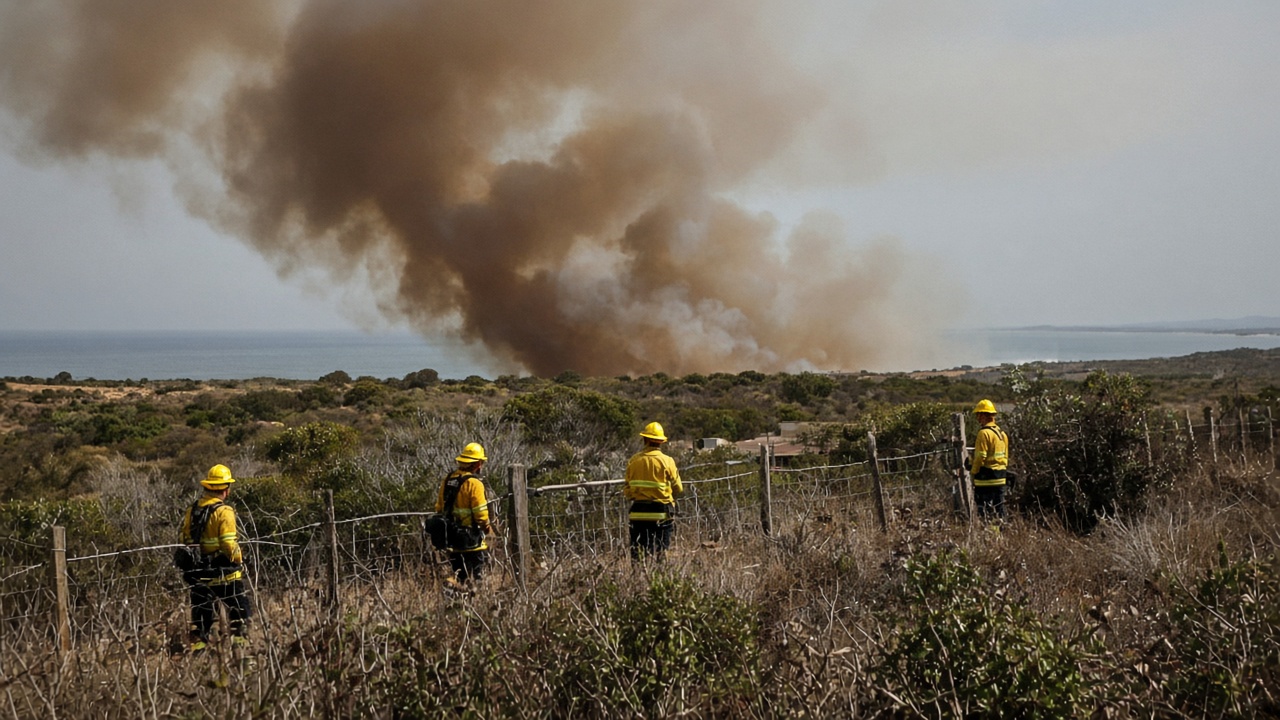
A bushfire tearing across Flinders Island has burned about 14,500 hectares along the island’s northern tip and left at least six homes damaged or destroyed, with Tasmania Fire Service officials telling residents of Killiecrankie it is too late to leave. Emergency warnings were reinstated Thursday after a brief downgrade, as firefighters described ten-metre flames on an active western front while crews tried to hold properties at Leeka and Pine Scrub.
Warnings and evacuations
TasALERT lists an emergency warning for Killiecrankie, the Mount Killiecrankie Recreation Area and nearby settlements, while watch-and-act alerts cover Leeka, Mount Tanner, Mount Boyes and Carnacs Flat. Northern deputy regional chief Steve Richardson said variable weather overnight gave teams a safer window to probe the southern and southwestern flanks, but the western edge remained dangerous enough that direct attack was impossible in places.
More than sixty personnel from Tasmania Fire Service and Tasmania Parks and Wildlife Service were on the fireground Thursday, backed by seven helicopters and fuel shipments to keep aircraft flying. An evacuation centre opened at the Furneaux Arts and Entertainment Centre in Whitemark, and authorities said multiple tourists and residents had left an island whose permanent population sits below nine hundred.
Homes, communications and stranded residents
Richardson told the Australian Broadcasting Corporation that crews had confirmed up to six houses hit but had not completed a property-by-property tally because heat and falling timber kept routes unsafe. He said some locals bypassed roadblocks late Wednesday to check on stock and became stranded when conditions worsened; escorts would be arranged when tracks opened.
Emergency backup generators were keeping communication towers alive while technicians worked to restore mains power, Richardson said. Smoke from the blaze drifted hundreds of kilometres, with the fire service reporting haze visible near Triabunna on Tasmania’s east coast.
What drove the run
Authorities believe lightning near the original fireground last week may have started the blaze, although the official cause remains undetermined. Highly flammable fuels in the island’s north and strengthening winds intensified the run south-west on Wednesday, a shift Richardson said made the event one of the more significant blazes in recent island history even if not the largest by area.
A cattle producer on the island’s northern end told the ABC the fire burned fencing and scrub across hundreds of hectares, describing the sky as apocalyptic as embers jumped containment lines. Parks officials hoped weekend rain might allow exhausted crews to rest after days of aircraft and dozer work along exposed ridges above Bass Strait.