South Korea’s ruling Democratic Party handed Supreme Council member Choi Min-hee a two-year suspension of party membership on Friday, the heaviest penalty short of expulsion and the first major disciplinary blow to a directly elected party leader since President Lee Jae Myung took office. If the sanction survives a review, Choi would lose her council seat and could not run on the party’s ticket in the 2028 general election.
What the tribunal decided
Ethics tribunal chair Lee Chang-hwan told reporters that some of Choi’s recent remarks had damaged the party’s dignity, after a closed hearing lasting roughly two hours. Party rules bar officials from disclosing the precise sanction before notification, but Yonhap News Agency and other outlets confirmed the panel chose the maximum membership suspension available under the charter.
The case stemmed from Choi’s claim at an internal meeting that Lee, when he led the party, had opposed impeaching former President Yoon Suk Yeol after Yoon’s December 2024 martial-law attempt. She also likened journalists to “a pack of hyenas.” Choi later apologized, saying she had been mistaken about Lee’s impeachment stance, but party leader Kim Min-seok ordered an inspection that sent her file to the tribunal within days.
Choi’s response and next steps
Choi wrote on Facebook that the outcome was unacceptable and that she would request a formal review within the seven-day window allowed after notification. While a review is pending, the suspension does not take effect; the tribunal must rule within 60 days. If upheld, her Supreme Council post would be declared vacant and the party would hold a by-election among registered members.
Under Democratic Party bylaws, suspending membership automatically strips formal party offices. That matters for Choi because Supreme Council members are elected nationwide rather than appointed by the parliamentary caucus, giving the dispute a direct link to the party’s activist base.
Factional fallout
The penalty deepened a split between lawmakers aligned with Kim and those loyal to former leader Jung Chung-rae. Another council member, Lee Sung-yoon, questioned whether Choi was treated more harshly than other leaders who misspeak, and demanded that a disciplinary petition against Kim move forward on the same timetable.
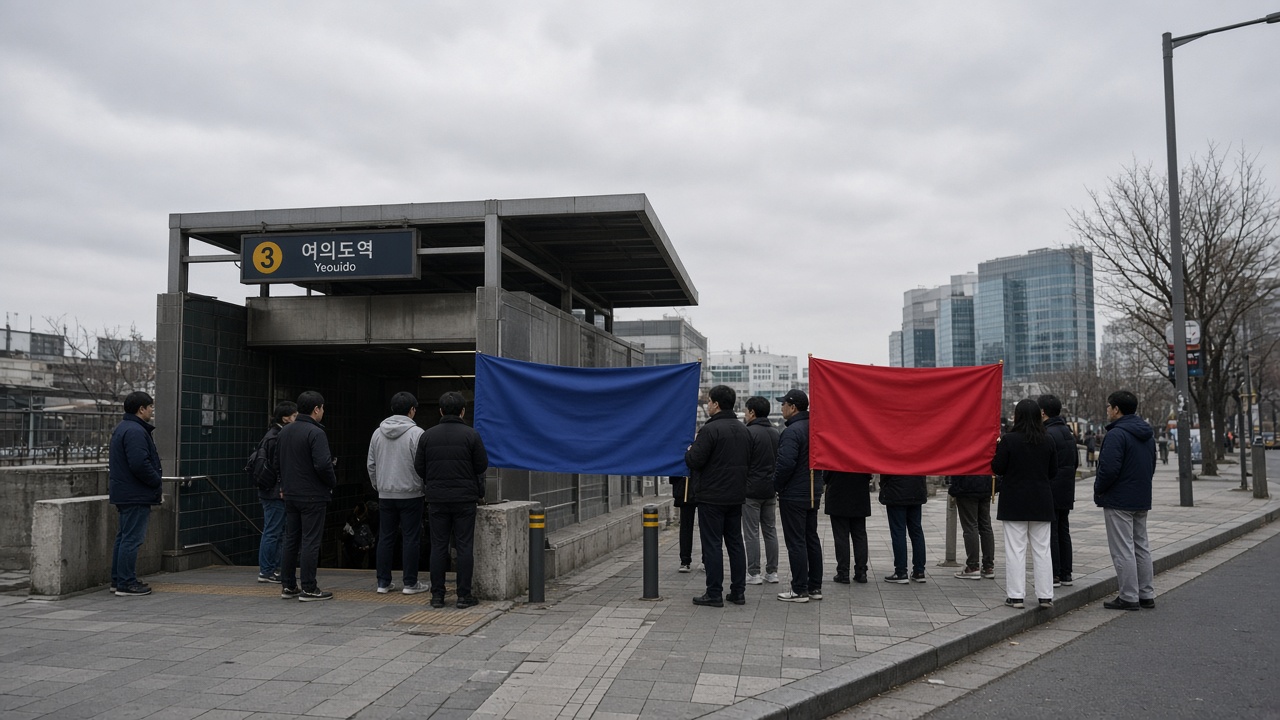
Kim is under fire from Jung’s supporters for alleging, without later evidence, a “three-way” conspiracy involving dissident lawmakers and the Shincheonji church. Jung himself warned that even a party chairman should face discipline if his claims divided the movement. Organizers aligned with the Jung faction scheduled a rally for 5 p.m. Saturday outside National Assembly Station in Yeouido calling for Kim’s resignation, Cho Hee-dae’s impeachment as chief justice, and reversal of Choi’s punishment.
Stakes for the Lee government
Kim passed his hundredth day as chairman this week with the party holding a comfortable parliamentary majority, but the feud tests his promise to keep progressive factions united behind Lee’s legislative agenda. Choi remains a lawmaker regardless of party status, yet losing her council platform reduces Jung-aligned influence over appointments and convention rules ahead of local elections in 2027.
Presidential aides have avoided comment, treating the matter as internal, but opposition parties are already citing the drama as evidence that the Democratic Party cannot manage its own factions while asking voters to trust its economic and security policies. How many Jung-aligned legislators appear at Saturday’s rally will signal whether the conflict stays within party channels or spills into a broader leadership challenge before the year ends.