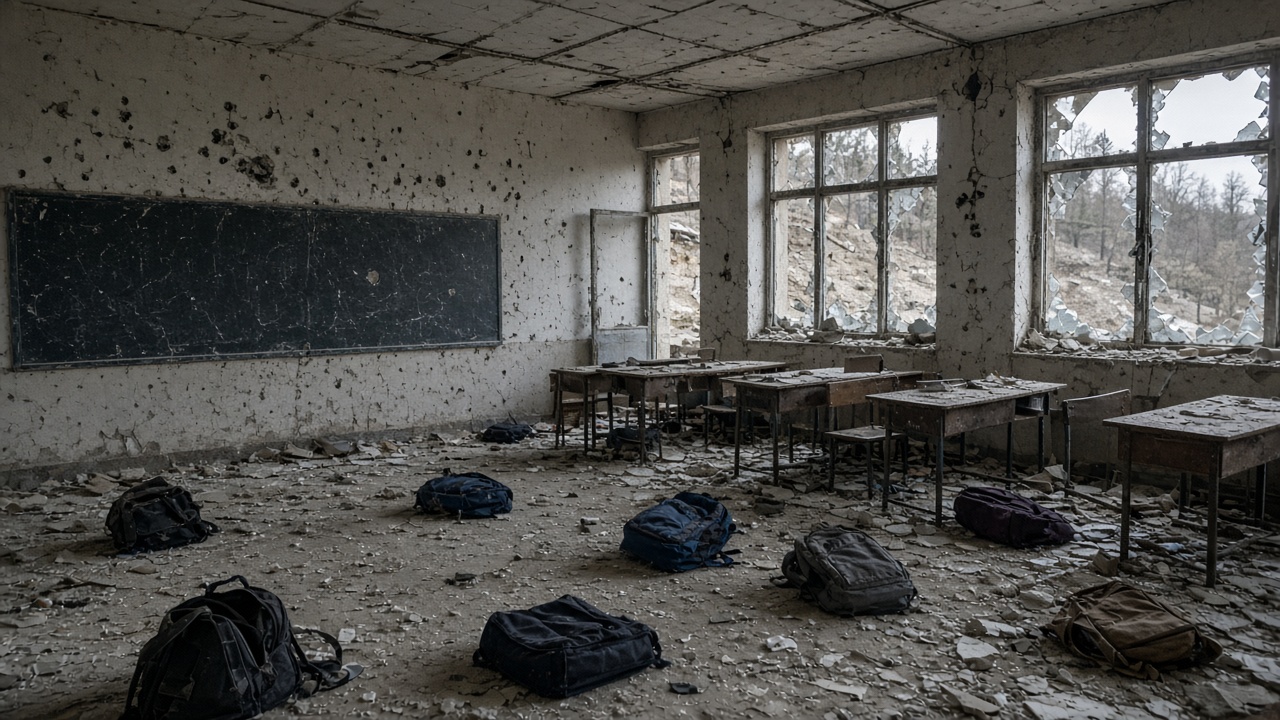
An explosives stockpile tied to mining operations blew up beside a middle school on the edge of Asadabad on Saturday, and Afghanistan’s Interior Ministry said negligence at the depot—not an attack—was the most likely trigger. Spokesman Abdul Mateen Qani said in a statement and on social media that the blast killed students and injured scores more in the Andar Ser area of Kunar, a province along the Pakistani border where quarries and mineral extraction are common but lightly regulated.
What officials reported
Reporting agencies published conflicting early tolls, a familiar pattern when provincial hospitals are still triaging. Reuters cited Qani as saying seven students were killed and as many as 99 hurt. The Associated Press, Al Jazeera and the BBC quoted Kunar culture and information director Sami ul Haq Bayan and ministry figures putting deaths at about 10 and total injuries at 110, most of them children. Provincial police spokesman Farid Dehqan told local outlets the explosion struck around 10 a.m. at a campus on Asadabad’s outskirts.
Qani said preliminary work pointed to carelessness at a facility holding explosives belonging to mining firms. Bayan told The Hindu that up to 15 wounded people remained hospitalized while others were discharged after treatment. RTA, the state broadcaster, listed seven fatalities and 99 injuries in its English bulletin, using the government’s standard “martyred” language for the dead.
How the blast reached classrooms
Al Jazeera quoted Mawlawi Sami-ul-Haq as saying the detonation originated in a house next to the school where dynamite was kept for mining and rock blasting. Reuters and AFP dispatches described classrooms damaged and books scattered as parents and teachers retrieved belongings. Photographs circulated by Reuters showed men gathering schoolbags from rooms with blown-out windows—evidence, aid workers said, that classes were in session when pressure waves hit the building.
Kunar sits in northeastern Afghanistan, a corridor of steep valleys where informal mining has expanded since international troops withdrew. Humanitarian groups have long warned that commercial explosives, often stored in residential compounds, sit too close to schools and mosques. Saturday’s casualty list lands directly on that vulnerability: a campus beside a depot that officials now concede should not have been there.
Investigation and unanswered questions
All official statements stressed that inquiries were only beginning. Qani did not name companies or individuals responsible, and no mining contractor had issued a public statement by midafternoon Kabul time. Taliban authorities have pledged tighter oversight of extractive industries before, but provincial governors lack the engineering capacity to inspect every powder magazine in remote districts.
For families in Asadabad, the immediate need is hospital beds and identification of remains. International monitors were not on the ground, and the United Nations mission in Afghanistan has yet to post a field assessment. Until investigators publish findings—and until casualty counts converge—governments watching from Islamabad and beyond will treat the incident as a storage failure with a children's toll, not a continuation of Afghanistan's armed conflict.