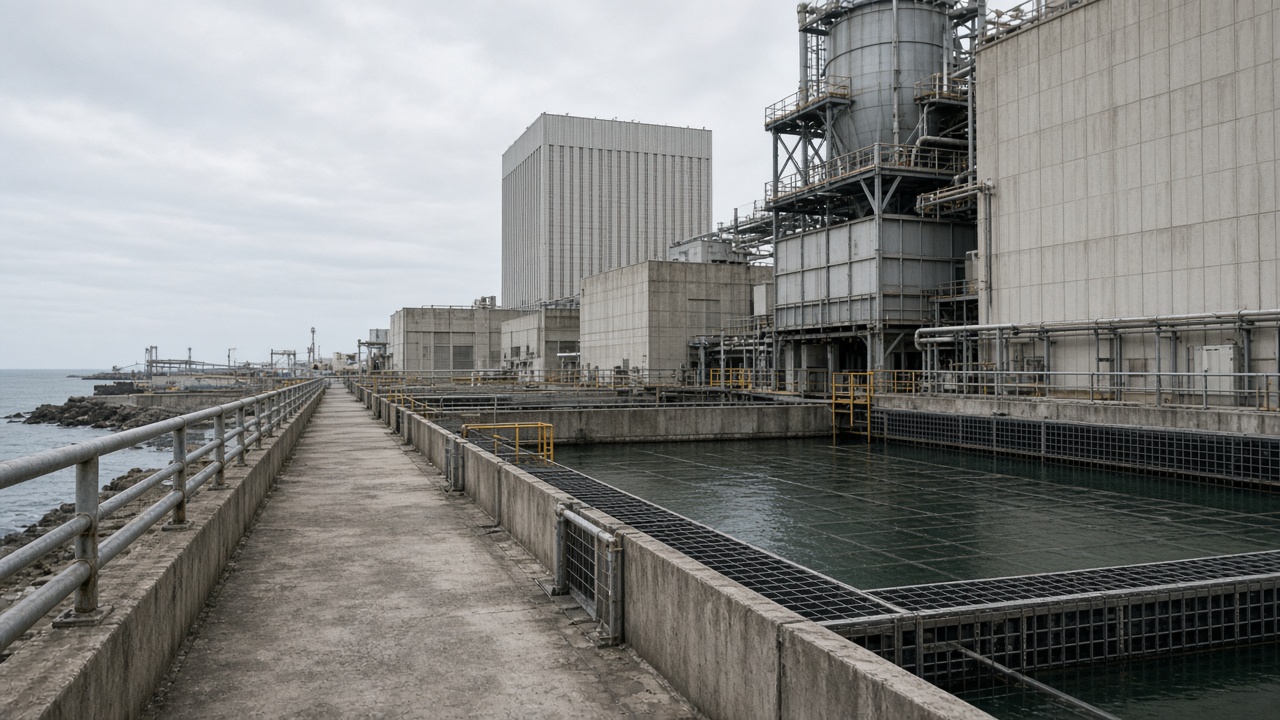
The Ministry of Economic Affairs ratified Taipower’s conclusion that Kuosheng and Maanshan remain technically restartable, giving the state utility until March to submit formal reactivation plans to the Nuclear Safety Commission. Chinshan was ruled out because critical generation gear has already been dismantled after more than a decade offline.
Economics Minister Kung Ming-hsin told lawmakers the cabinet would hold Taipower to the legal “two necessities” and the policy “three principles” whenever politicians promise megawatt-hours from idled reactors. Peer review by overseas technical bodies must finish before any operating licence returns to active status.
What MOEA signed off
The November assessment walks seven dimensions at each site: reactor equipment, staffing, dry storage, comparisons with similar units abroad, seismic risk, inspection readiness, and the power-supply value if steam returns. Kuosheng’s boiling-water units kept maintenance cycles current, but reactors have been empty for years and dry casks lagged a decade behind schedule. Maanshan’s pressurized-water units still carry in-vessel fuel and routine outage standards.
MOEA said Maanshan’s inspection window runs about 18 to 24 months, while Kuosheng needs longer because spent rods must leave the core before certain pressure-vessel exams. Taipower must file both restart plans in March 2026. NSC already cleared Maanshan’s preliminary package; that step only tests paperwork, not wires and valves on the Pingtung coast.
Grid stakes for Taiwan readers
Taiwan’s six utility reactors once covered roughly 15 percent of electricity. All units are now shut as licences lapsed under the former nuclear-free deadline. Restart talk accelerated after Middle East fuel shocks and AI-driven demand from fabs in Hsinchu and Tainan. President Lai has said he is open to reopening Kuosheng and Maanshan while Chinshan stays closed.
Environmental groups in Pingtung want guarantees on spent-fuel pool capacity and typhoon hardening before any fuel load. Business groups counter that summer reserve margins narrowed even with new gas units. MOEA framed Friday’s ratification as a management directive, not a generation guarantee for 2026.
What happens next
Taipower must continue cataloging dry-storage racks, updating training programs, and staging seismic walk-downs under revised Nuclear Reactor Facilities Regulation Act language that allows 20-year licence extensions. NSC will conduct on-site verification while plans execute. Administration spokespeople said Friday they expect public briefings when peer reviewers publish findings, not when ministers stage ribbon cuttings.
Shareholders should treat any dividend linked to nuclear output as contingent on those milestones. Taipower cannot bill “restart revenue” until combustion turbines are idle because licensed fission heat is back on the dispatch chart.