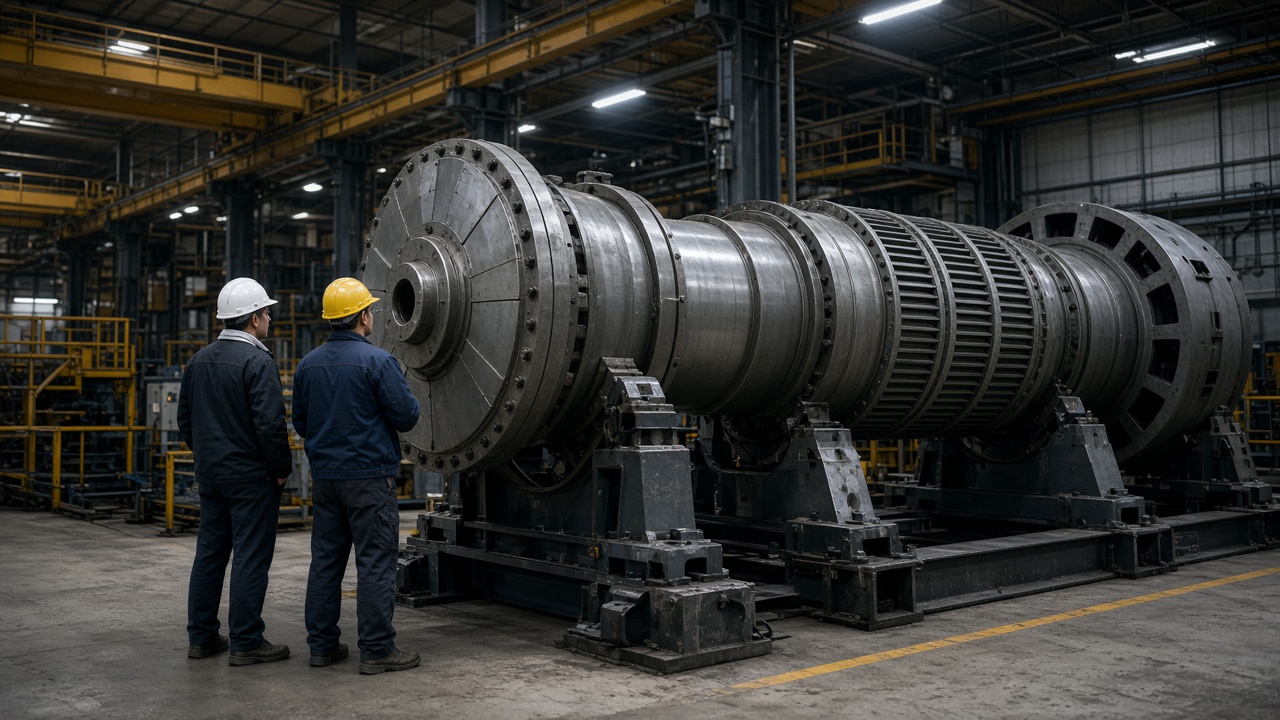
Doosan Enerbility signed a 320 billion-won retrofit contract with Taeshin Power to rebuild three ageing steam turbines at the Yeongnam combined-cycle site, giving the listed heavy-engineering arm its largest domestic parts-and-service order since it split from Doosan Heavy three years ago.
What the contract covers
Under the agreement filed Friday with the Korea Exchange, Enerbility will supply new rotors, blade sets and control modules for units that entered service between 1998 and 2004. Work starts in March 2027 and must finish by October 2028 so Taeshin can keep winter peak capacity without buying wholly new frames. The price includes on-site assembly crews from Changwon and a five-year maintenance option Taeshin can exercise if output efficiency gains exceed 2.4 percent.
Taeshin, an independent power producer with three gas units in Gyeongsang, said it picked Enerbility because the supplier could source forgings locally. Imported rotors would have added roughly seven months to the schedule and exposed the plant to dollar invoicing at a time the won has traded near 1,470 per dollar. Enerbility's Dangjin forge can cast the 28-tonne low-pressure sections Taeshin needs without an export licence delay.
Why the order matters on the Kospi
Investors have treated Enerbility as a nuclear-and-gas export story, but domestic retrofits still account for about 38 percent of backlog. This contract lifts that ratio for 2027 planning and helps smooth factory load between overseas nuclear steam-generator shipments. An analyst note from Mirae Asset on Monday said the deal should add 12 to 14 billion won to 2027 operating profit if material costs stay inside the hedged band Enerbility disclosed in its third-quarter call.
The Ministry of Trade, Industry and Energy has been urging utilities and IPPs to favor Korean suppliers on mid-life turbine work, citing supply-chain risk after pandemic-era shipping delays. Taeshin's board cited that guidance in its signing statement, though the deal did not use a mandated offset credit.
For plant neighbors in Ulsan and Busan, the stake is grid stability. Yeongnam feeds industrial demand on the southeast coast; an unplanned outage during last summer's heat wave pushed spot power prices above 180 won per kilowatt-hour for two afternoons. Taeshin executives told local media they expect the retrofit to recover roughly 90 megawatts of nameplate capacity that degraded over the past decade.
Enerbility shares rose 2.1 percent in early Monday trade, outpacing the Kospi industrial index, while Taeshin parent Taesan Group's thinly traded preference shares were unchanged. Bondholders are watching whether Taeshin funds the capex from cash or refinances a 2029 maturity; the company said it will detail financing at its December investor breakfast in Seoul.
Local unions in Changwon welcomed the order because it locks in overtime shifts through 2028 without relying solely on overseas nuclear component deadlines that can slip when export licenses lag. Safety inspectors from the Korea Occupational Safety and Health Agency will audit rigging plans before the first rotor move.