Kansai International Airport will widen its lineup of Japanese regional food stalls adjacent to international departure gates, Nikkei reported, aiming to capture passengers who clear security late and cannot walk back to the terminal’s central dining atrium without risking boarding calls. The refresh lands ahead of winter charter peaks and year-end return traffic to China and Southeast Asia.
Layout logic
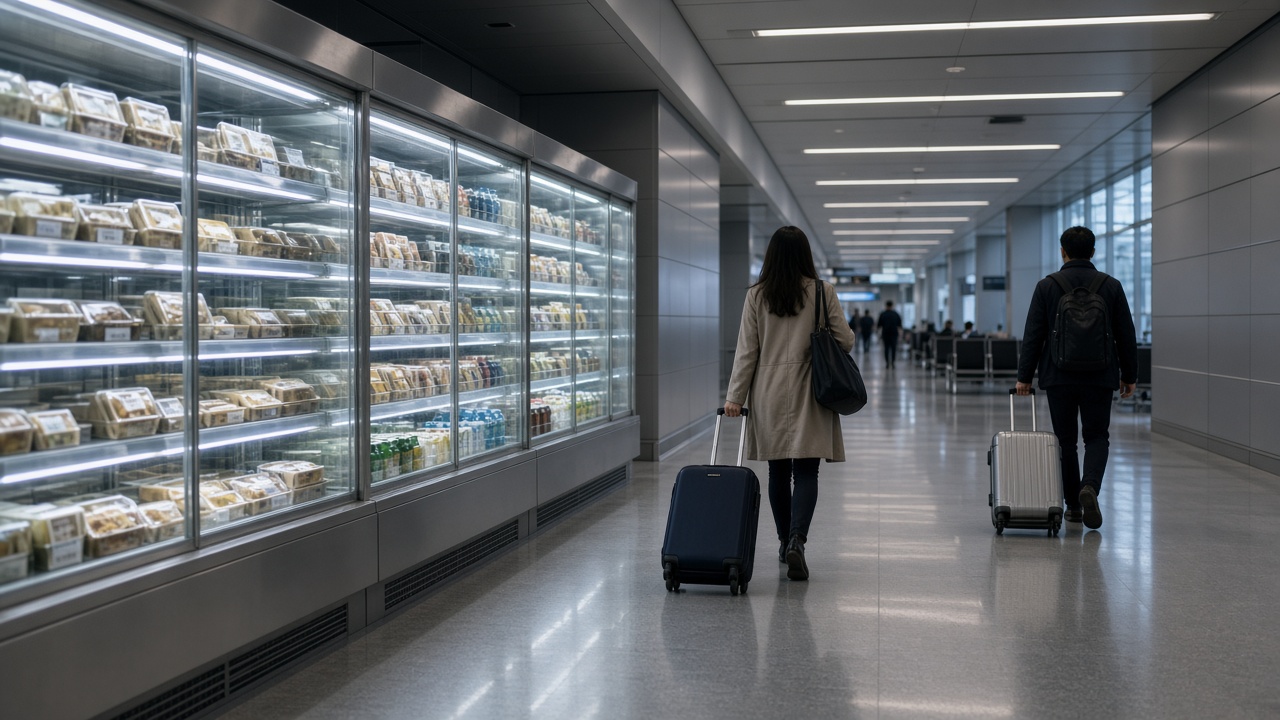
Airport retail planners measured footfall heat maps showing international passengers doubling back for takoyaki and boxed meals during the 2024 summer rebound. Moving refrigerated cases of Kobe beef bentos, Kyoto pickles, and Awaji onion snacks within 200 meters of gates cuts missed purchases that frustrate both concessionaires and tourism boards promoting prefectural brands.
Kansai Airports, the operating company, already runs luxury corridors in the Renzo Piano terminal; the food push targets mid-market travelers on LCC carriers with tighter gate call times. Digital menu boards will rotate English and Chinese descriptors without handwritten specials that slow queues.
Supply chain
Central kitchens in Izumisano prepare chilled components trucked through the airport’s dedicated logistics tunnel; gate micro-kitchens finish assembly and label allergen stickers required on China-bound flights. Cold-chain failures during summer typhoons prompted redundant generators last season—equipment the expanded counters will share.
Tourism politics
Osaka prefecture tourism officials want passengers to taste local brands even on four-hour layovers, supporting small suppliers hurt when inbound duty-free cosmetics crowded out domestic food gifts. Nankai and JR West rail-ticket bundles may cross-promote new stalls in 2026 spring campaigns targeting Kansai residents flying from Itami transfers.
Competitive context
Haneda’s international wing completed a similar gate-proximate food refresh in 2023; Narita markets farmer-market pop-ups in Terminal 3. Kansai’s artificial island limits back-of-house space, so planners use vertical chilled merchandisers rather than full kitchens at every pier.
What travelers see
December schedules add red-eye departures to Taipei and Manila; counters will test 24-hour service on two piers if staffing agencies fill security-cleared roles. Travelers should still budget extra minutes—customs queues, not food distances, remain the binding constraint on many winter evenings.
Osaka tourism agencies plan tasting events linking prefectural seafood producers with airport concessionaires in January, testing whether sampler cups convert to carry-on sales during two-hour delays. Operators track conversion by QR-coded receipts rather than anecdotal chef visits, a metric they intend to publish quarterly if gate sales beat atrium baselines by more than eight percent.