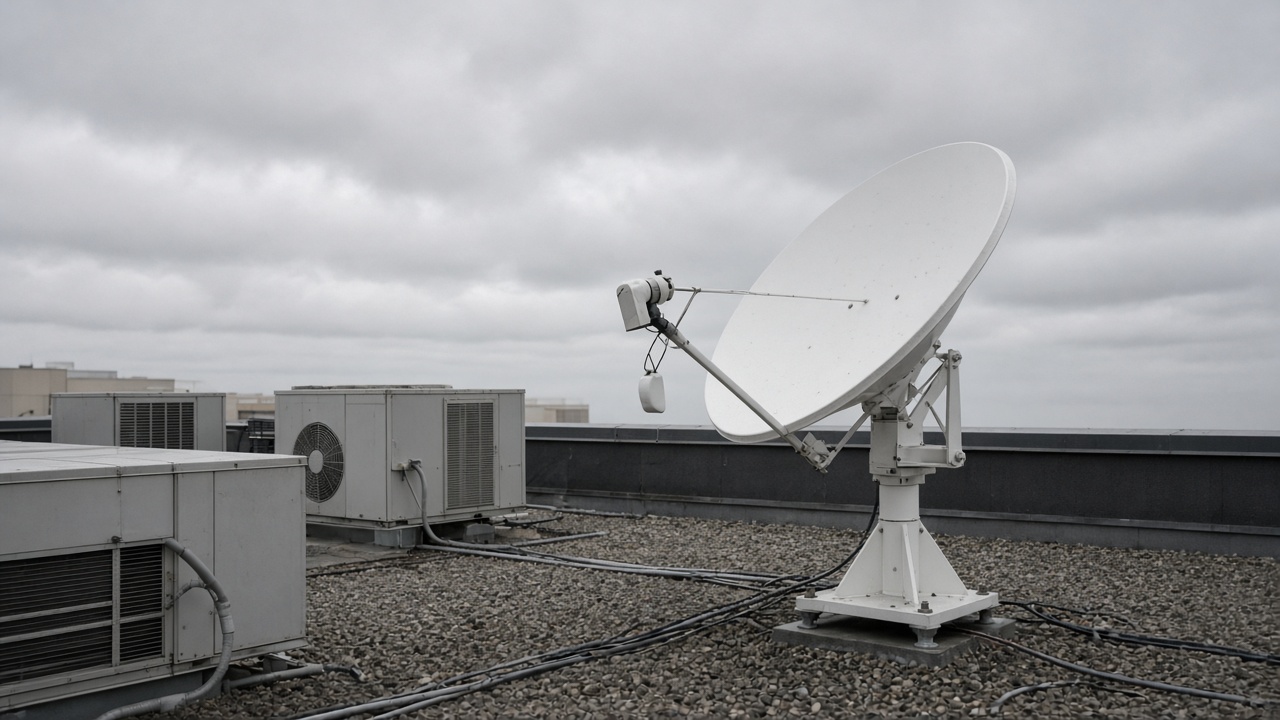
SK Telecom demonstrated a satellite-to-handset SMS link from its Pangyo research campus on Monday, sending a 160-character message through a low-earth-orbit relay minutes after the Ministry of Science and ICT opened a working group on mobile-core resilience.
What SK showed
Engineers used a rooftop phased-array antenna roughly the size of a carry-on suitcase to reach a commercial LEO constellation partner SK declined to name under confidentiality. The test handset was a modified Android device with a dual-mode modem; no commercial SK plan yet covers satellite SMS. Latency averaged 18 seconds, acceptable for emergency pings but not for voice, which SK said remains years away on consumer price points.
The demo lands one week after KT's data-center cooling fault knocked mobile banking and transit apps offline for several hours, prompting the Korea Communications Commission to demand failure timelines from all three mobile network operators. SK framed satellite SMS as a "last-resort bearer" when terrestrial base stations lose backhaul, not a replacement for fiber.
Regulatory and market angle
MSIT's working group will compare SK's approach with KT and LG Uplus disaster-recovery filings due December 15. Spectrum fees for satellite links remain unresolved; SK asked for a temporary experimental licence rather than a consumer tariff filing. Competitors note that handset subsidies would rise if every flagship required satellite-capable chipsets.
Enterprise customers are the nearer-term buyers. Logistics firms along the east coast told InfoHandle they want truck-driver check-ins when mountain tunnels drop LTE signals. SK pitched a fleet bundle starting at 19,000 won per device monthly, pending KCC approval.
Investors treated the demo as narrative support rather than earnings news: SK shares rose 0.6 percent, in line with the Kospi telco peer group. The company said a public pilot could start on Jeju in the second quarter of 2027 if antenna costs fall below 400,000 won per site.
Chipset vendors said dual-mode satellite modems add roughly 8,000 won to bill-of-materials costs on midrange phones, a premium carriers may absorb only on rugged devices sold to utilities and maritime crews. SK told handset partners it will certify two rugged models by June for fleet contracts.
Rural municipalities along the east coast asked whether satellite SMS could substitute for aging VHF pagers used by volunteer firefighters; SK said firmware trials are pending.