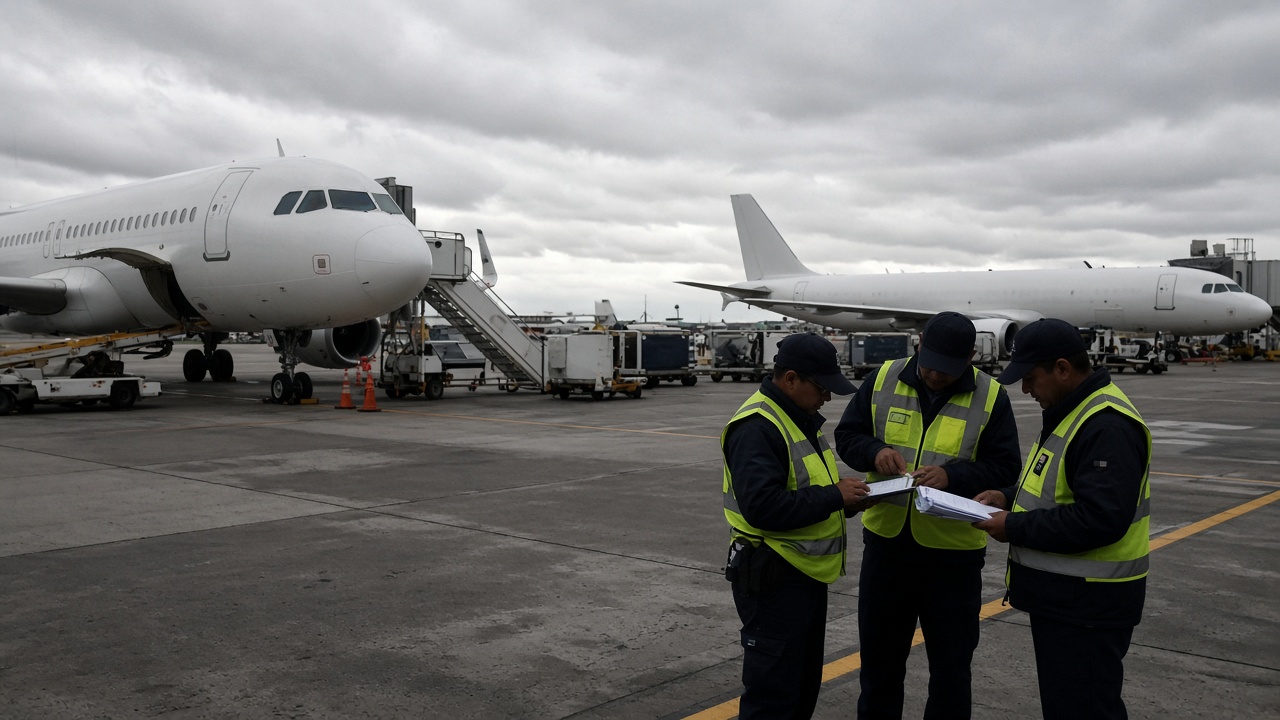
U.S. President Donald Trump declared on Saturday that the airspace above and surrounding Venezuela should be treated as closed, issuing the warning in a blunt Truth Social message that named airlines, pilots and smugglers but offered no legal mechanism or military plan to enforce it.
"To all Airlines, Pilots, Drug Dealers, and Human Traffickers, please consider THE AIRSPACE ABOVE AND SURROUNDING VENEZUELA TO BE CLOSED IN ITS ENTIRETY," Trump wrote. Reuters reported that U.S. officials contacted after the post said they had not been briefed on steps to impose an air blockade, deepening uncertainty for carriers still weighing whether to operate into a country already under tightened American pressure.
Caracas pushes back as permits disappear
President Nicolás Maduro's government condemned the message and linked it to what officials in Caracas described as a campaign to isolate Venezuela's civilian aviation sector. Hours earlier, regulators in Venezuela had pulled landing rights for several international airlines after U.S. aviation authorities warned about security risks, continuing a pattern of retaliation between Washington and Caracas that has stranded passengers on both sides of the dispute.
Industry groups said the post, read in isolation, could not substitute for a formal Federal Aviation Administration notice to airmen, the standard channel through which U.S. restrictions on commercial flying are communicated. Several global carriers had already rerouted or cancelled South American rotations in recent weeks; Trump's language threatened to widen that caution even if regulators issued no matching order.
What pilots and diplomats watch next
Retired U.S. military officers quoted by Reuters noted that shutting airspace in practice requires sustained patrol or credible threat of force, neither of which Trump described. Latin American diplomats said any unilateral closure attempt could complicate humanitarian flights and repatriation missions that still touch Venezuelan airports.
The White House has paired economic sanctions, oil-sector enforcement and rhetoric against Maduro's inner circle with periodic military movements in the Caribbean. Saturday's post read as another pressure point rather than a signed policy, but it landed on one of the year's busiest travel weekends in the United States, when airlines monitor presidential social media for signals that move markets and operations alike.
Caracas signaled it would defend sovereign control of its skies. Washington gave no timeline for follow-up orders. Until regulators and insurers receive formal guidance, carriers face a familiar calculus: treat the president's words as a reputational and liability risk even when the NOTAM system stays quiet.
Holiday weekend exposure for U.S. carriers
Thanksgiving week concentrates domestic flying in the United States, but several airlines still operate narrow-body rotations that clip Venezuelan airspace when connecting South America with Caribbean resorts. Risk teams watching Truth Social on Saturday had to decide whether to brief flight dispatchers immediately or wait for FAA duty officers to open on Monday.
Insurance underwriters said informal presidential warnings can still shift premiums for lessees flying into disputed regions, even absent a NOTAM. Pilots' unions urged members to defer to company operations control rather than parsing political posts mid-trip. Passengers on existing tickets saw few instant cancellations, but fare sales into Caracas and neighbouring capitals softened as travel agents flagged the uncertainty.
Congress returns soon with Venezuela policy on several committees' calendars. Saturday's post may surface there as either bargaining pressure against Maduro or as an example of governance-by-social-media that aviation regulators are expected to interpret after the fact.