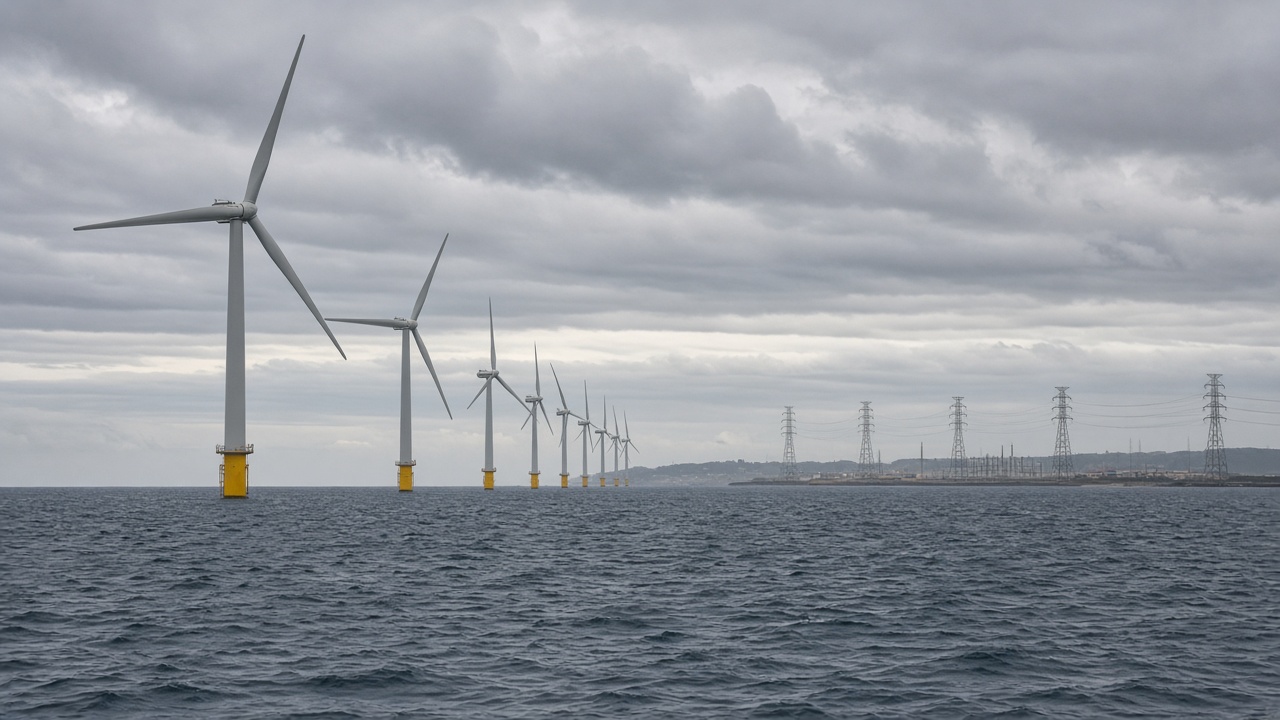
We judge Taiwan’s offshore wind delays to be a grid reliability risk, not a renewable-energy talking point, because every slipped commissioning date pushes fossil backup harder into the hours when air conditioning and export factories already stress the system.
Correspondents have documented hearings, vendor disputes, and typhoon-season installation windows closing. Our argument is narrower: the Ministry of Economic Affairs and Taipower should publish a single public schedule that ties each megawatt to a substation upgrade—and lawmakers should fund the upgrades on that same calendar.
What the calendar shows
Round-two projects that were supposed to add material capacity before this summer’s peak instead moved toward late 2026 in developer filings summarized by the Bureau of Energy. That gap matters because Taiwan’s reserve margins already tighten on hot afternoons when solar output falls and gas plants ramp. Offshore wind was pitched as a shoulder-hour resource; when turbines sit idle offshore, the shoulder is filled by LNG, not rhetoric.
Taipower’s own long-term supply documents assume a rising share of zero-carbon megawatts by 2028. Those models are not ideological; they are dispatch math. Delay does not merely slow decarbonization—it keeps price-sensitive industrial users one heat wave away from voluntary curtailments.
Science parks in Taichung and Tainan have already negotiated interruptible contracts for peak afternoons. If offshore electrons arrive late, those contracts become the default operating mode for more fabs—a hidden tax paid in throughput rather than a line item voters recognize.
The strongest objection
Developers say cables, harbors, and local content rules were unrealistic from the start, and that forcing dates would invite unsafe installs before typhoons. That caution is fair for any single project. It is not a substitute for a system plan. If harbors are the bottleneck, harbor budgets should be line items in the same bill that sets renewable targets—not surprise costs discovered after auctions close.
What we are not saying
We are not arguing that Taiwan should abandon offshore wind or reopen every contract. We are not claiming onshore solar can carry peak demand alone. We are saying that slippage without a published reliability impact is how democracies sleepwalk into brownouts.
What should happen
The Executive Yuan should require Taipower to release a quarterly “grid gap” table: projected peak demand, committed thermal capacity, and wind/solar megawatts actually energized—not merely permitted. The Legislative Yuan should tie appropriations for grid reinforcement to that table, the same way defense budgets attach to readiness metrics.
Readers planning factory shifts or hospital backups deserve a date they can audit. Campaign ads about green leadership do not keep the lights on; energized turbines connected to upgraded substations do. Until those dates are public and funded, offshore wind delays remain a grid risk—and pretending otherwise is the real talking point.
We will watch whether Tuesday’s Legislative hearing produces that audit trail or another slide deck. The difference is whether reliability stays a bureaucratic secret or becomes a budget line citizens can enforce.
That is the standard we will apply in every future editorial on energy: dates, megawatts, and who pays when they slip.