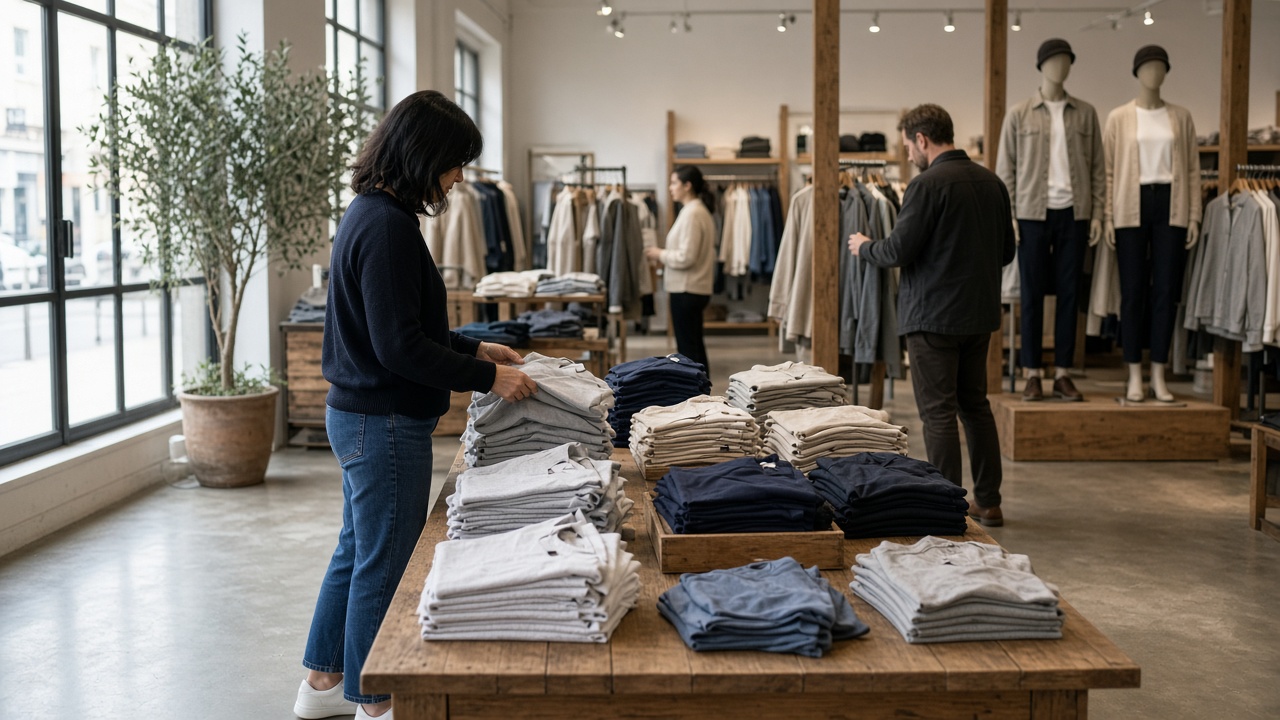
Fast Retailing Co. stock came under pressure in Tokyo after Uniqlo Japan reported a same-store sales decline for the first half of September, missing internal plans built around autumn layering launches and inbound tourist traffic. The company blamed humid weather that delayed fleece and outerwear trials, plus household budgets stretched by food inflation—even as flagship districts still logged long queues for collaboration capsules.
Reading the September flash
Uniqlo Japan’s weekly sales tracker, closely watched by domestic brokers, showed negative comparable-store growth in the September 1–14 window after a modest August gain. Fast Retailing does not publish monthly Japan comps in a standalone press release every week, but store managers submit daily registers headquarters aggregates for investor relations teasers ahead of quarterly earnings in October.
Apparel sell-through for AIRism basics held steady, suggesting core replenishment demand remains intact. The miss concentrated in seasonal categories—lightweight down, flannel shirts, and kids’ school sets—where shoppers delay purchases until nighttime temperatures drop reliably.
Weather and calendar effects
Japan Meteorological Agency data show Tokyo and Osaka average highs stuck above 28°C through mid-September, discouraging early autumn buys. Retail analysts at two securities firms said the heat echoed 2024’s late cold-front pattern, which similarly pushed Uniqlo’s heattech and fleece ramps into October.
Silver Week holidays arrive later this month; domestic travelers typically pick up travel-sized toiletries and accessories, not full outerwear wardrobes. Uniqlo’s planning team had expected more pre-holiday gifting from suburban malls, but traffic stayed flat outside tourist magnets.
Inbound tourism: helpful but uneven
Japan Tourism Agency visitor counts remain elevated year on year, buoying Ginza, Kyoto, and Fukuoka flagships where tax-free queues persist. Same-store metrics weight hundreds of suburban outlets more heavily, however, so inbound strength in a dozen districts cannot offset lukewarm comps in bedroom communities.
Currency swings also matter: a weaker yen helps translated revenue when overseas tourists spend, yet it raises import costs on fabrics sourced in dollar markets. Fast Retailing’s vertical supply chain mitigates some FX lag, but September’s miss was demand-timing, not margin guidance.
Competition and marketplace pressure
Domestic rivals Shimamura and GU—Fast Retailing’s own value banner—promoted early autumn discounts on TV and apps. Marketplace sellers on Rakuten and Amazon Japan undercut list prices on basic tees, pressuring Uniqlo to keep opening-price points stable even when cotton futures moved.
Collaboration drops with anime and designer labels still sell out online within hours, generating social buzz without always lifting nationwide comps because allocations favor flagship stores. Investors want proof that hype SKUs translate into margin-accretive repeat visits in Chiba and Saitama outlets, not only photo lines in Harajuku.
Investor implications ahead of October earnings
Fast Retailing shares trade at a premium to global apparel peers on international store openings and GU expansion in Asia. A single Japan comp miss rarely changes guidance alone, but it refocuses attention on domestic same-store momentum after years of China and Europe headlines.
Options markets priced slightly higher implied volatility into the October results week, reflecting uncertainty on whether October cold snaps will rescue fleece sell-through. Dividend-focused funds still cite the company’s net cash and supply-chain ownership as buffers.
Store operations and inventory
Warehouse managers said autumn inventory arrived on schedule; the issue is floor conversion, not stockouts. Markdown risk rises if temperatures stay warm through October 1, but Uniqlo historically avoids deep nationwide sales until year-end events.
Employees at suburban stores report pushing cross-category bundles—socks with loungewear—to lift baskets while waiting for weather-driven outerwear demand. Headquarters analytics teams are A/B testing digital coupons limited to lukewarm regions, a tactic used after typhoon seasons delayed traffic.
What shoppers and shareholders should watch
Next flash updates covering Silver Week will show whether domestic travelers picked up autumn layers. Until then, the slip is a weather-and-calendar story more than a structural retreat from Uniqlo’s Japan dominance—unless October nights cool late again and comps miss twice.
Supply-chain executives added that fabric commitments for winter heattech are already locked, so a late cold snap could produce a sharp rebound rather than inventory distress. That pattern would mirror prior years when a single cool weekend cleared fleece backrooms across Kanto within days.