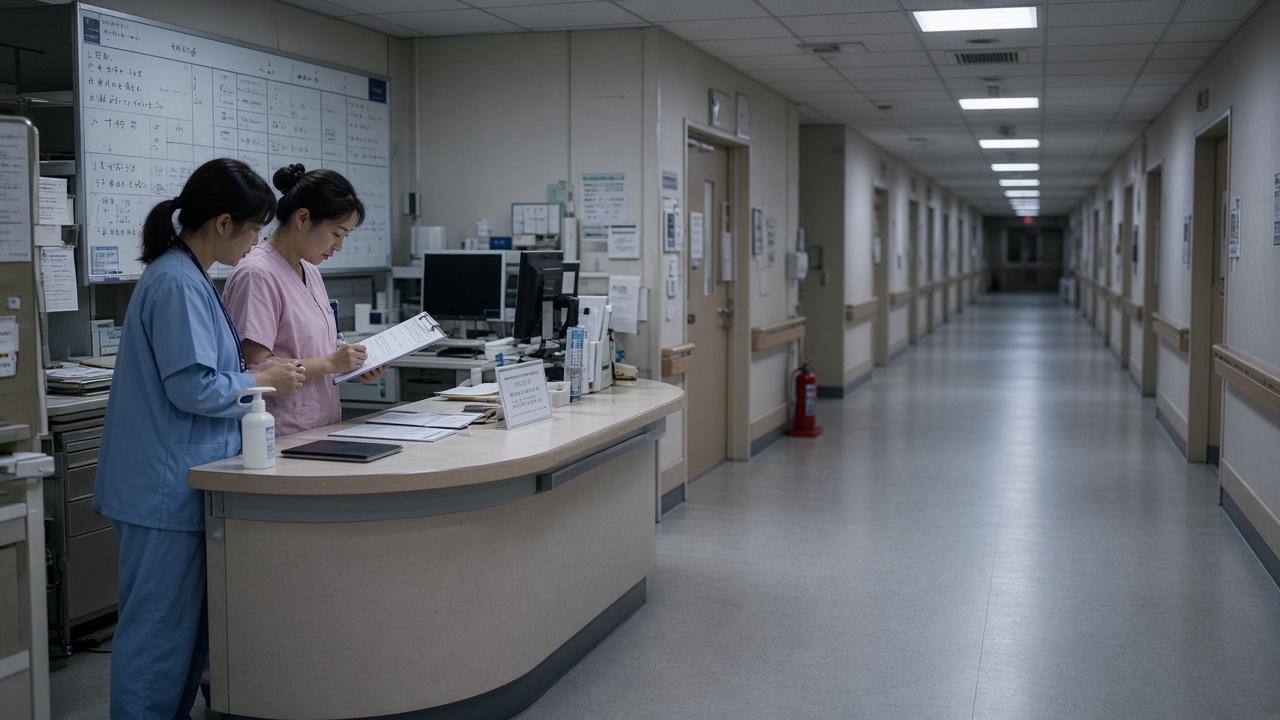
Japan's largest nursing labor group demanded nationwide night-shift pay reform on Tuesday, saying acute-care wards that stayed above 90 percent occupancy through late summer cannot keep relying on voluntary overtime and one-time bonuses to cover gaps left by retirements and part-time exits.
What the union wants
The Japan Federation of Medical Workers Unions, known as Iryo-soren, asked the Ministry of Health, Labour and Welfare to mandate higher premiums for shifts between 10 p.m. and 6 a.m., with additional pay when nurses work more than three consecutive nights. The proposal would fold into revised guidelines for public university hospitals and give prefectural labor bureaus clearer grounds to cite employers who treat night differentials as discretionary.
Iryo-soren chair remarks at a Tokyo briefing cited internal surveys showing one in four members at major metropolitan hospitals logged more than 16 night shifts in August, above the federation's own safety ceiling. The group also wants caps on "on-call at home" hours that hospitals expanded after the pandemic without updating collective agreements.
Hospital finances versus beds
Japan Hospital Association executives countered that base wages rose in spring shunto rounds and that blanket night premiums would force rural facilities to close maternity wards already operating below break-even. Tokyo's St. Marianna University Hospital said its September occupancy averaged 93 percent in internal medicine, with heat-related admissions overlapping flu-shot prep and Silver Week elective surgeries that patients postponed from August.
MHLW officials told reporters they would convene a working group on "sustainable shift design" but stopped short of endorsing binding premium floors. The ministry's September nursing dashboard shows 348,000 licensed nurses employed in hospitals, still short of its 2027 target by roughly 120,000 full-time equivalents when adjusted for aging retirements.
Regional pressure
Osaka and Fukuoka chapters reported higher quit rates among nurses in their first five years, often citing unpredictable rosters that make childcare impossible. A Kanagawa nurse told InfoHandle she transferred to a clinic after her city hospital removed a promised ¥30,000 monthly night allowance when COVID emergency funds expired, even though night census counts never fell.
Prefectural governments that own hospitals face bond payments on pandemic-era expansion projects. Hokkaido said it would pilot team-based scheduling with fixed night teams at two facilities, trading flexibility for predictability—a model Iryo-soren supports if premiums stay attached to the teams.
Policy context
Diet debate on foreign health workers intersects the dispute. The Upper House health committee heard testimony Tuesday that language support—not visa numbers alone—determines whether imported nurses stay on night rosters. Union leaders argue pay reform must arrive before larger recruitment drives, or Japan will import the same burnout patterns seen in other aging societies.
Private staffing agencies reported 18 percent higher dispatch requests for September nights at emergency departments, a sign hospitals are buying temporary labor instead of raising permanent pay. MHLW warned agencies must follow the same work-hour rules as employers, but inspectors have only 290 specialists nationwide to cover more than 8,000 hospitals.
What patients see
For families, the fight surfaces as slower evening vitals checks and longer waits for pain medication on orthopedic floors. Consumer groups asked hospitals to publish average night nurse-to-patient ratios; only a handful of Tokyo wards comply voluntarily. Iryo-soren said it would stage informational pickets outside major stations on September 19 unless MHLW schedules a public hearing before Silver Week.
Until premiums and caps are codified, night shift remains the pressure valve Japan's hospital system squeezes each time heat waves, flu season, and holiday travel stack atop chronic understaffing—and nurses say the valve is close to bursting.
Silver Week staffing
Travel clinics and airport quarantine posts are pulling nurses from inpatient floors for temporary Silver Week assignments, worsening rosters at base hospitals. Iryo-soren asked MHLW to ban inter-facility poaching without mutual consent, a request the ministry said it would "study" after the holiday.
Pharmacists and physical therapists filed companion petitions for night differentials, arguing rehabilitation sessions scheduled at 9 p.m. to free beds should not pay daytime rates. MHLW's working group agenda, published late Tuesday, includes allied health workers for the first time.