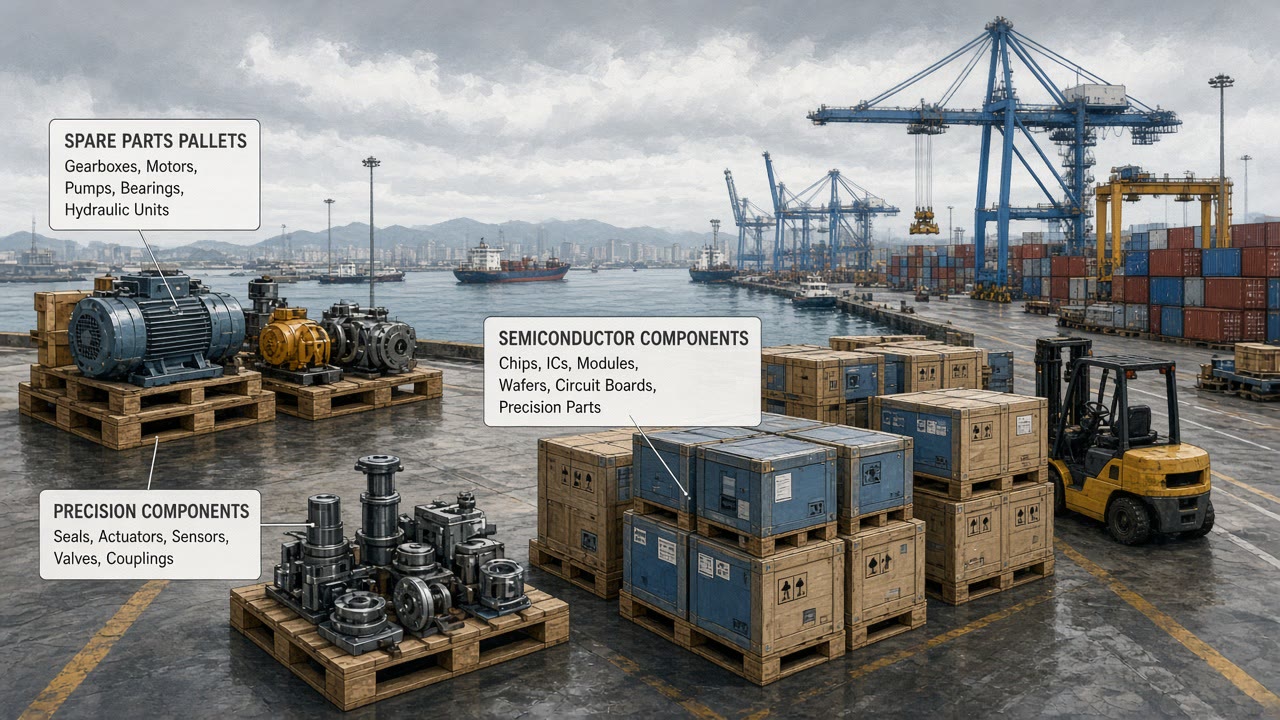
PortFlow, a Kaohsiung logistics software startup, reduced average dwell time for semiconductor spare-parts containers at the city’s port by pairing customs pre-clearance data with live berth schedules from Taiwan International Ports Corporation, according to pilots with two chip-equipment suppliers and metrics the company shared with InfoHandle.
The problem on the dock
Spare parts for lithography and test tools—valves, sensors, refurbished boards—often arrive in LCL containers that sit until a fab planner confirms receipt windows. Each idle day ties up cash and risks missing a maintenance slot when a tool goes down. Kaohsiung’s congestion during peak export season made the pain visible: dwell times for industrial spares averaged 4.2 days in July, PortFlow said, versus 2.8 days for full container loads.
Suppliers blamed fragmented paperwork. Customs forms, bonded-warehouse receipts, and port gate appointments lived in different portals with no shared timestamp.
What PortFlow built
PortFlow’s stack ingests bill-of-lading events, pushes structured data to Taiwan Customs’ advance cargo information lane where available, and reserves bonded slots only when berth data shows the vessel within six hours of arrival. Drivers get QR gate passes tied to container numbers so security does not re-key manifests at the truck lane.
The startup charges a per-container software fee plus a success bonus when dwell drops below a contracted threshold. It does not own warehouses; it orchestrates timing among third-party bonded operators near the port’s free-trade zone.
Pilot results
A lithography equipment vendor running Kaohsiung imports cut median dwell to 2.1 days across 38 containers in August. A test-handler supplier reported fewer emergency air shipments after maintenance teams trusted port ETAs enough to schedule tool downtime three days ahead instead of five.
PortFlow logs show most gains came from eliminating “wait for planner” gaps on weekends, when fab contacts were offline but containers already cleared customs.
Fab and port politics
Taiwan Semiconductor Industry Association members asked whether dwell metrics should become a standard supplier scorecard, similar to on-time delivery for wafers. Kaohsiung city economic officials cite PortFlow as part of a broader push to market the port as a spare-parts hub, not only an export exit for finished goods.
TIPC officials cautioned that berth data feeds can lag during typhoon diversions; PortFlow added manual override workflows when the Central Weather Administration hoists sea warnings.
Funding and competition
PortFlow raised a $6.8 million Series A led by Taiwania Capital with participation from a Kaohsiung-based corporate venture arm tied to shipping agents. Competitors include global freight forwarders bolting visibility dashboards onto existing contracts, but PortFlow bets fabs will pay for Taiwan-specific customs integrations incumbents ignore.
Investors note the round is modest by Silicon Valley standards but meaningful in a city courting logistics tech after chip-packaging investments in nearby Ciaotou Science and Technology Park.
Risks ahead
Customs rule changes or strikes could break API assumptions. PortFlow maintains on-prem fallback servers in Kaohsiung in case cross-strait cable cuts slow cloud sync—a lesson from 2024 outages.
If dwell gains plateau, the startup plans to monetize carbon accounting by proving fewer expedited air legs. For now, the headline metric fabs watch is simpler: spare parts off the ship and into the cleanroom before the tool alarm sounds.
Integration with fab planners
PortFlow added read-only hooks into two popular maintenance planning tools so spare containers auto-book receiving docks when a tool’s mean-time-between-failure model crosses a threshold. Planners can still reject slots, but defaults moved from “wait for email” to “confirm or reschedule.”
Insurance angle
Marine insurers offering downtime riders to fabs asked for dwell telemetry; PortFlow’s logs now feed underwriting models that discount premiums when median stays stay below three days.
Expansion roadmap
The startup plans Taichung feeder support for suppliers routing through Taipei Port during Kaohsiung typhoon closures. Executives said they will not chase global forwarding volume—Taiwan semiconductor spares are niche enough to defend.
PortFlow executives said they turned down a global forwarder acquisition approach in favor of staying focused on fabs that measure downtime in hours, not fashion seasons.