Taiwan’s National Science and Technology Council opened a second round of compute vouchers for teams training Mandarin-language models, doubling the subsidized GPU-hour pool available through domestic high-performance computing centers while adding paperwork on dataset provenance and per-job energy reporting, according to grant guidelines published Thursday.
Who can apply
Universities, government research institutes, and incorporated startups with fewer than 200 employees may request vouchers worth up to NT$3 million in GPU time over six months. Teams must pair with a faculty or institutional sponsor and describe model objectives in Traditional Chinese, including intended downstream uses in public sector or regulated industries.
The first voucher round last year exhausted its budget in nine weeks, dominated by fine-tuning experiments on seven-billion-parameter bases. NSTC said the second pool prioritizes pretraining proposals that document licensed corpora and open-data mixes, responding to copyright concerns raised by publishers and the Ministry of Education.
Where the hours run
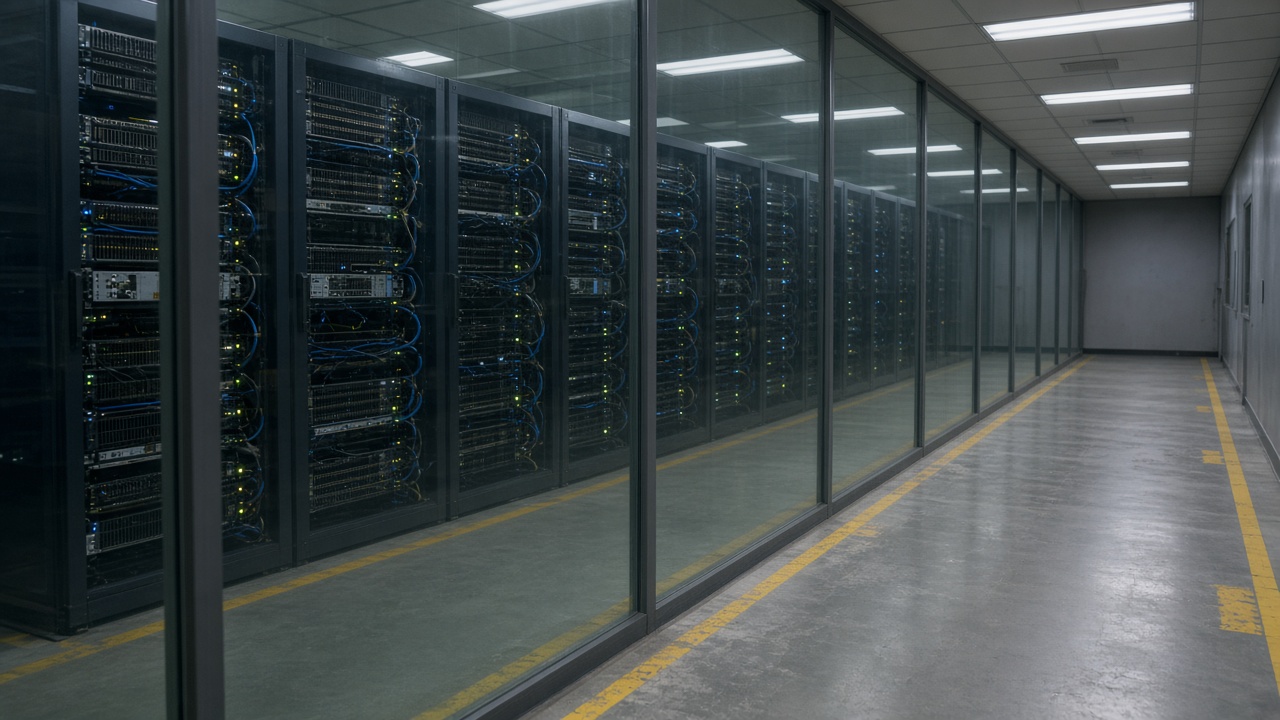
Vouchers redeem at the National Center for High-Performance Computing clusters in Hsinchu and Kaohsiung, plus approved commercial GPU farms that pass NSTC security audits. Teams may not resell hours or route jobs to offshore clouds while claiming the subsidy; telemetry hooks report job metadata to NCHC for aggregate statistics.
Operators must disclose power draw per training run. NSTC will publish a dashboard of kilowatt-hours per trillion tokens trained, a metric climate reviewers asked for after Taipower warned science parks about peak loads during heat waves.
Artifact and evaluation requirements
Grantees commit to releasing model cards in Mandarin listing bias tests on Taiwan-specific entities—place names, legal terms, and indigenous language placeholders—even if weights remain proprietary. Teams pursuing open weights must host checkpoints on NCHC storage for six months and provide inference containers reproducible on voucher hardware.
NSTC embedded a red-team checklist adapted from Taiwan AI Grand Challenge playbooks: jailbreak attempts, election-related prompt suites, and medical advice refusals. Failures do not automatically claw back vouchers but trigger mentorship sessions with evaluators from academia and civil society.
Power and politics
Legislators from both camps supported the voucher expansion as counterweight to U.S. and Chinese foundation models dominating boardrooms. Critics asked whether subsidizing larger models duplicates corporate spending at TSMC suppliers already buying private GPU farms. NSTC responded that vouchers target groups without balance-sheet access—campus labs and seed-stage startups—and require publication of at least one downstream application pilot.
Publishers lobby for royalty pools when copyrighted news archives appear in training mixes. The new guidelines require applicants to list licensing status per corpus; “web scrape” without license is disallowed for commercial release tracks.
What evaluators can check
Auditors can compare NCHC job logs against voucher balances and cross-check energy reports with Taipower feeder data where farms colocate in science parks. Dataset manifests must be hash-stamped so teams cannot silently add sources mid-training without amendment.
What remains opaque is competitive selection weighting: NSTC reviewers score proposals but do not publish rubrics until after awards, a transparency gap open-science advocates want fixed in the third round.
Timeline
Applications close October 31, with awards announced before year-end budgeting. Training windows must finish by June 2027, aligning with campus semesters and giving startups enough runway to seek venture rounds with demonstrable Mandarin benchmarks rather than slide-deck promises.
Campus and startup overlap
National Taiwan University and National Cheng Kung University teams said they will share voucher hours on a single multimodal project, splitting tokenizer work from vision encoders to stay within per-team caps. Startups must disclose any prior venture funding above NT$50 million, a rule added after a well-capitalized spinout nearly consumed the first pool.
NCHC operators warned that queue times lengthen when voucher jobs mix with typhoon-season weather modeling; NSTC said it would reserve overnight windows for long pretraining runs if teams submit schedules two weeks ahead.
Open-source advocates welcomed the model-card rule but asked NSTC to publish failed proposals’ redacted summaries so teams do not repeat the same dataset licensing mistakes—a transparency request the council said it would pilot with volunteer reviewers.
For Taiwan’s Mandarin LLM effort, the voucher is less a moonshot grant than a metered utility bill—paid, logged, and argued over in public hearings.