Rakuten Mobile and KDDI Corporation are negotiating active radio access network sharing on selected towers in rural Hokkaido, according to executives and engineers involved in the talks, as the carriers race to replace wholesale roaming that is scheduled to shrink when their current agreement ends in September 2026.
Roaming wind-down forces a new model
Since 2018 KDDI has carried Rakuten traffic on its au network in gaps where Rakuten’s Open RAN build lagged. The 2023 revision extended roaming through September 2026 but signaled a step-down: Rakuten would lose access in areas where its own coverage is adequate, while sparsely populated regions might keep limited roaming for a defined period. KDDI president Hirokazu Matsuda told investors this summer that discussions continued for “certain rural areas,” without naming prefectures.
People briefed on the Hokkaido talks said both sides now treat pure roaming as a bridge, not a destination. Rakuten pays per gigabyte for au capacity; in northern ski and agriculture corridors the economics favor sharing physical assets—antennas, power, backhaul—while each operator keeps its own core and spectrum licenses.
What RAN sharing would change on the ground
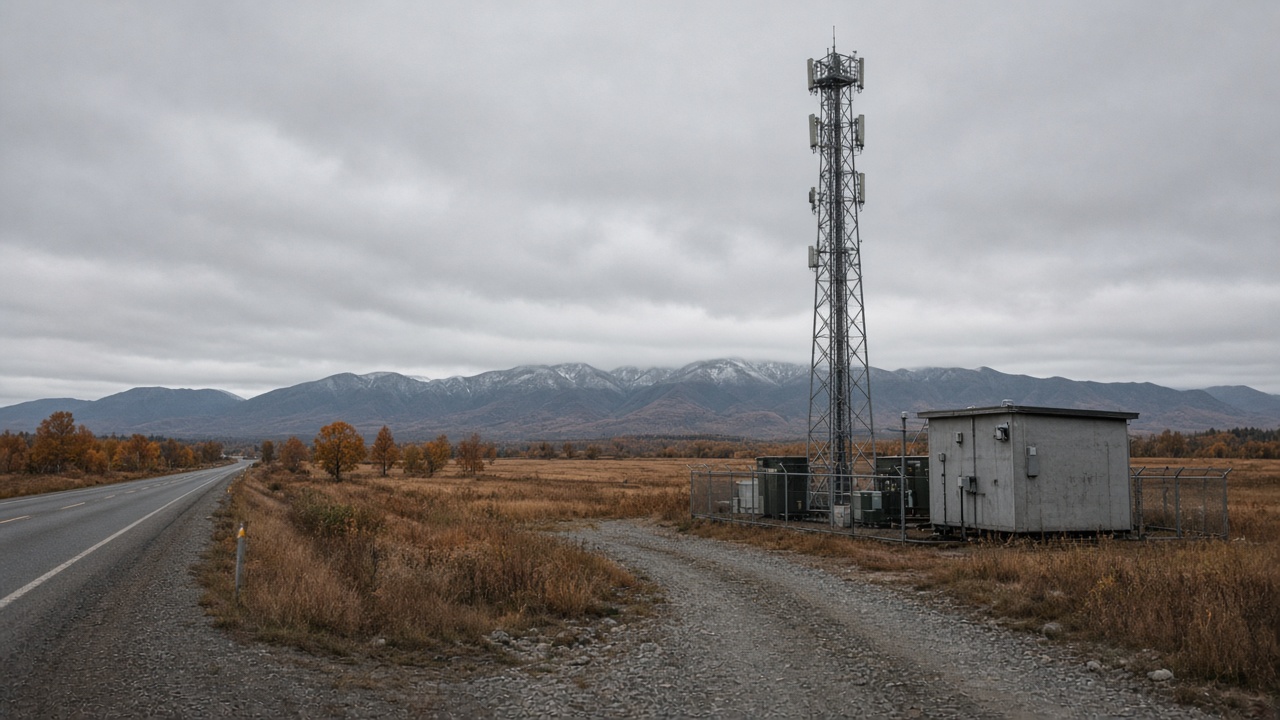
Under the proposal being modeled, KDDI would host Rakuten radios on existing macro sites along Routes 237 and 274 serving Niseko and eastern farmland, while Rakuten contributes maintenance crews it has been building in-house to address Japan’s tower-construction labor shortage. Rakuten Group chief operating officer Kentaro Hyakuno has publicly described bringing construction processes internal to accelerate rollout; Hokkaido is a test case because terrain and weather stretch deployment timelines.
Engineers emphasized that shared RAN is not MVNO-style resale. Each carrier would run its own baseband and SIM authentication path; only the tower compound and fronthaul are mutualized. That distinction matters for regulators reviewing fair competition and for Rakuten’s narrative as Japan’s fourth facilities-based operator.
Hokkaido-specific pressures
Hokkaido’s population density drops sharply outside Sapporo and Asahikawa. Tourist surges during Silver Week and early ski season expose coverage holes that are expensive to fill with standalone Rakuten sites. KDDI, meanwhile, wants to repurpose 4G assets toward 5G standalone upgrades without stranding au subscribers who share mountain routes with Rakuten users.
Local government officials in Kushiro and Abashiri have pressed both carriers to stabilize service along fishing and logistics corridors where dropped handoffs affect fleet dispatch apps. A shared-tower framework could speed permits because municipalities prefer one compound upgrade instead of duplicative construction.
Open RAN and vendor politics
Rakuten’s network relies heavily on virtualized Open RAN suppliers; KDDI’s rural footprint mixes traditional vendors. Technical workshops this month focused on interference budgets and alarm segregation when two radio lines share a mast. Neither carrier has committed to a multi-operator RAN software stack; interim designs assume separate radio units on the same structure, similar to earlier utility-pole sharing trials TEPCO and Japanese carriers explored ahead of 5G.
Rakuten’s U.S. technology partners watch the talks because a Hokkaido template could replicate in Tohoku if successful. KDDI investors, meanwhile, want assurance that aiding Rakuten does not degrade au quality-of-service metrics used in premium pricing.
Timeline and fallback
Negotiators aim to initial a memorandum before October so field teams can prioritize sites ahead of winter maintenance windows. If talks stall, Rakuten would fall back to extended roaming on fewer Hokkaido routes—likely the pattern KDDI’s CFO Nanae Saishoji described as cooperation “for a certain period” in rural areas—or accelerate standalone builds with higher capital spending.
Wholesale analysts tracking Rakuten’s mobile unit said a Hokkaido sharing pact could trim annual roaming outlays by high single-digit billions of yen if extended across Tohoku, though neither carrier has published models. Rakuten Mobile’s parent still carries debt from the original network build; any capital saved on rural steel tends to flow to marketing and customer acquisition in urban zones rather than dividend relief.
For subscribers the visible outcome is simpler: fewer dead zones on highway drives between eastern Hokkaido cities. For the industry, a signed RAN-sharing deal would signal that Japan’s fourth carrier and its oldest rival can cooperate on steel in the ground even as they compete on price plans in Tokyo and Osaka.