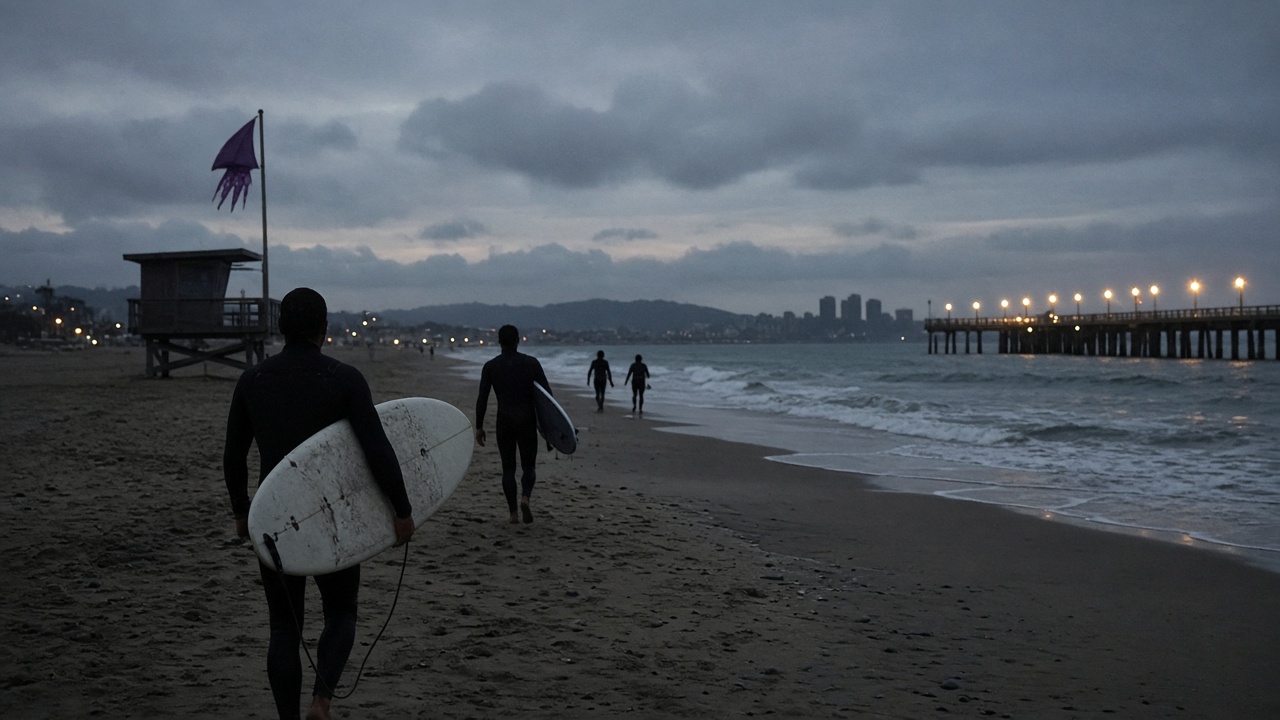
Busan’s dawn surf clubs started routing jellyfish bloom SMS alerts through group chats this week, pairing municipal texts with volunteer spotters before 5:30 a.m. paddle-outs at Haeundae and Gwangalli when autumn plankton surges follow monsoon runoff.
How the texts work
Busan Metropolitan City sends Korean-language bloom notices when beach managers report above-threshold gelatinous zooplankton near buoys. Surfers who register mobile numbers on the city beach portal receive codes by beach segment—Haeundae 1–4, Gwangalli A–C—so riders know which break to skip. Messages link to a simple traffic-light map updated hourly, not a forecasting model; lifeguards still raise purple flags when stings send swimmers to first-aid tents.
Club admins forward SMS screenshots to KakaoTalk threads with timestamp annotations because city servers sometimes batch-send after spot checks finish. Paddle-board instructors require members to acknowledge alerts before renting boards; refusal means no launch, a rule adopted after a July sting cluster sent three tourists to Haeundae Hospital allergy desks.
What changed in the water this week
Korea Institute of Ocean Science and Technology sampling near Busan showed elevated Aurelia-class blooms after September river plumes lowered salinity at the surface. Stings remain mostly irritating, but surf wax and wetsuit rinses cannot remove nematocysts trapped under rash guards. Dawn sessions favor glassy waves but also coincide with offshore winds that concentrate jellies against groins—exactly where longboarders sit waiting for set waves.
Surfers track moon phases informally; clubs note that bloom SMS often spike two days after warm rain, a pattern matching municipal logs published since 2024.
Cost and household labor
Membership fees cover vinegar spray bottles and portable showers installed outside club storage containers; city texts are free but push surfers to upgrade phone plans with pre-dawn data for map refreshes. Parents who drive teenagers to dawn sessions sleep in cars; a false-negative text means wasted parking fees and groggy school days—a social cost clubs weigh when deciding to cancel outright versus shifting to Songjeong breaks outside the alert zone.
Hot shower tokens at public bathhouses jump after stingy mornings; clubs budget KRW 2,000 stipends for members who end sessions early to hose off on-site rather than tracking salt into apartment elevators.
Limits of SMS
Texts lag visual spotting when wind shifts mid-session; surfers still paddle in pairs with whistle signals if jellies drift inside lineup perimeters. The city cautions that SMS is advisory, not liability protection for rental shops. Foreign visitors can register with passport numbers on the beach portal, but English push notifications remain partial; clubs assign bilingual members to translate during holiday weeks.
After Chuseok, surf associations will ask Busan to add RSS feeds for smartwatch apps, reducing phone glare on dark beaches. Until then, dawn paddlers treat bloom SMS like tide tables: check twice, launch once, keep vinegar within arm’s reach.