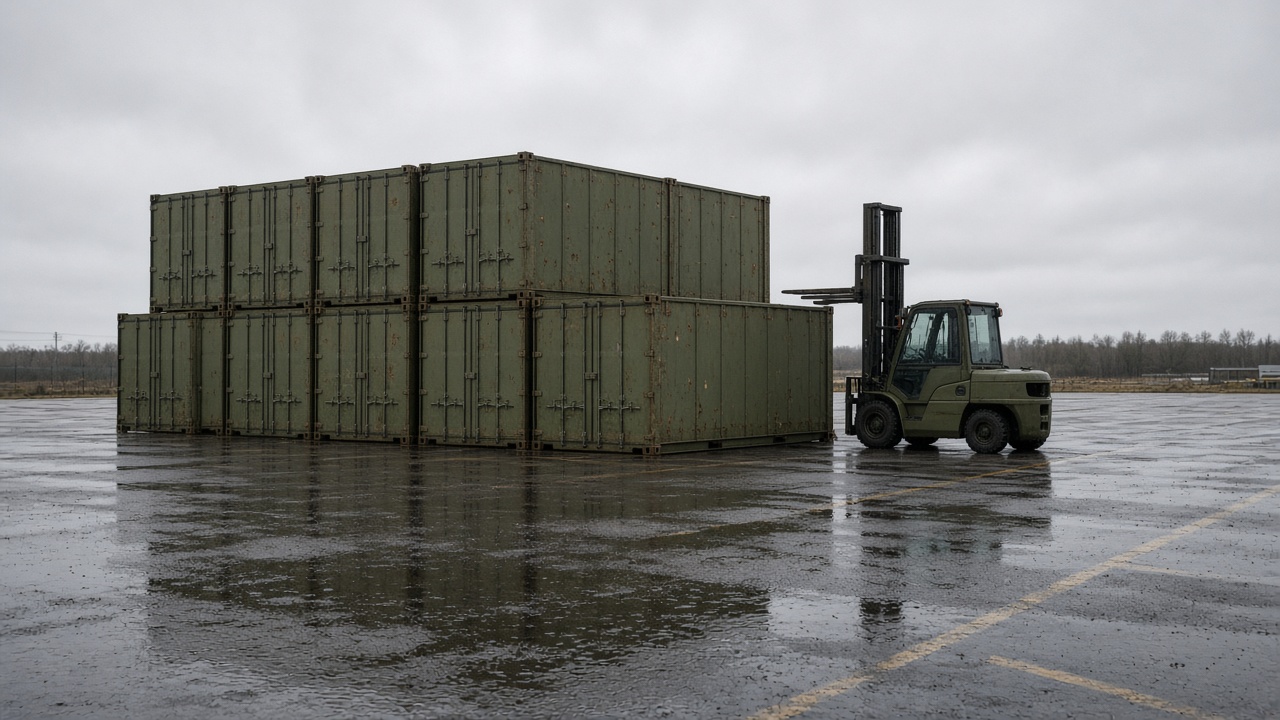
Faculty AI secured a two-year Ministry of Defence contract worth up to £18 million to forecast spare parts, fuel, and ration usage across UK bases, replacing spreadsheet models that planners said collapsed during a joint exercise in Estonia last spring, according to a contract award notice and a redacted statement of requirements published on the MOD contracts portal.
What broke before
Logistics officers at RAF Brize Norton and Army garrisons in Salisbury Plain relied on legacy Excel macros that ingested delivery notes weekly. When NATO’s Steadfast Defender rotation surged troop movements through Baltic ports, lead times on vehicle tracks and medical freezers diverged from forecasts by more than thirty percent. The National Audit Office had flagged similar fragility in prior reports on defence inventory, though auditors did not name Faculty in those findings.
Faculty’s pitch combines time-series models with weather and training-calendar features—inputs that spreadsheets treated as footnotes. The system must run in MOD-approved cloud regions with air-gapped fallbacks when classified annexes attach to orders.
Scope and data
The first deployment covers sixteen home bases plus two joint logistics nodes in Germany that supply British units. Feeds include historic consumption, supplier SLA breaches, and port congestion indices from commercial data vendors already cleared for MOD use. Personal data on individual soldiers is explicitly out of scope; forecasts operate at unit and SKU level.
Faculty must publish model cards describing confidence intervals when recommending emergency airlifts versus road convoys. Commanders retain override authority; the AI issues recommendations, not autonomous purchase orders, a line MOD lawyers repeated in briefing slides after parliamentary questions on autonomous weapons.
UK AI governance
The award lands under the Defence Artificial Intelligence Strategy, which promises human-in-the-loop for logistics even as strike systems face stricter review. The Ada Lovelace Institute asked whether vendor concentration in London AI shops creates single points of failure; MOD responded that competitive tenders included two other bidders whose scores fell on integration timelines, not ethics reviews.
Faculty previously worked on NHS demand forecasting during the pandemic; unions cited that track record when demanding transparency on error rates that might leave bases short of winter heating fuel. The company committed to quarterly dashboards for base commanders, not just headquarters analysts in Whitehall.
Security and sovereignty
Model training happens in UK South data centres with encryption keys held by MOD. Faculty cannot reuse fine-tuned weights on commercial clients without written consent—a clause defence suppliers increasingly demand after US cloud leaks made headlines. Cyber Command will red-team API endpoints that ingest supplier feeds; phishing against logistics clerks remains the likelier attack path.
Smaller bases in Scotland and Wales worried headquarters would optimise for England-heavy exercises. MOD’s statement of requirements mandates regional weighting so Highland training cycles do not starve spare tyre stocks in Plymouth.
What changes on the ground
Quartermasters will see tablet dashboards replacing emailed CSVs every Monday. When forecasts miss, users must log override reasons so auditors can retrain models instead of blaming “the algorithm” in silence. Catering contractors said ration forecasts could reduce food waste if freezers stop overstocking before quiet weekends—a mundane win commanders mention when justifying AI spend to Treasury.
Union representatives for civilian MOD workers asked for training on interpreting uncertainty bands; Faculty pledged onsite workshops before go-live at Brize Norton in November.
Risks ahead
Supply shocks from Red Sea routing still lie outside historical training data; Faculty warned that black-swan events require manual buffers the model cannot invent. MPs on the Defence Committee requested a six-month progress hearing with published error metrics, echoing NAO recommendations on measurable outcomes rather than vendor slide decks.
If forecasts stabilize exercise planning, MOD may extend the framework to naval stores in Portsmouth. For now, the contract is a test of whether British AI vendors can ship operational value without the procurement delays that plagued earlier ERP replacements—and whether bases trust software more than the sergeant major’s notebook when trucks are due at dawn.