
AI
Burnham Signals G20 AI Safety Push as Security Institute Tests Stay Voluntary
Andy Burnham told Labour conference listeners he will put AI safety on the G20 agenda while the UK Security Institute still relies on voluntary frontier-model testing.
House byline
AI correspondent
Owen Griffiths is a house byline for InfoHandle’s AI desk.
Andy Burnham told Labour conference listeners he will put AI safety on the G20 agenda while the UK Security Institute still relies on voluntary frontier-model testing.

The Bank of England’s July Financial Stability Report warned that rapid frontier-AI adoption is amplifying cyber and operational risks across UK banks and market infrastructures.

Shadow health secretary Damian Hinds told the Conservative conference the NHS should adopt AI only with frontline clinicians setting guardrails, citing the abandoned National Programme for IT as a cautionary tale.
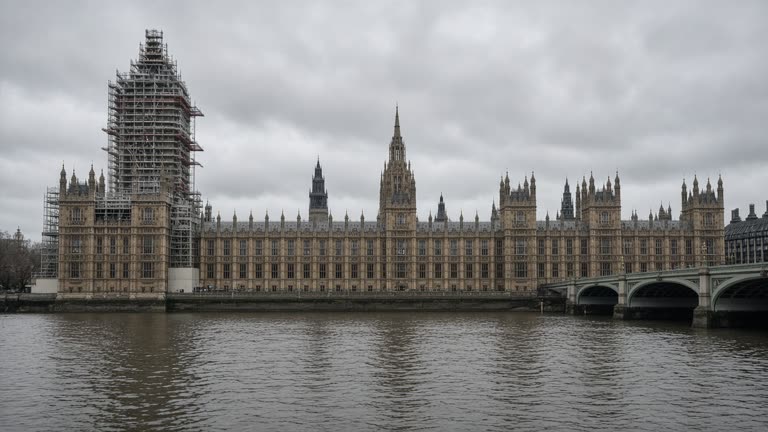
The Joint Committee on Human Rights gave ministers until mid-November to respond to its call for mandatory pre-release testing of powerful AI models by the AISI.

Cohere has opened a fine-tuning pod in Canary Wharf for Lloyd's syndicate underwriters, letting London market firms train domain-specific assistants on claims text without shipping sensitive documents to generic public models.

Oxford's Institute for Ethics in AI hosts a Monday summit on embedding human rights in governance frameworks as Whitehall splits AI safety and industry policy.

The Information Commissioner's Office told UK employers they must log prompts, outputs and human review steps when staff use generative AI on personal data from 31 October.

The UK AI Safety Institute ran open-weights language models through banking-themed stress prompts as the Financial Conduct Authority asked lenders how third-party AI vendors are audited before customer-facing deployment.

The Department for Science, Innovation and Technology named five firms for the second tranche of AI compute credits after September benchmark tests on national GPU clusters.

Guidance tied to the AI Risk Management Toolkit gives departments five-point likelihood and impact scales, Orange Book risk language, and a monitoring dashboard as AI minister Kanishka Narayan’s taskforce absorbs the AI Security Institute.
Ofcom told broadband and mobile providers they cannot use AI chatbots to block access to mandatory human complaint channels, citing General Condition C4 as chatbot use reaches one in four UK adults online.

AI minister Kanishka Narayan arrives at Labour's Liverpool conference with civil servants still mapping which teams move to the Cabinet Office after Andy Burnham abolished DSIT.

Pre-release testing for frontier models has quietly stalled after DSIT was broken up in Andy Burnham's Whitehall reorganisation. Labs and buyers want statutory rules; this month, UK regulation asks nothing new of them before a model ships.

Lloyds is testing internal large language models over risk documentation in its corporate and institutional arm, built on a summarisation pattern the group already runs in production for fraud and dispute calls. The regulatory question is narrower than the technology: what was evaluated, by whom, and can a supervisor follow the trail from the summary back to the file.

Ofcom is running closed autumn 2026 engagements on how telecoms operators use AI for cyber defence, testing whether Telecommunications (Security) Act and NIS rules unintentionally block useful tools—with findings due early 2027.

Google DeepMind and Isomorphic Labs opened a King's Cross drug-discovery bench tied to a narrow NHS England data pact for de-identified oncology pathways, with MHRA and National Data Guardian sign-off on scope and no direct patient identifiers.
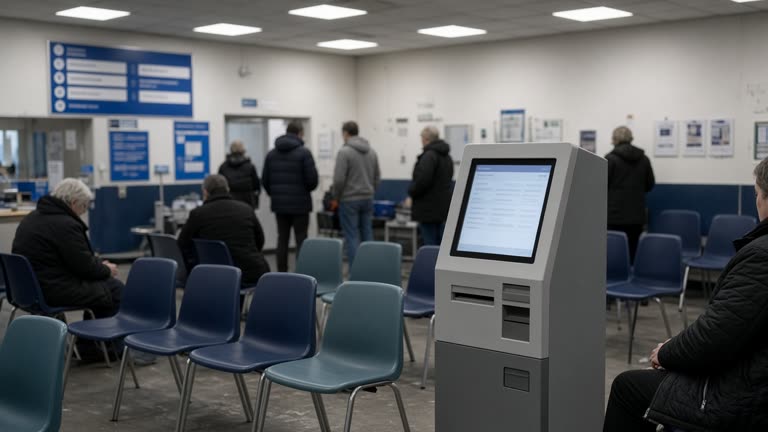
NHS England widened waiting-room AI triage pilots to five hospital trusts after early data showed kiosk assessments shortened clerk time without routing stable patients into the wrong acuity track, subject to MHRA software scrutiny.
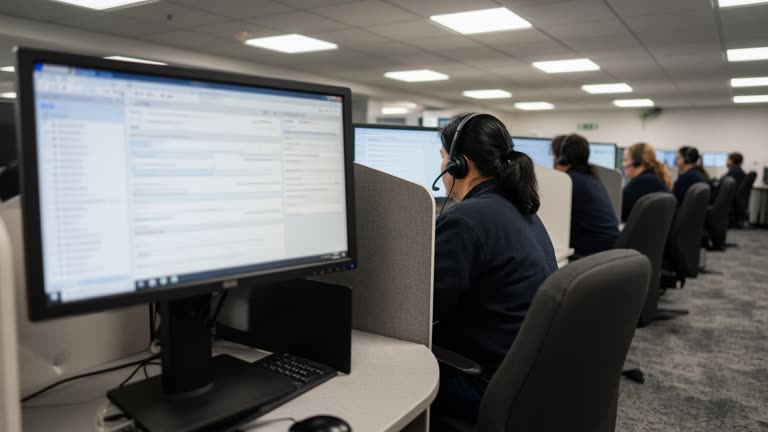
NHS England expanded a pilot where large language models draft triage summaries for NHS 111 call handlers in two regions, with clinicians signing off before patients receive callback instructions.

The UK AI Safety Institute released evaluation summaries for three frontier models and told departments how to embed those scores in enterprise procurement before Christmas framework renewals.
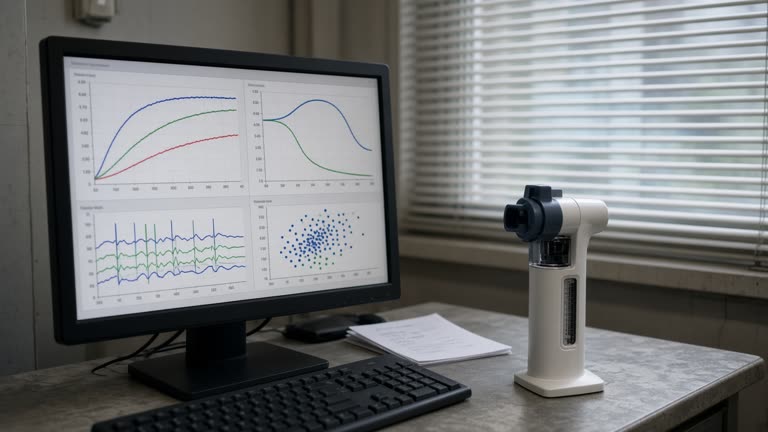
Huma Therapeutics has rolled remote asthma spirometry dashboards from its White City lab into NHS integrated care board pilots, pairing home peak-flow uploads with clinician triage views audited for MHRA software-as-a-medical-device pathways.

Wayve’s Camden autonomous bus pilots have begun logging fall fog interruption thresholds for TfL, recording when embodied-AI perception hands back to safety drivers as moisture and street glare breach confidence bands on north London test loops.

Microsoft UK widened EU Data Boundary controls to NHS trust staff Microsoft 365 tenants running Copilot, letting clinical administrators use summarisation without patient identifiers leaving UK processing enclaves.

Cohere’s London team began piloting on-premises legal embedding models for a Magic Circle alumni firm that wants semantic search across seven decades of matter files without shipping text to US cloud regions.

Faculty AI won a two-year Ministry of Defence contract to forecast spare parts and ration usage across UK bases, replacing spreadsheet models that failed during joint exercises in Estonia.

Google DeepMind’s London team released an open toolkit that embeds watermark tags in synthetic images and audio, pitching UK newsrooms on provenance checks ahead of Online Safety Act duties on misleading content.

Sage is switching on AI-assisted invoice matching for UK accountancy practices using its cloud ledger, promising to flag duplicate VAT lines before they reach HMRC’s Making Tax Digital pipelines.
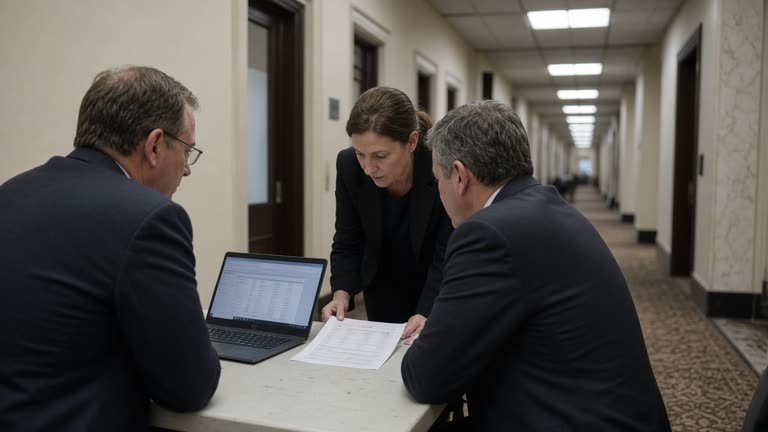
Cabinet Office guidance now requires departments to submit generative chatbot renewals to the AI Safety Institute for pre-deployment checks before signing extensions worth more than £500,000.