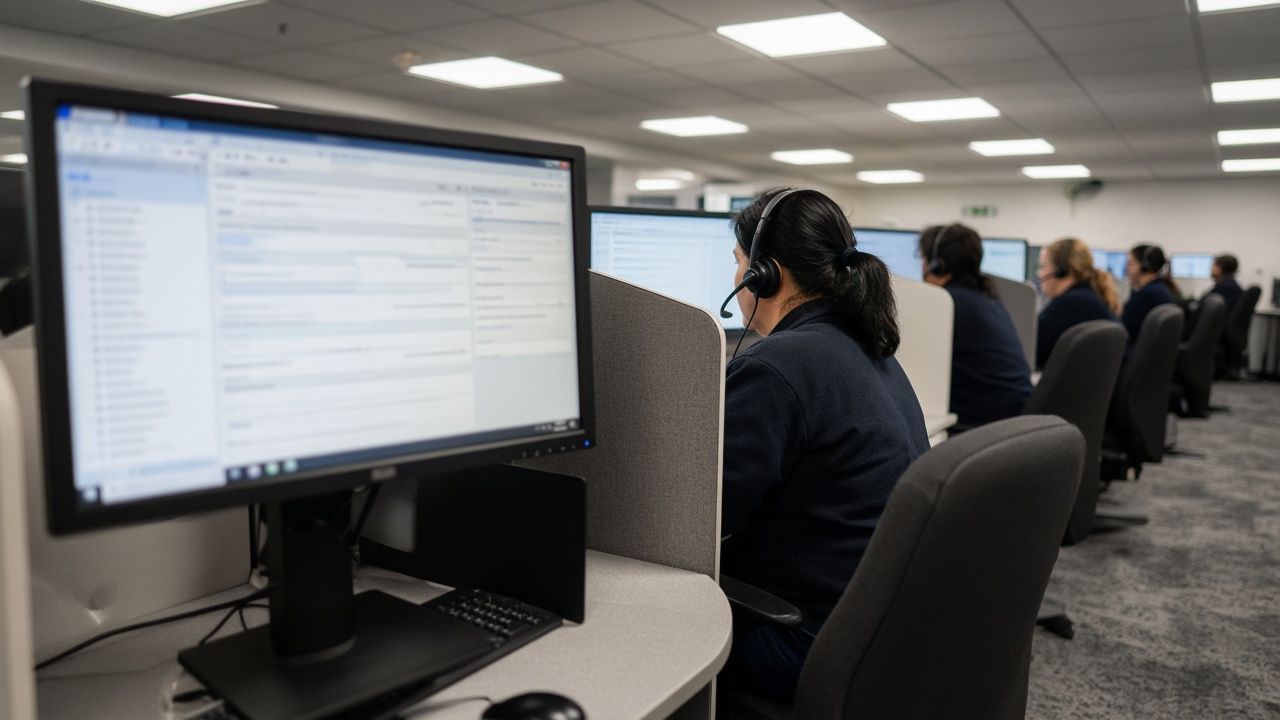
NHS England widened a controlled pilot Monday in which a large language model drafts structured triage summaries for NHS 111 call handlers in the North East and West Midlands, with a clinician reviewing every summary before the patient hears callback or ambulance instructions, according to an operational safety case and trainer script reviewed by InfoHandle. The model does not pick disposition codes on its own—it compresses free-text symptom narratives into headings aligned with NHS Pathways language so handlers spend less time retyping while patients repeat fever spikes and medication names.
Where the model sits in the call
When a caller finishes the initial questionnaire, audio and chat transcripts feed a hosted inference endpoint on NHS-approved infrastructure. The model returns a draft summary: onset timing, red-flag symptoms mentioned, and contraindications the handler must confirm aloud. Handlers see the draft beside the official Pathways tree; they cannot send outcomes until a nurse or paramedic supervisor clicks approve. Latency targets are under eight seconds; if the model times out, handlers fall back to manual notes—Monday’s memo said timeout rates averaged four percent in August shadow mode.
Why 111 and not A&E triage
111 carries high volume, lower acuity variance than ambulance dispatch, and already documents every keystroke for CQC. That audit trail lets NHS England compare summary quality before and after model assist. Emergency departments were excluded because medico-legal risk spikes when seconds matter; 111 callbacks tolerate brief review delays if supervisors are staffed—which is the pinch point unions flagged.
NICE has not issued new clinical guidance for LLM assist; the pilot sits under existing digital clinical safety standards with a named responsible officer per region. Patient consent messaging at call opening now mentions automated drafting; callers may opt to human-only notes, though uptake of opt-out has been under two percent in shadow data.
Workforce and training
Health Education England modules added a ninety-minute block on verifying model summaries—handlers are taught to challenge hallucinated drug allergies. UNISON reps in one West Midlands hub asked for workload credits when approvals queue; NHS England offered temporary supervisor overtime rather than permanent headcount, a tension likely to resurface in winter pressure.
Data handling
Transcripts stay in UK regions with no training on live calls; vendor weights are frozen releases evaluated by NHS Digital assurance. Identifiers are stripped from logs used for quality improvement after 72 hours unless a patient complaint extends retention. That policy is stricter than some commercial medical scribes marketing to GP practices.
What patients should notice
Shorter repeat questions and faster callback scheduling if supervisors keep pace—not a different clinical answer. If the model misheard a symptom, the human still owns the record; patients should correct handlers explicitly. CQC will inspect documentation trails in November; public reporting on approval times is promised for January.
Winter pressure planning
NHS England’s winter resilience deck slots the pilot into surge planning because respiratory calls spike when schools return; model assist is meant to free handler minutes, not reduce headcount. If flu and COVID queries climb, supervisors may batch-approve similar summaries—a risk clinicians flagged in the safety case, which caps batch size at five before mandatory re-read. Digital triage for 111 online journeys remains separate; this pilot is voice and chat only.
Integrated care boards in the pilot regions must fund supervisor overtime from existing digital transformation envelopes, not new Treasury lines—a political choice that could squeeze expansion if ICB deficits widen in Q3 accounts.
Equality and access
Patient groups asked whether Welsh-language callers get summaries drafted in Welsh; the pilot defaults to English drafts with manual translation by handlers where bilingual staff are on shift. NHS England said full Welsh inference is a later tranche pending AISI-style bias checks on devolved health terminology.
Scale beyond two regions awaits those metrics. For now, NHS 111 in the North East and West Midlands runs LLM-drafted summaries under mandatory clinician sign-off—a narrow automation bet on documentation time, not autonomous triage.