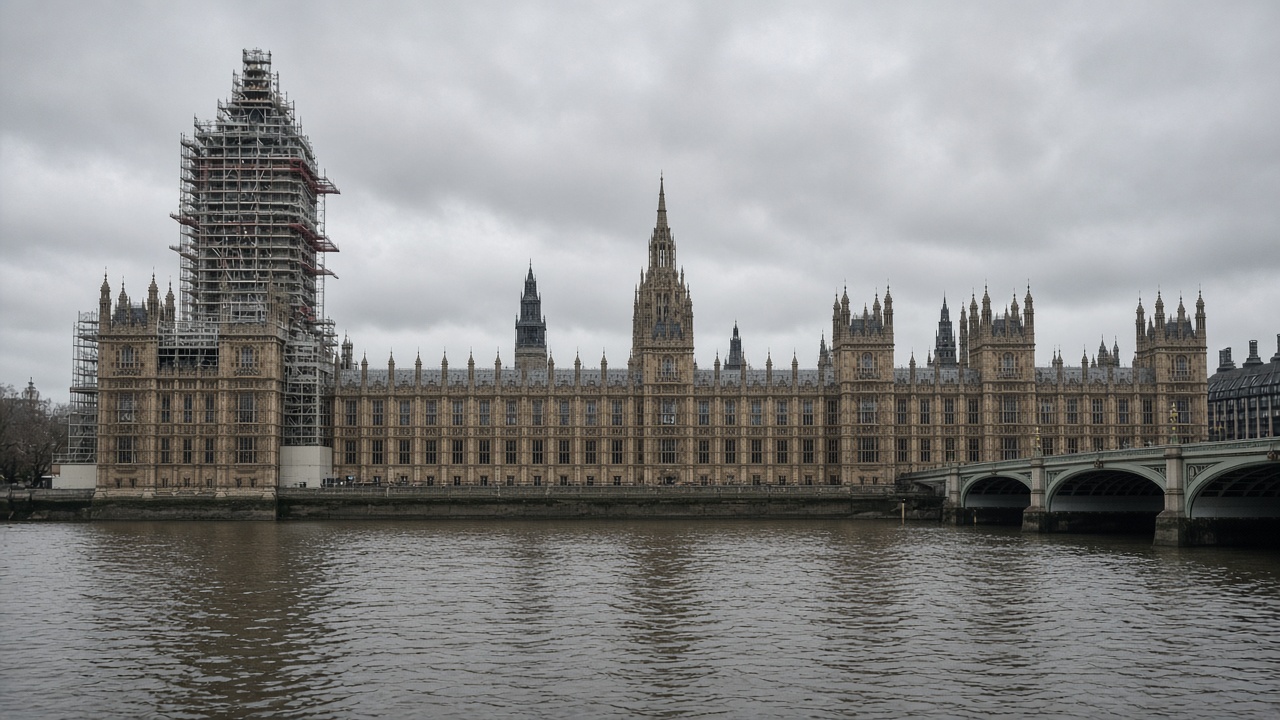
The Joint Committee on Human Rights gave the government a mid-November deadline to answer its September report urging statutory powers for the AI Security Institute to review powerful models before public release.
Committee chair statements published with report HC 160 ask ministers to introduce the promised AI Bill, place AISI on a legal footing and require developers to submit new foundation models—including technical specifications and safety testing evidence—for evaluation ahead of launch. The recommendations are not binding, but they reset the parliamentary clock on a manifesto pledge that has slipped since the 2024 King's Speech.
What compulsory testing would entail
The committee envisages AISI publishing findings before models ship and issuing preliminary warnings when evaluations uncover human-rights risks. A new statutory oversight body could block deployments or order withdrawals if significant harms are identified, including for services operated from outside the UK but reaching British users.
Industry groups at the Labour conference in Liverpool said they still hear mixed signals from ministers. Science and technology minister Kanishka Narayan argued Britain should prioritise building domestic capability and convening international safety standards, especially with the UK preparing to chair the G20, while stopping short of committing to immediate legislation.
How this fits existing UK rules
Separately, ICO obligations under the Data Protection Act now require a code of practice on AI and automated decision-making that took effect in May. Ofcom is also publishing Online Safety guidance on AI moderation. None of that replaces sector-specific financial or medical rules, but it shows regulators moving while primary AI legislation stalls.
The House of Commons Library notes the UK still lacks AI-specific statute covering the technology as a whole, relying instead on context-based enforcement by existing regulators. The JCHR report argues that patchwork leaves rights protections trailing model capabilities, particularly for biometric surveillance and large language models used in public services.
What happens before the reply
Government whips have roughly two months from publication to file a formal response. Backbenchers on both sides expect AISI funding and staffing to feature in pre-Budget debates, especially after front-page coverage of long gilt yields squeezing fiscal headroom. AI safety campaigners will treat silence past the deadline as a political choice rather than a technical delay.
For developers with UK headquarters or major research offices, the practical question is whether voluntary engagement with AISI today becomes a legal submission requirement tomorrow. Lawyers advising labs said clients should document testing pipelines now so a future statutory duty does not force a retroactive paper chase.
International labs and extraterritorial reach
Silicon Valley firms with London safety offices already share voluntary evaluations with AISI, but general counsel cautioned that mandatory submission could collide with U.S. export-control rules on model weights. The committee's proposal to restrict UK deployment of foreign-built systems would force multinational product teams to segment releases by jurisdiction, increasing engineering overhead.
Civil-society witnesses told MPs that biometric surveillance in public spaces remains a flashpoint even if frontier-model testing advances. Any AI Bill will likely face amendments on police use of live facial recognition, showing how human-rights scrutiny extends beyond chatbots to hardware on high streets.
Universities hosting AISI secondments want clarity on whether academic research models would fall inside mandatory testing thresholds or remain exempt when not deployed commercially. Graduate recruitment fairs this autumn featured safety roles as a growth area, reflecting student demand for ethics-heavy AI careers.