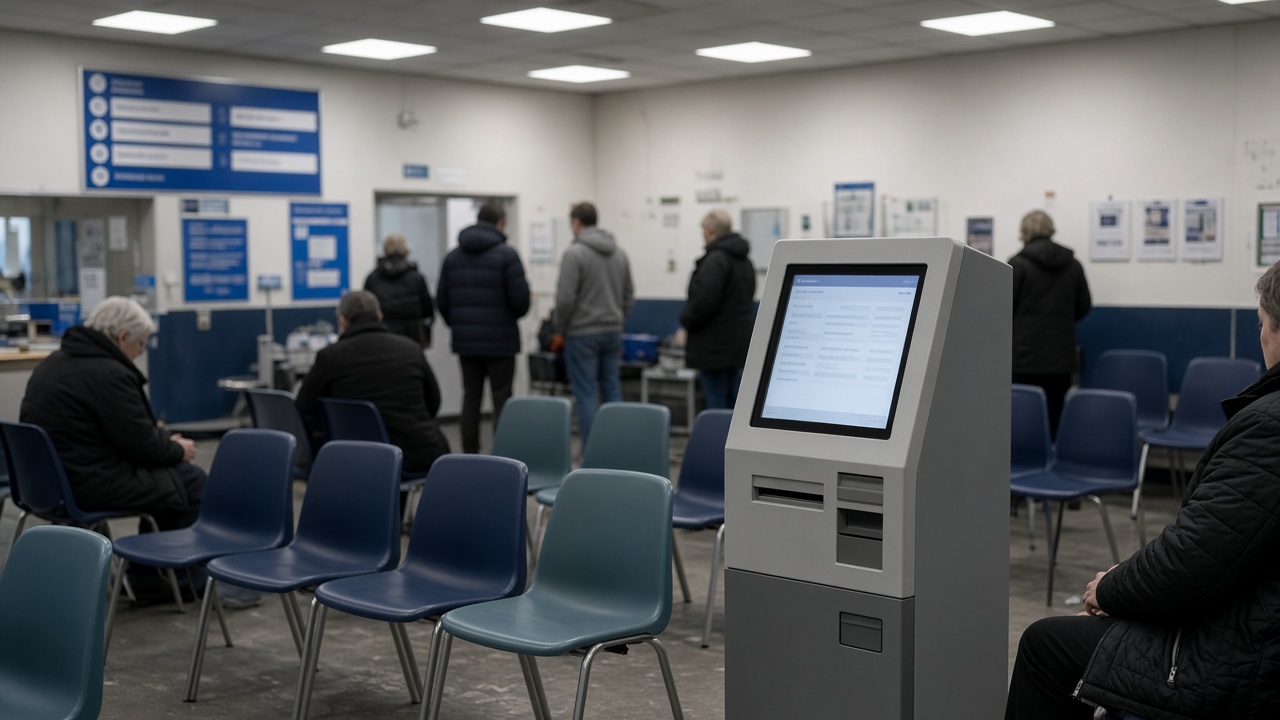
NHS England expanded waiting-room AI triage pilots to five acute trusts Tuesday after a spring evaluation at two sites found kiosk-led symptom checks cut average clerk interview time by roughly four minutes per arrival without shifting stable patients into higher-acuity queues, according to a programme bulletin and trust operations note reviewed by InfoHandle. The rollout covers Frimley Health, Leeds Teaching Hospitals, University Hospitals Plymouth, Sandwell and West Birmingham, and East Suffolk and North Essex—each adding supervised tablets or freestanding kiosks that feed structured summaries into existing emergency department tracking systems rather than auto-assigning treatment bays.
How the workflow differs from phone triage
Patients who can use screens answer adaptive questionnaires mapped to Manchester Triage System categories; the model highlights red-flag chest pain, stroke face-arm-speech prompts, and pregnancy complications for immediate clinician review. A band 2 nurse still confirms vitals and overrides the software when presentation does not match text answers. The AI vendor, not named in the public bulletin, holds UKCA-marked classification as a decision-support tool, not autonomous diagnosis.
Pilots log every override with reason codes so clinical governance committees can audit drift. Early data showed override rates near eleven percent, mostly elderly patients who under-reported pain scores on touch keyboards—kiosks now default to nurse-led interviews above age seventy-five unless patients opt in.
Why waiting rooms, not ambulances
Trusts wanted relief at the front door where walk-ins spike after GP out-of-hours services close, not in ambulance handover bays where paramedic narratives already carry structured data. Waiting-room kiosks cannot see cyanosis or sweating; programme leads were explicit that the tool compresses clerical history-taking, not physical exam. CQC observers in Plymouth noted improved visibility of pending nurse reviews because dashboards show kiosk completion timestamps.
Leeds added bilingual Welsh-English prompts at a Frimley satellite site for border commuters; Sandwell included Urdu audio for a high-volume demographic in its catchment. Accessibility advocates asked for headphone jacks; two trusts delayed go-live a week to install sanitary wipe dispensers beside screens post-FOI pressure on infection control.
Regulatory and safety guardrails
MHRA reminded sponsors that software updates require change-control notices if symptom ontologies shift. NHS England’s digital clinical safety officers run weekly incident triage; no serious harm events were logged in the spring cohort, though one patient with atypical appendicitis presentation was up-triaged after nurse exam—the kiosk had scored moderate pain only. That case sits in the lesson-learned pack trusts must read before switch-on.
NICE’s evidence standards framework sets the evidentiary bar for scaling beyond pilots; independent economists have not yet signed off cost-per-minute savings once hardware leases and cleaning contracts are included. Trade unions representing reception staff want redeployment guarantees, not silent job cuts; NHS England said clerks shift to wayfinding and safeguarding watches while kiosks run.
Data and privacy
Summary records land in trust-held electronic patient records; no secondary research use without explicit consent. DPIAs note CCTV overlap in waiting rooms—patients who decline screens can use paper forms without penalty. National Data Guardian staff joined a review of whether kiosk IP addresses could re-identify domestic violence attendees; Plymouth routes high-risk domestic flags straight to nurse call rather than displaying on public queue boards.
Performance metrics trusts will watch
Programme dashboards track time-to-triage-nurse, not overall four-hour standard performance yet—leaders warned journalists not to expect instant breach reductions. Sandwell will compare left-without-being-seen rates against last autumn’s RSV surge baseline; East Suffolk linked kiosk use to maritime worker injury patterns when ferry crews present in clusters.
Frimley plans a December readout for integrated care boards considering borough-wide procurement. Competitors including established ED software vendors and newer LLM entrants lobby for open APIs so kiosks are not locked to one supplier; NHS England’s bulletin says procurement frameworks open in 2027 if safety metrics hold.
Patient experience
Healthwatch volunteers in Leeds reported mixed comfort—teenagers preferred screens, some older adults felt rushed by countdown timers that were later disabled. Trust communications teams removed language implying “AI doctor” from posters after complaints; current copy says “digital check-in assistant.”
For patients walking into the five trusts, the practical change is more kiosks supervised by nurses who still set acuity, four minutes on average returned to clerk capacity in early data, and MHRA oversight on any algorithm update—not a robot assigning beds, but a structured front door during another winter pressure season.