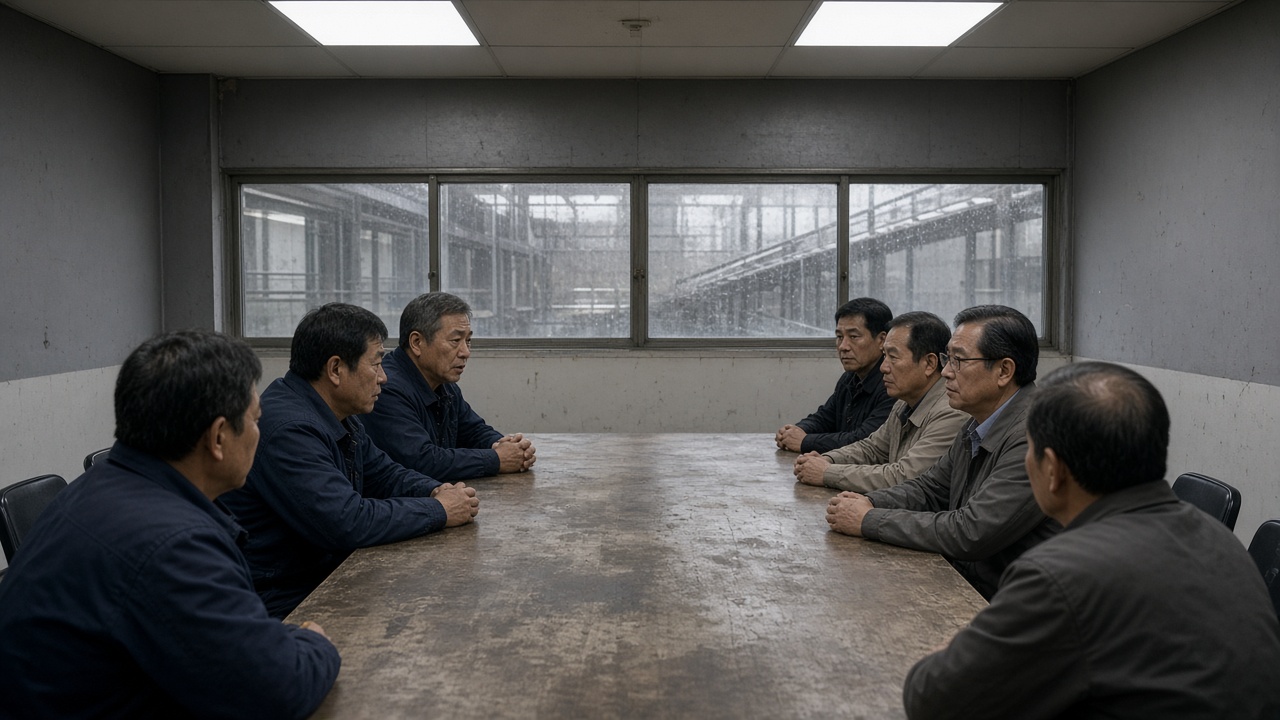
Hyundai Motor Co.’s unionized workforce returned to the wage table at Ulsan on Thursday, less than two weeks before the automaker’s scheduled Chuseok production shutdown, to nail down how this year’s pay package will flow through holiday overtime and subcontractor pass-through clauses. Management framed the session as a housekeeping round; shop-floor leaders said anything short of written guarantees on bonus instalments would leave members working maintenance shifts without clarity on what counts toward the 450 percent performance pool ratified earlier in September.
What the company put on the record
Hyundai Motor confirmed that negotiators met in the Donghaeng room at the Ulsan complex, the same venue that produced the tentative wage accord after more than 20 rounds and a rare partial strike. The agreement already on file with the Ministry of Employment and Labor includes a 100,000-won monthly base increase, cash incentives totaling 15.8 million won, stock grants, and traditional-market gift certificates. What remains unsettled for the pre-holiday window is the timetable for paying the performance component and whether temporary workers on line-support contracts receive the same holiday premium multipliers as direct hires.
President Lee Dong-seok’s team told reporters the talks are “administrative,” not a reopening of base pay. Union chapter officials countered that without a side letter, Hyundai’s listed affiliate suppliers could treat the shutdown as unpaid idle time, shifting cost onto smaller tiers that feed the group’s export numbers. Minseo Park’s desk review of recent disclosure filings shows Hyundai Motor has not posted a separate material event on the Korea Exchange for these sessions, implying any binding change would still route through the union ballot process rather than a same-day board resolution.
Chuseok shutdown math
The automaker traditionally idles final assembly for roughly five to seven days around Chuseok while keeping skeleton crews for paint curing and battery logistics. This year’s calendar compresses shipping deadlines for hybrid sport-utility models bound for North America, raising the premium on who works which shift. Union negotiators are seeking a written multiplier table: double pay for voluntary holiday maintenance, treble for unplanned call-ins, and explicit language that absentee penalties cannot apply during government-designated holiday eve closures.
Subcontractors inside the gate—tooling, cafeteria, and in-house logistics—are not covered by the master agreement. Hyundai Motor’s labor relations office said it would “encourage” tier-one partners to mirror the bonus schedule, but stopped short of committing group funds to make up gaps. That gap matters for investors because labor peace at the parent does not automatically translate to peace across the 47,000-worker Ulsan ecosystem cited in union headcount filings.
Retirement age deferred, not forgotten
The ratified deal kicked the retirement-age extension demand to next year’s bargaining cycle, yet pre-holiday meetings still drew older members asking for interim protections. Management reiterated that the current continued-employment system—one year of post-60 work where eligible—remains unchanged through December. Union elders want a moratorium on layoffs targeting senior inspectors during the shutdown, citing quality audits scheduled for export certification.
Analysts covering Hyundai Motor on the Kospi said the market has already priced the wage envelope; what could move the stock in the next fortnight is any hint of production slippage if maintenance crews slow-walk overtime sign-ups. Export data for August showed Ulsan-built Tucson and Santa Fe units rising sequentially, giving management leverage to argue the package is generous relative to volume.
What happens before lines go quiet
Both sides scheduled a follow-up session for Monday, with a target of signing a holiday appendix before the union’s Chuseok pilgrimage leave begins. If the appendix fails, the union warned of informational pickets at plant gates—not a strike, but enough friction to delay truck loading during peak gift-season demand.
For the board, the priority is preserving the narrative that 2026 bargaining closed without a prolonged stoppage after the seven-year strike gap. For members, the priority is cash in account before family travel. The wage table reopened because those two timelines diverge whenever a national holiday sits between signature and payout.