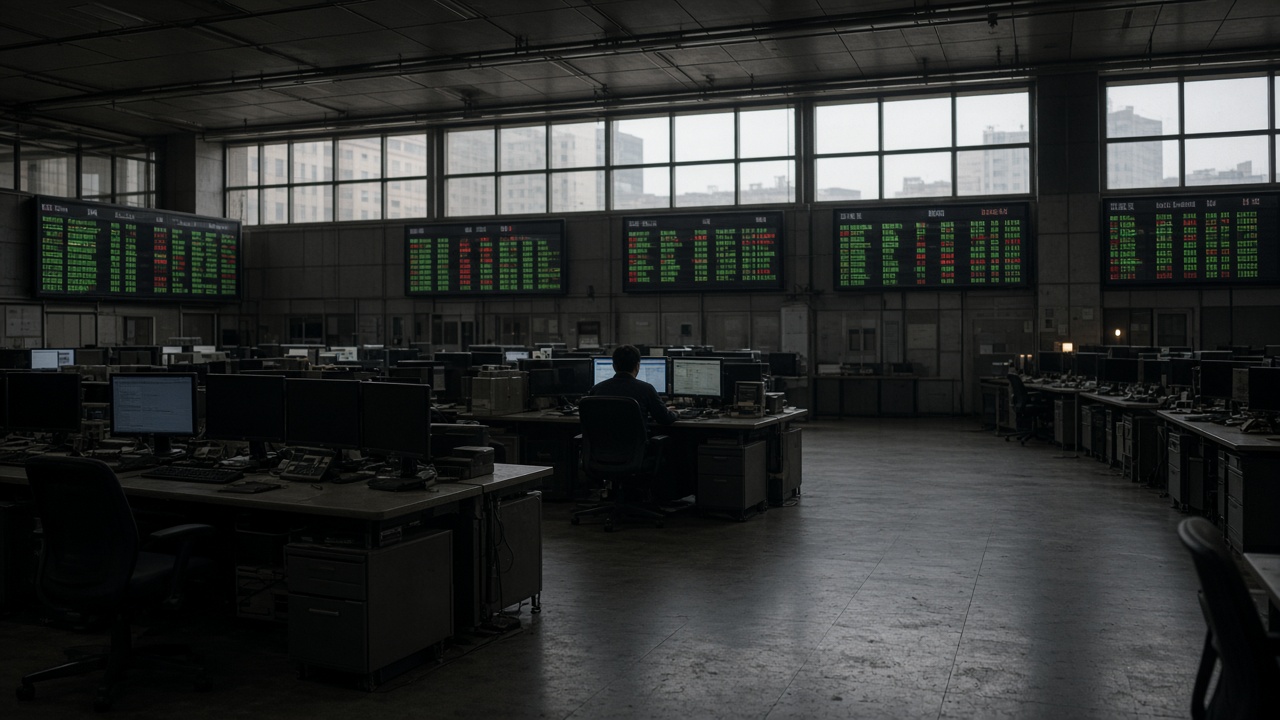
South Korea’s benchmark Kospi slipped in Friday’s morning session, breaking a five-day streak of record closes, as memory-chip heavyweights Samsung Electronics and SK hynix retreated with the won trading weaker against the U.S. dollar. The move came one session after the Federal Reserve’s first rate cut of the year lifted Seoul shares to an all-time high, illustrating how quickly currency swings can unwind chip-led rallies when offshore investors hedge dollar returns.
Who led the tape down
Samsung Electronics shares opened lower, pulling back from the 80,500-won threshold crossed Thursday for the first time in 13 months. SK hynix, which set a fresh record high alongside Samsung after the Fed decision, fell more sharply on profit-taking and concerns that a softer won inflates dollar-denominated input costs for equipment imports. The KRX Semiconductor Index, up more than 14 percent month-to-date entering the week, bore the brunt of selling while defense and shipping names that had lagged the chip rally posted comparatively smaller moves.
Hyejin Lee’s desk tracked foreign investor flows through midday: net sellers after three consecutive buying sessions that had poured more than 7 trillion won into Korean equities in September alone. Analysts at Shinhan Securities noted that every 10-won move in the dollar rate can shave basis points off foreign funds’ hedged returns, a sensitivity that grows as the Kospi concentration in dual-listed chip names rises above 30 percent of market capitalization.
Won volatility versus export pricing
The won weakened to roughly 1,390 per dollar in afternoon trading, continuing a drift from the 1,378 level seen midweek when chip stocks surged. Exporters book much of their revenue in dollars while paying domestic wages in won, so a weaker currency normally flatters earnings translations—but only if memory contract prices hold. Traders said spot DRAM pricing indicators remained firm, yet options markets priced higher near-term volatility around Chuseok, when liquidity thins and hedge desks cut positions.
Currency desks at major banks flagged client flows tied to dividend repatriation and month-end rebalancing, not a structural exit from Korean tech. Still, the combination of record index levels and a creeping dollar gave quant funds a signal to reduce beta into the holiday.
What could reverse the slip by Tuesday
History suggests the first session after a long Korean holiday often sees catch-up buying if U.S. tech futures stabilize. Samsung’s order book for high-bandwidth memory remains tight into 2027, supporting bullish earnings revisions that underpinned this month’s rally. Any reopen above 3,450 on the Kospi would require Samsung and SK hynix to reclaim Thursday’s highs and the won to stabilize below 1,395.
Bond yields ticked slightly higher alongside the equity dip, with three-year Korean treasury yields moving in sympathy with U.S. moves post-Fed. That linkage keeps financial stocks sensitive to further dollar strength, adding a second-order drag if chip leaders cannot absorb foreign selling.
Friday positioning into Chuseok
Portfolio managers described the session as “gamma reduction,” not a macro pivot. Retail investors, heavily exposed to Samsung through index funds and direct holdings, saw the dip as a buying opportunity in after-hours discussion boards, though volume remained moderate at under 400 million shares by midday.
For the Kospi narrative, the story remains chip-led—but Friday’s slip is a reminder that won volatility can interrupt even Fed-assisted highs. Exporters may still win on translation, yet foreign holders cash out in dollars, and that arithmetic turned against Seoul hours before the market closes for Chuseok.
Secondary screens and Kosdaq spillover
The Kosdaq followed the Kospi lower, with smaller memory-equipment names and biotech issuers catching down-draft selling even though their fundamentals diverge from export giants. Market data showed program trading accounts reducing long exposure into the close, a pattern brokers associate with foreign banks rolling FX hedges at the 3:30 p.m. fix. Retail margin balances remained elevated, suggesting local players may step in if the won stabilizes over the weekend.
Credit strategists said they are not revising year-end Kospi targets yet; the slip is a volatility event within a trend still driven by earnings upgrades at Samsung and SK hynix. If the dollar holds above 1,390 through Tuesday’s reopen, some houses may trim foreign inflow assumptions for the fourth quarter.