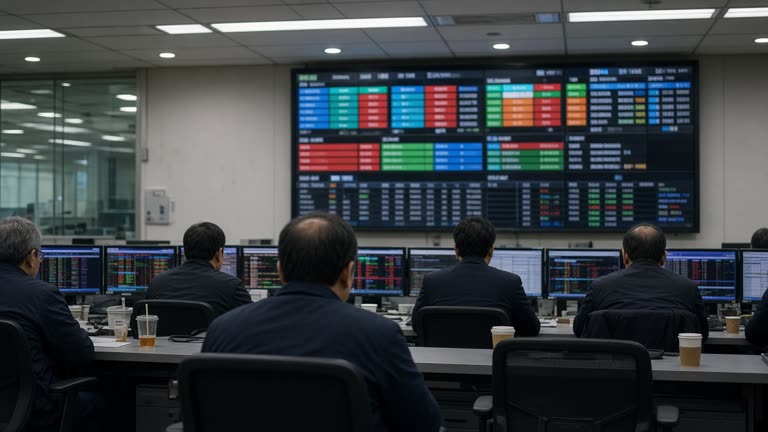
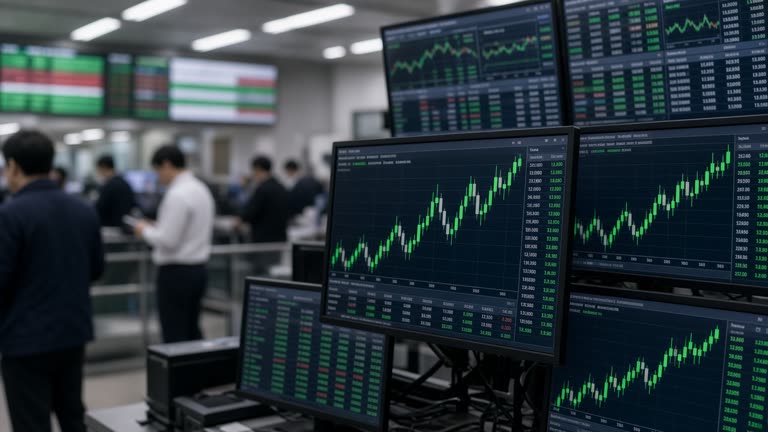
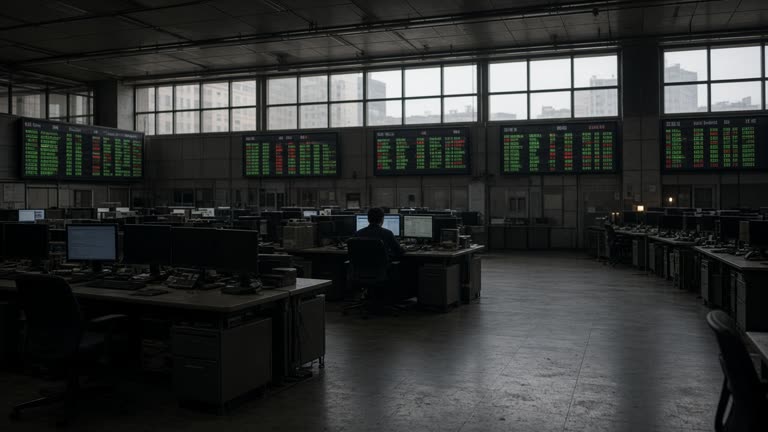
Cash equities shut Friday through Sunday for Hangul Day while Thursday’s 2.62 percent Kospi drop to 6,625.93 leaves futures and options desks to price chip risk into Tuesday’s reopen.
The Kospi opened lower Thursday as September FOMC minutes hit local screens, monthly options expired, and foreigners extended net selling into Samsung’s preliminary earnings print.
The Kospi finished last week at 7,003.74 as Micron Technology's beat steadied memory sentiment, but foreign funds still net-sold 20.3 trillion won over 22 sessions ahead of Samsung Electronics' Oct. 8 preliminary earnings.
The won closed at 1,350.90 per dollar in Seoul’s final pre-holiday FX session, firming eight won as institutions bought equities and long-term U.S. yields eased slightly.
Investment trusts and pension funds led a late-session push that lifted the Kospi to 7,003.74 on Oct. 2, while foreigners net-sold for a fifth day and individuals trimmed chip winners into the Gaecheonjeol break.
The Kospi closed at 6,971.35 on 1 October, up 1.95 percent, as Samsung Electronics executed the final two-million-share tranche of its scheduled buyback on 2 October while SK hynix nears a mid-October repurchase end and foreigners net sold despite roughly fifty issuers buying shares Thursday.
The Kospi rose 0.91 percent to 6,690.12 on Oct. 1 as foreigners bought a net 845.9 billion won for a third straight session, led by Samsung Electronics and SK hynix after September export data.
The Kospi fell 1.38 percent to 6,598.87 on Sept. 30 after touching 6,750 intraday, as foreigners sold 1.46 trillion won while individuals and institutions bought on the dip.
EcoPro BM and peer battery-material names led the Kosdaq higher as traders reacted to widening lithium carbonate spreads and foreign funds returning after the long weekend.
Institutional investors led net buying on the Kospi’s first session after Chuseok as the benchmark hovered near its 7,080.92 pre-holiday close, with chipmakers drawing foreign inflows ahead of Micron Technology’s earnings and U.S. inflation data.
Seoul's cash market stays shut through Sunday, Sept 27, and reopens Monday at 9 a.m. with US-China trade detail, Micron earnings and Sept 30 PCE stacked on the holiday gap.
Kospi closed at 7,080.92 in its last pre-Chuseok session as Samsung and SK hynix led, but retail investors sold more than 1 trillion won. The market reopens Sept. 28.
With the Kospi closed through Chuseok, overseas Korea ETF desks on NYSE Arca reported their busiest September session as hedgers and retail investors traded exposure ahead of Seoul’s Thursday reopen.
The Kospi finished at 7080.92 on Tuesday before a Chuseok closure that shuts KRX cash markets Thursday and Friday, leaving Korean holders to hedge on overseas desks while T+2 settlement slips to Monday the 29th amid Micron earnings and Trump–Xi summit headlines.
The Kosdaq slipped as profit-taking hit Celltrion and other biotech heavyweights, while OK Savings Bank surged on retail dividend hopes and net-interest optimism that offset weakness in game and content names tied to won volatility.
The Kospi rose in Tuesday trading as Samsung Electronics and SK hynix led a memory-chip rally, with foreign desks citing hedge flows around U.S.–China summit headlines while the won stayed volatile on Bank of Korea messaging.
SK Biopharmaceuticals shares swung double digits after European regulators opened a monotherapy label window for cenobamate tablets in focal epilepsy, setting a December committee date investors are already modeling.
LG Energy Solution raised cathode shipment guidance for U.S. battery plants after Treasury auditors signed off on IRA foreign-entity rules for its Michigan and Tennessee cathode lines, lifting Kosdaq sentiment on Friday.
A lingering EMA information request on a partnered biosimilar dossier pushes a European distributor’s revenue guide from autumn launches into winter, Celltrion told Seoul analysts.
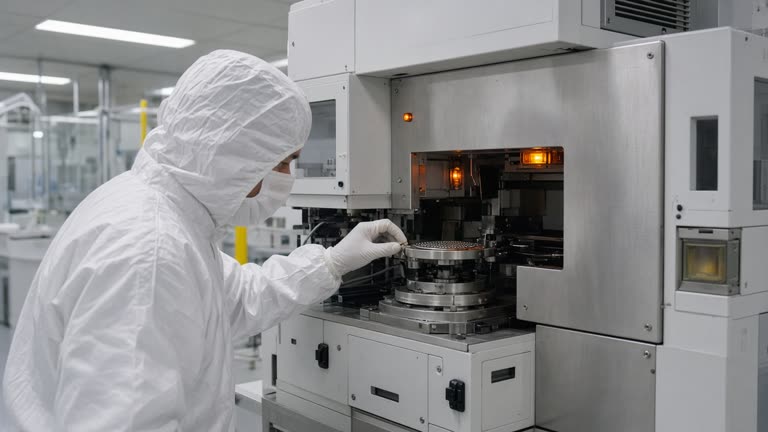
Hanmi Semiconductor’s order book for HBM bonding tools is swelling as an Ulsan backend hub stages fluxless and hybrid bonder installs ahead of HBM4 ramp talks with memory makers.
Samsung Biologics shares climbed after the CDMO confirmed renewal talks with a top-tier U.S. client on Songdo capacity running through 2029, extending a order book that already cleared 5 trillion won this year.
The Kospi gave back part of its record run as a firmer dollar clipped export margins for Samsung Electronics and SK hynix, with foreign funds trimming buys ahead of Seoul’s long Chuseok weekend.