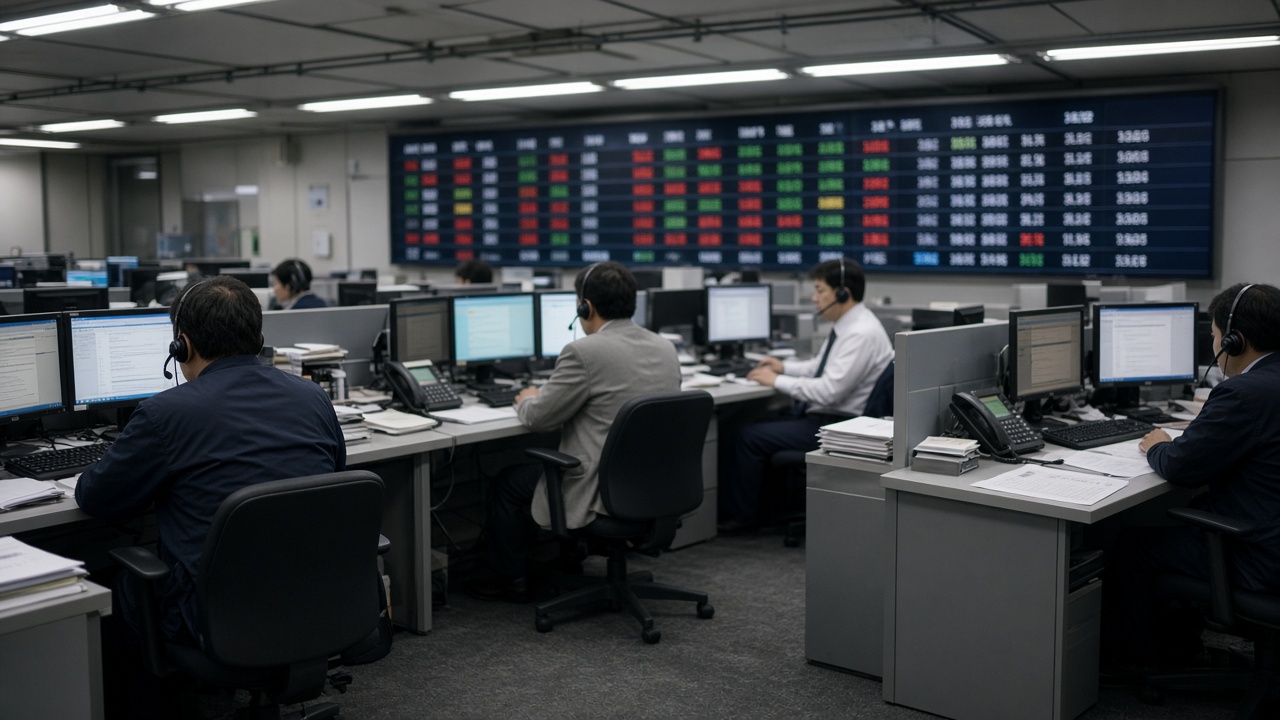
Institutional accounts led net buying on Monday as the Kospi reopened after Chuseok, keeping the benchmark within sight of its 7,080.92 pre-holiday close while retail investors who had chased the September rally took profits into a week packed with Micron Technology earnings and U.S. personal-consumption inflation prints. Foreign desks returned from the long weekend with orders concentrated in memory and foundry names that dominate Seoul’s export narrative.
Opening tone and flows
Korea Exchange data through the morning session showed pension and insurance funds net-purchasing large-cap tech while individuals sold into strength, reversing part of the holiday-week pattern that saw households absorb more than one trillion won of stock supply. Dealers said liquidity was thinner than a normal Monday because several global banks staffed skeleton crews until New York opened, but chip block trades still crossed on dark pools tied to earnings positioning.
The won traded weaker against the dollar in Seoul’s first fixing after Chuseok, reflecting a broader Asia move as oil prices stayed elevated and traders hedged U.S. rate expectations. Exporters with dollar revenues benefited on translation, yet importers of consumer goods warned that a sustained won slide could feed into autumn discount wars at big-box retailers.
What Micron and PCE mean here
Micron’s after-hours guide matters in Seoul because Korean memory suppliers trade as a beta to U.S. pricing commentary and capital-expenditure hints. Analysts on the local conference circuit said a constructive datacenter outlook could extend the September rerating that lifted SK hynix above one million won intraday before the holiday. A cautious tone, conversely, would test whether sidecar halts—already a political talking point after a record year of triggers—fire again if retail algorithms chase momentum.
U.S. PCE due later in the week is the macro anchor. Bank of Korea officials have paused rate cuts while the won weakens; a hot inflation print could keep Treasury yields firm and pressure foreign holders of Korean equities to hedge currency risk more aggressively. Domestic strategists at NH Investment told clients in a Monday note that they would treat any Kospi dip toward 6,950 as a buy zone only if foreign flows stay positive for three consecutive sessions.
Sector moves beyond chips
Automakers and battery chains moved with Mexico summit follow-through headlines, but gains were muted compared with semiconductors. Bio names lagged as U.S. tariff talk on branded drugs resurfaced in offshore headlines, a reminder that Korea’s export basket is not only silicon. Kosdaq retail favorites in content and game software saw volatile opens as teenagers returned from hometown trips and refreshed mobile trading apps.
Credit investors watched Hyundai Motor and POSCO bonds for any widening tied to U.S. investment pledges, but investment-grade spreads were largely unchanged by lunch. That stability suggested fixed-income desks view the equity reopen as a positioning week rather than a macro shock.
Risks on the calendar
National Assembly hearings on chip subsidies and DMZ security could steal afternoon headlines without moving index weights, yet they shape sentiment for foreign funds with ESG mandates. A prolonged DMZ investigation may not dent earnings, but it raises geopolitical premia in options markets where one-month implied volatility ticked higher into the close Friday before the holiday.
For Seoul investors, Monday’s message was procedural: the cash market is back, institutions are providing a floor near the pre-Chuseok close, and the next catalysts arrive from Boise and Washington rather than from ancestral grave sites. Whether the 7,100 handle holds depends on Micron’s language and on whether foreign buyers treat Korea as a AI-memory proxy or as a geopolitical trade again.
Closing mechanics
Market-on-close imbalances favored buyers in the final ten minutes as passive funds rebalance month-end weights, dealers said. Short sellers covered modest positions in second-tier battery names after a social-media rumor about export credits proved unfounded. Volume remained below the thirty-day average, consistent with a holiday-adjacent session where many family offices stayed offline until Tuesday.