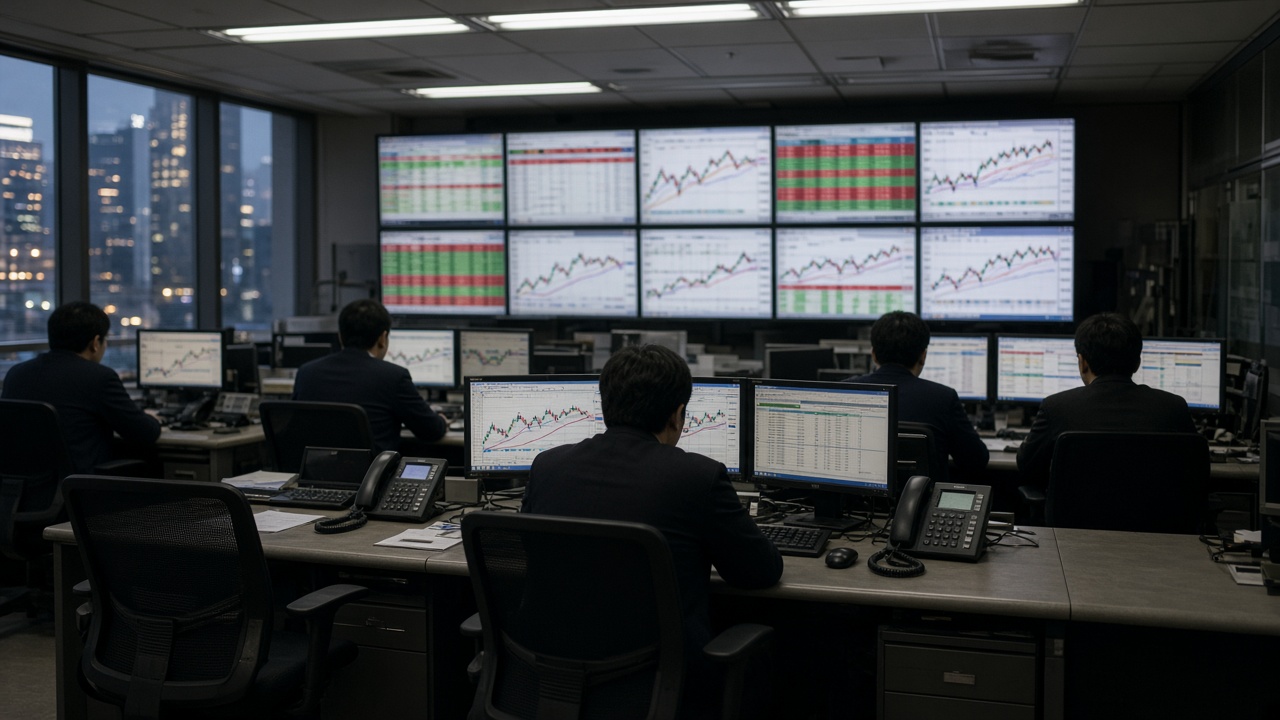
The won strengthened to 1,350.90 per dollar in Seoul’s last foreign-exchange session before the Gaecheonjeol market closure, gaining 8.60 won from the prior close as institutions bought Korean equities and traders trimmed dollar longs ahead of a three-day pause in KOSPI trading. The move gave importers brief relief on dollar invoices even as exporters warned that sustained won strength could compress semiconductor and auto margins when third-quarter guidance lands later in the week.
Session mechanics
Dealings thinned after lunch as banks squared positions before the extended weekend that kept the Korea Exchange shut through Monday. Foreign banks supplied dollars to corporate clients settling month-end import letters of credit, while domestic asset managers converted overseas dividend receipts into won to fund local bond purchases. Options desks reported lower implied volatility than during the Chuseok week, when U.S. jobs data and Treasury auctions whipsawed Asian currencies.
Currency strategists told InfoHandle that the won’s bounce tracked a softer tone in long-dated U.S. yields after Federal Reserve officials reiterated data dependence rather than pre-commitment to further hikes. That linkage matters for Korean households carrying floating-rate mortgages indexed to domestic monetary policy, which often follows the gap between U.S. and Korean rates.
Equity cross-currents
The currency session overlapped with a 0.46 percent gain in the KOSPI to 7,003.74 on the last cash equity day, a combination that usually signals foreign investors selling stocks while hedging less aggressively. Retail investors, net sellers of equities that day, kept more savings in won deposits as card-loan rates stayed elevated. Export heavyweights Samsung Electronics and SK hynix see translation effects on dollar revenue, but both hedge portions of exposure through forward contracts booked before the holiday.
KOSDAQ names with overseas licensing revenue felt a sharper immediate impact in analyst models, though thin holiday liquidity limited speculative positioning. Importers of liquefied natural gas and food commodities face the opposite effect: a stronger won reduces the local-currency cost of dollar-priced shipments arriving at Pyeongtaek and Incheon terminals.
Policy and data calendar
The Bank of Korea did not intervene visibly in the session, according to traders familiar with Seoul money-market desks. Officials next publish foreign-reserve figures mid-month; reserves have held above $400 billion, giving policymakers room to smooth disorderly moves even as they emphasize market-determined rates.
Tuesday’s reopening brings U.S. September employment data into focus for global FX, while Seoul traders will watch whether institutions continue equity buying that supported the won. Corporate treasury desks queued hedging reviews for the fourth quarter, when year-end repatriation flows historically nudge the currency.
Household and business stakes
Travel agencies noted steady dollar sales for overseas trips scheduled after the holiday, suggesting households still expect volatility despite the one-day firming. Small exporters in Busan’s machinery cluster said they delayed forward hedges until they see whether the won holds below 1,355 after trading resumes.
For fund managers, the pre-holiday print is a bookmark: it captures how Seoul positioned before a rare simultaneous pause in equities and a long FX half-day schedule. The number that lingered on screens—1,350.90—will be the reference point when volatility returns with the opening bell.