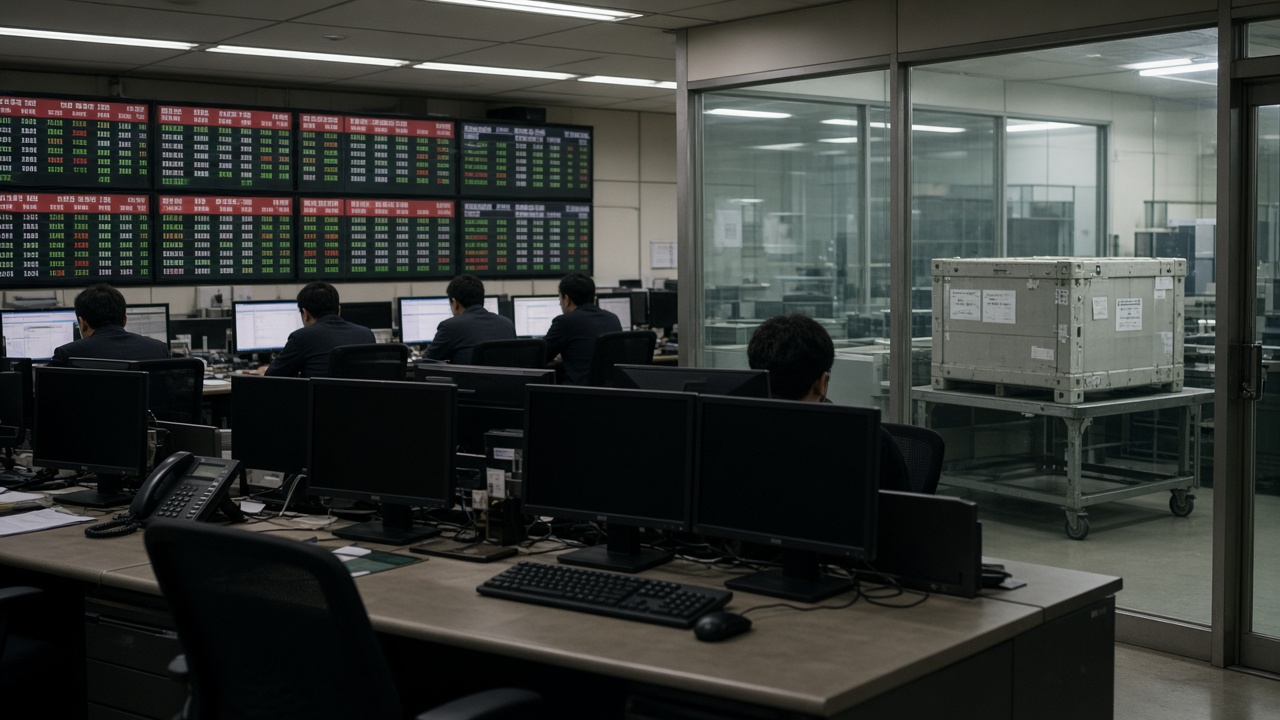
The benchmark Kospi closed last week at 7,003.74 after bargain hunting in large technology names offset rising oil prices and stubborn U.S. Treasury yields, while foreign investors extended a selling streak that reached 20.305 trillion won in net outflows across 22 trading sessions through Oct. 2, according to Korea Exchange flow tables and English-language market wraps InfoHandle compiled Monday.
Why 7,000 still matters
Index strategists at NH Investment & Securities told clients to expect a 6,500–7,500 trading band this week, meaning Friday's print is mid-range—not a breakout. Retail accounts bought Samsung Electronics and SK hynix on dips, but foreign ownership in SK hynix fell to 49.76 percent on Oct. 2, the lowest in more than three years. The story is not a single day's bounce; it is whether Oct. 8 preliminary guidance from Samsung can reverse estimate cuts that pulled third-quarter operating profit consensus toward 104 trillion won.
Micron as the warm-up act
Micron's late-September earnings beat lifted sentiment for memory pricing even as analysts trimmed 2026–2027 Kospi earnings models. Daishin Securities researchers argued in notes published over the weekend that if Samsung meets or beats lowered bars, semiconductor leadership could help the index settle above 7,000 on more than one Friday print. Until then, macro headwinds dominate: Brent crude near $108 and 10-year U.S. yields at multi-year highs keep foreign funds defensive.
Flow math investors watch
Foreign selling concentrated in the two largest chipmakers, accounting for more than 17 trillion won of the month-long outflow, Seoul Economic Daily reported citing exchange data. After-market trading, which launched mid-September, is included in the totals. Net selling narrowed to 190 billion won on Oct. 2 after a 243 billion won buy day on Oct. 1—too small to call a trend, desk strategists said, but enough to pause alarm bells ahead of earnings.
Calendar beyond Samsung
Bank of Korea speakers stay quiet until audit appearances later in October. U.S. payroll and inflation prints still feed hedge fund positioning in Korean ADRs. For Hyejin Lee's readers, the actionable clock is Samsung's preliminary release on Oct. 8, not Tuesday's thin post-holiday volume.
What this desk is not doing
We are not calling a foreign-investor return or a guaranteed Kospi 7,500 close. We are tracking whether estimate revisions inflect after Samsung speaks. Until then, 7,003.74 is a holding line, not a victory lap.
Won moves and exporters
A stronger won trims translation gains for exporters when they convert dollars, yet September customs still showed record semiconductor shipments in dollar terms. Strategists said currency hedging at Samsung and SK hynix partially offset the move, but portfolio investors still treat won strength as a reason to lighten Kospi beta into U.S. rate decisions.
Retail participation
Retail net buying through the week helped large caps even as foreigners sold, according to exchange retail flow tables. Pension funds stayed neutral in published filings, waiting for Samsung guidance before rebalancing chip overweight positions that grew during the summer rally.