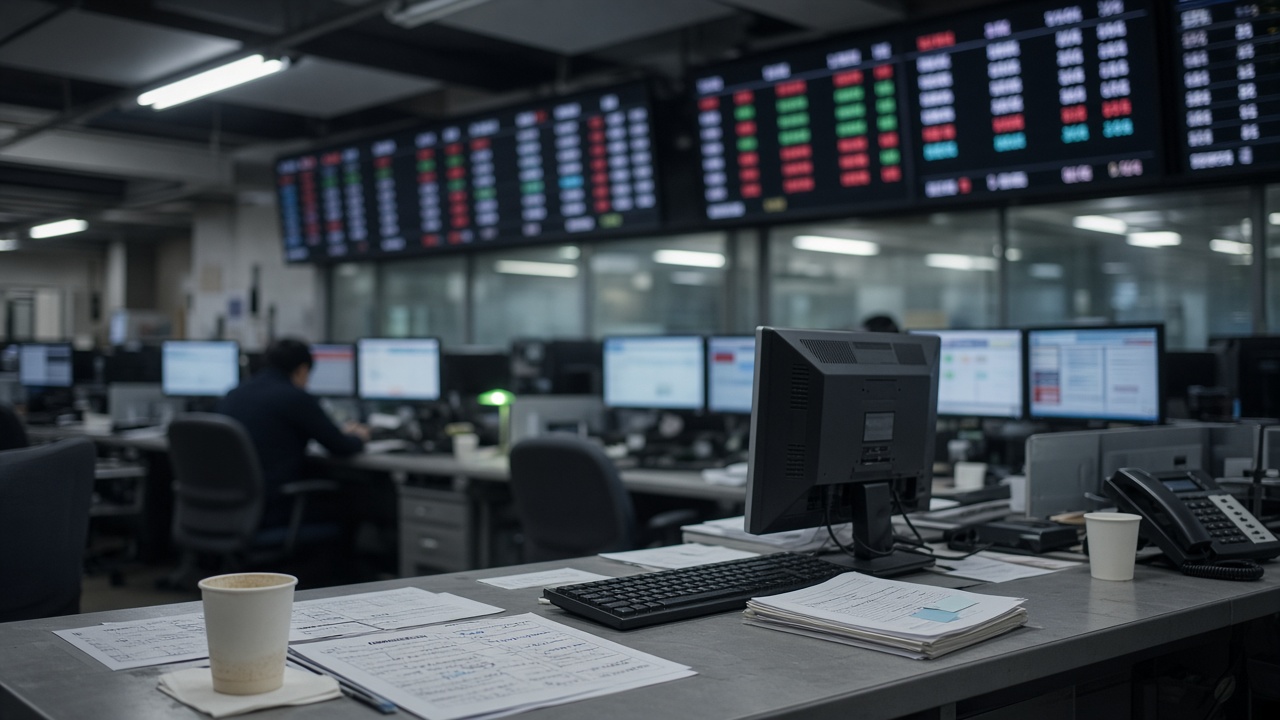
Domestic investment trusts and pension pools staged a 381.4 billion won buying spree in the final hour on Oct. 2, dragging the Kospi back above 7,000 to close at 7,003.74 after an intraday dip toward 6,920. Foreign portfolio managers extended a five-session net-selling streak, and retail accounts took profits on semiconductor names, setting up a tense reopen after the Gaecheonjeol holiday when liquidity returns Monday.
Flow breakdown
Korea Exchange data compiled by Businesskorea showed institutions as the only major cohort net-buying on the day, while foreigners unloaded 136.7 billion won and individuals joined the sell side on chip heavyweights that had carried the index through September. Dealers said much of the institutional flow sat in Samsung Electronics and SK hynix, with financial holdings benefiting from expectations that slower U.S. hiring reduces pressure on the Bank of Korea to keep hiking.
The session echoed a pattern that has defined much of 2026: local long-only money absorbs foreign de-risking when global macro wobbles, especially when the won firms and dividend futures roll into their autumn cycle. Prop desks in Yeouido said program trades tied to pension rebalancing executed only after the dollar-won rate slid to 1,350.6, reducing hedging costs for overseas mandates.
Chip leadership and valuation
Memory and foundry names still dominate Kospi point contributions. Analysts at a Gangnam brokerage noted that Samsung’s Friday gain came on moderate volume, suggesting trusts were filling strategic underweights rather than chasing momentum. SK hynix outperformed after U.S. peer commentary on high-bandwidth memory demand, but options markets priced only modest upside for the coming week with volatility skewed to downside hedges.
Kosdaq names saw a similar split: bio shares lagged while AI-server component suppliers bounced. Retail chat rooms buzzed about “7,000 psychology,” yet account snapshots showed smaller investors actually reduced exposure into the holiday, wary of October seasonality surveys that predict a weak start to the fourth quarter before a year-end rally.
Macro crosswinds
Weaker U.S. payroll growth shifted Fed hike odds, helping emerging-market equities and trimming dollar strength. For Korea, that eases the policy dilemma: the Bank of Korea already lifted rates in July and August to 3.00 percent, and traders now lean toward a hold on Oct. 22 while board members watch housing credit and inflation prints. Bond yields edged down in tandem with the equity bounce, though traders cautioned that oil and Middle East shipping insurance remain wild cards.
Currency moves matter as much as Fed dots. Friday’s firmer won can hurt exporters’ next earnings translations even as it lowers import inflation for utilities and food companies. Index investors said they will watch whether foreigners return if the won stabilizes near 1,350 rather than sprinting toward 1,340.
Technical levels
Chartists flagged 6,920 as intraday support on Oct. 2 and 7,050 as near-term resistance where foreign supply might reappear. Volume was lighter than the September rally peaks, consistent with pre-holiday de-risking. Dark-pool prints showed sovereign wealth funds absent, while trust companies dominated block tickets after 2 p.m.
Listed derivatives open interest rose in weekly puts struck near 6,950, hinting that institutions still buy crash protection even as they lift cash positions. Retail margin debt ticked down for a third week, according to FSS snapshots, reducing one source of forced selling if Monday gaps lower.
Monday setup
With no cash session Sunday, futures traders will use offshore instruments to signal sentiment. U.S. tech earnings guidance and China reopening flows after its Golden Week will filter into Seoul’s morning call. Desk heads said a clean hold above 7,000 requires foreigners to stop net-selling for at least two sessions—a bar they have not cleared since late September.
For investors waking up after Gaecheonjeol, the Oct. 2 close is a snapshot of who blinked: trusts bought the dip, foreigners walked away, and households banked chip gains. Whether 7,003.74 becomes a floor or a ceiling depends on dollar liquidity returning Monday, not on the holiday headline that the index reclaimed a round number.