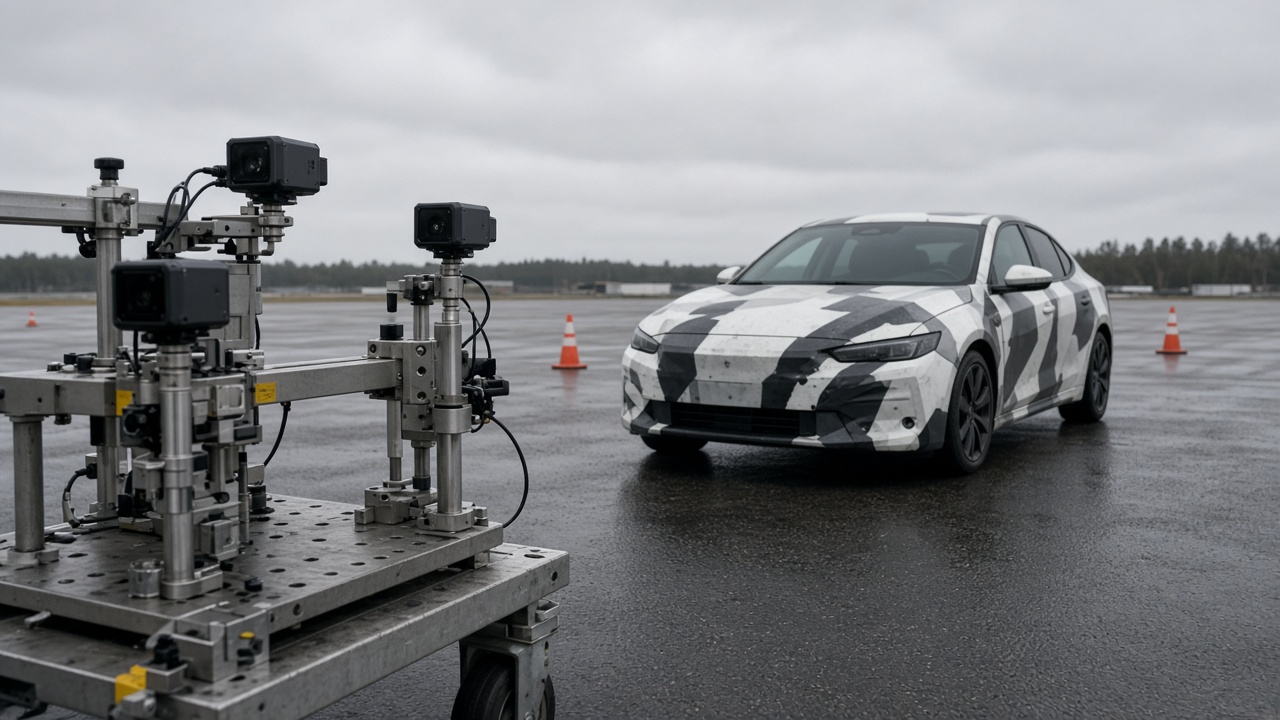
LG Innotek Co. is qualifying high-resolution camera modules for Hyundai Motor Group’s Motional robotaxi sensor suite at the Namyang R&D campus, adapting optics proven on Amazon’s Zoox fleet to Ioniq 5-based mules before Korea winter validation runs, according to test engineers and a qualification matrix LG Innotek shared with Hyundai autonomy staff.
From Zoox lines to Hyundai mules
LG Innotek became a serial supplier for Zoox robotaxi cameras earlier this year, shipping modules with multiple fields of view and waterproof housings tuned for harsh weather. Hyundai’s partnership with Motional on the Ioniq 5 robotaxi uses more than thirty sensors across cameras, radar, and lidar; LG Innotek is now mapping which Zoox-derived modules can meet Hyundai’s redundancy and temperature specs without redesigning the entire bumper package.
Executives from both companies met at Namyang after Hyundai invited LG Group vehicle-system suppliers to Tech Day sessions, continuing talks reported last year about deepening cooperation on infotainment and autonomy hardware. LG Innotek’s qualification documents describe side-mount wide cameras and narrow forward units staged on Hyundai mules alongside existing Motional reference designs.
Qualification tests underway
Engineers run vibration, salt fog, and rapid temperature cycling on modules mounted to proving-ground rigs. Calibration bays compare intrinsics against Motional’s golden datasets so perception stacks do not drift when Korean-built units replace imported batches. LG Innotek said latency from shutter to Ethernet delivery must stay within Motional’s bounds for fusion with lidar point clouds.
Night tests on Namyang’s low-light track evaluate blooming from oncoming headlights, a failure mode LG Innotek mitigated on Zoox fleets with revised lens coatings. Hyundai autonomy center staff requested additional samples with heated window lines for winter slush, tests scheduled after Chuseok when ambient temperatures drop.
Supply and redundancy rules
Robotaxi programs demand overlapping fields of view; LG Innotek’s five-FOV portfolio lets planners duplicate coverage if a corner camera fails. Hyundai’s redundancy policy requires graceful degradation to pull-over maneuvers rather than silent blind spots. Qualification includes fault injection that disables one module while perception software reroutes attention to neighbors.
LG Innotek declined to disclose unit pricing or volume commitments; people familiar with the talks said initial lots target low hundreds of modules for Korea validation before any export to Motional’s U.S. operations. Aptive’s reduced capital injections into Motional have made Hyundai wary of single-source risk, giving LG Innotek an opening if qualification succeeds.
Competitive context
LG Innotek separately signed a mobility sensing alliance with Kakao Mobility to improve camera, radar, and lidar modules using real-world driving logs. That partnership is distinct from the Hyundai robotaxi work but shares firmware teams optimizing auto exposure on urban glare. Boston Dynamics humanoid projects inside Hyundai’s orbit also consume LG Innotek sensing expertise, though robotaxi timelines are faster.
Rivals including Samsung Electro-Mechanics and foreign tier-one camera makers bid on earlier Hyundai ADAS programs; LG Innotek’s Zoox track record is its differentiator for Level 4 stacks that must look stylish enough for passenger service, not just engineering mules.
What happens after qualification
If modules pass winter sheets, Hyundai and Motional will decide whether to localize camera production for Korean homologation tests ahead of any future robotaxi pilot cities. Regulators have not approved driverless passenger service domestically; the work is preparation, not an launch announcement.
For LG Innotek, robotaxi qualification ties its mobility sensing revenue goal—two trillion won by 2030—to Hyundai’s most visible autonomy bet. For Hyundai, domestic modules reduce exposure to shipping delays and currency swings that hit imported sensor batches during earlier Ioniq 5 robotaxi builds in the United States.
Homologation paperwork
Hyundai safety lawyers are drafting component traceability binders that map each camera lot to vibration and thermal test logs, a step Korea’s future autonomous passenger rules are expected to require even before commercial routes open. LG Innotek assigned a dedicated quality engineer at Namyang to stamp releases daily so Motional firmware teams in Boston receive matching serial manifests overnight.
Wind-tunnel sessions on a stripped mule checked whether side mirrors and camera housings whistle at highway speeds, a nuisance passengers notice even when perception software tolerates vibration. Technicians resealed one prototype gasket after water ingress fogged a lens during a high-pressure wash mimicking tunnel cleaning equipment.