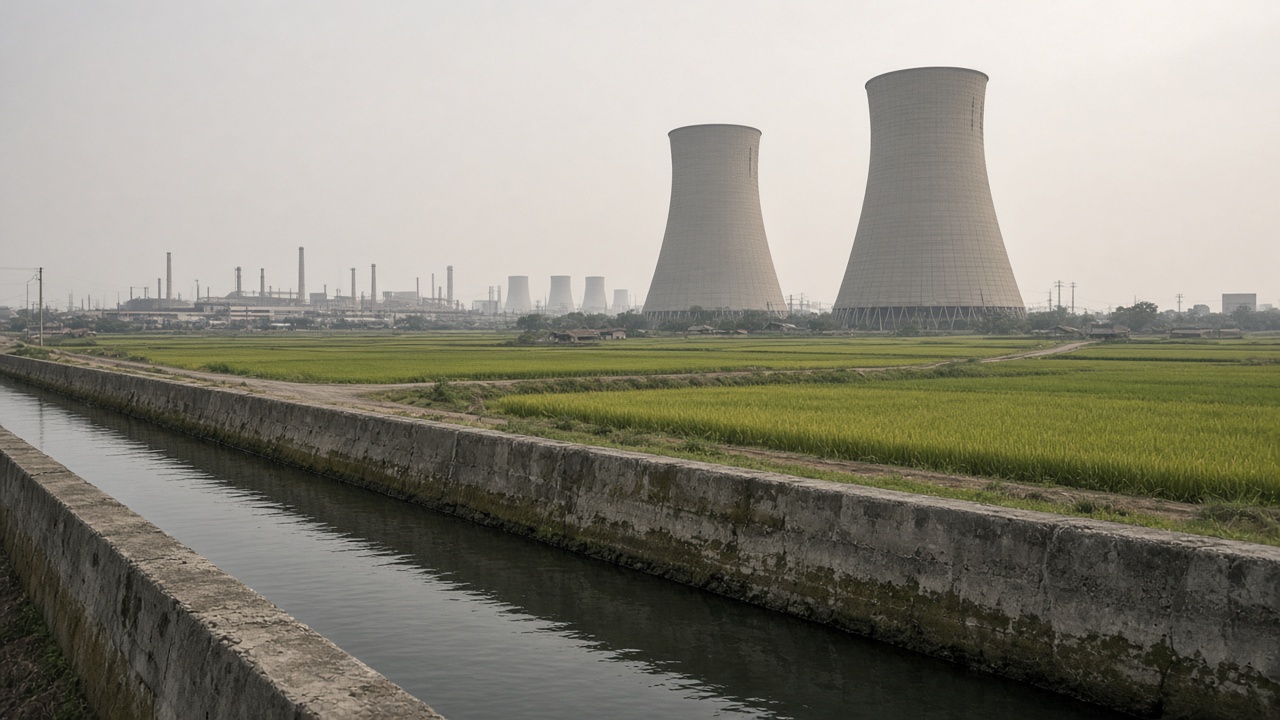
Korea should not extend semiconductor tax credits around Pyeongtaek until fab operators publish daily groundwater and recycled-water withdrawals on a tamper-evident public ledger tied to Ministry of Environment permits—because the same aquifers that cool etch lines also irrigate rice paddies that lost surface allocations during the 2024 drought.
The claim
Industrial policy cannot keep treating water as an invisible input. If SK hynix and partners want another decade of credits for advanced packaging lines, taxpayers deserve machine-readable proof that withdrawals stay inside licensed caps before harvest season stress returns.
What reporting already shows
Environment ministry bulletins document falling reservoir levels in Gyeonggi during heat waves, while chip complexes publicly tout recycling rates above 90 percent without block-level timestamps outsiders can audit. Farmers’ associations in Pyeongtaek filed freedom-of-information requests for hourly intake logs and received quarterly PDFs redacted as trade secrets—a gap that turns every dry spell into a courtroom argument instead of a planning conversation.
National Assembly industry committee hearings this summer linked fab expansion to substation upgrades but barely touched aquifer drawdown models. That omission matters: packaging fabs use less water per wafer than legacy DRAM plants yet pulse cooling loads during afternoon peaks when rural pumps compete for the same trunk lines.
Why a ledger beats another MOU
Voluntary sustainability reports are marketing. A public ledger—signed by plant SCADA exports and mirrored on K-water nodes—would let counties simulate scenarios before approving new lines. Tax credits could auto-pause if rolling seven-day withdrawals exceed permit thresholds by more than five percent, triggering review rather than fines years later.
Objection: fabs will leak yield data if flows are public. Granular publication can be aggregated to hourly plant totals without disclosing tool-level recipes; the environment ministry already publishes emissions stacks at that resolution for petrochemical sites.
What policymakers should do
Condition 2027 credit extensions on open APIs publishing signed flow meters, with third-party auditors paid from credit pools—not from municipal water budgets starving clinic upgrades. Pair that with binding recharge projects in the same watershed, funded before ground is broken on new cleanrooms.
We are not arguing against chips; we are arguing against financing them on secret straw. Transparency is cheaper than drought bailouts—and it is the price of asking rice farmers to share an aquifer with the national industrial strategy.
Credit design
Tax credits should step down automatically when ledger readings show permit exceedance, rather than relying on ministry inspectors visiting after social media outrage. That mechanism mirrors performance-linked subsidies in offshore wind—another capital-intensive sector where the public buys downside protection.
Chipmakers will say publication risks revealing capacity ramps. Aggregated hourly flows at the plant fence line do not disclose tool recipes; they disclose whether neighbors’ wells are being drained. That is the minimum bargain for sharing a watershed with the country’s largest industrial bet.
County budgets
Pyeongtaek and Hwaseong counties already spend disaster funds trucking water during drought emergencies. Tying tax credits to ledger compliance would let those municipalities recover monitoring costs instead of floating another bond for tanker trucks every August.