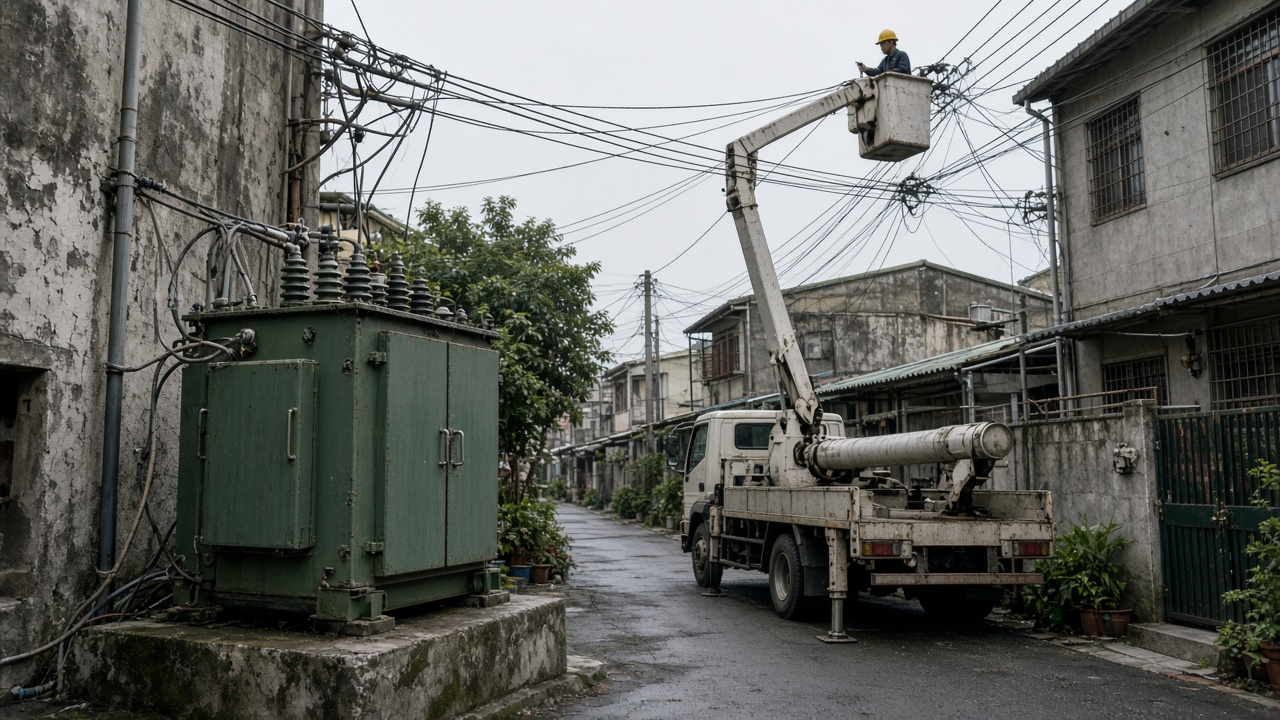
We should read Mid-Autumn Festival blackouts as the bill for deferred transformer work at Taiwan Power Company, not as unpredictable acts of weather—because the same districts lose power every long weekend once air conditioners, rice cookers, and gift-industry ovens load aging feeders that Taipower flagged for replacement months ago.
The claim
Holiday outages are a maintenance governance failure. If Taipower cannot finish scheduled swaps before families travel home, the Ministry of Economic Affairs should publish feeder-level backlog counts and tie bonus pools for regional managers to completion rates, not just annual profit targets.
What the grid already tells us
Taipower’s public outage map shows repeat clusters in Taoyuan exurbs, Tainan coastal townships, and mountain fringes where tourism spikes when urban workers return for reunion dinners. Bureau of Energy incident summaries attribute many events to “equipment failure” on 20- to 30-year-old transformers that appear on capital plans labeled “carry forward” from prior fiscal years.
Correspondents in this edition report courier and cold-chain stress ahead of Mid-Autumn; those logistics peaks ride on the same suburban feeders that trip when three generations run induction cookers simultaneously. The mechanism is mundane: thermal overload on hardware that should have been retired in spring when load is lower.
Why holidays expose the backlog
Taipower schedules major work during weekdays to minimize commercial disruption, yet contract crews slow when municipalities debate lane closures for crane trucks. By September, typhoon season absorbs emergency crews, pushing routine swaps into nights that still miss holiday surges. Residents then blame “bad luck” while utility social-media teams apologize with voucher discounts that do not replace spoiled medicine in warm refrigerators.
Objection: typhoons and heat waves are getting worse, so some outages are inevitable. True for downed lines, but not for the pattern InfoHandle sees—same transformer IDs, same hour-long resets, same apology template. Climate stress makes deferred maintenance more expensive, not less urgent.
What policymakers should do
Publish a transformer age ledger by district, updated monthly, with expected swap dates investors and county councils can audit. Link approval of new industrial feeders to demonstrated clearance of holiday-critical backlog in adjacent residential circuits. Offer Taipower accelerated depreciation for smart monitors on high-failure units so operators see heating oil breakdown before customers smell it.
We are not arguing against family reunions or against economic growth. We are arguing that a utility monopoly cannot treat Mid-Autumn as a surprise stress test when its own filings already named the failing assets. Accountability belongs in the maintenance schedule, not in a press release after the mooncakes go soft.
County roles
Local governments control permits for lane closures and tree trimming near feeders. Counties that fast-track holiday-priority corridors should get energy-bureau recognition; those that stall crane access should explain delays in open council sessions before voters blame “the grid” abstractly.
What we are not saying
This editorial does not claim every outage is preventable, nor does it call for privatizing Taipower overnight. It insists that known backlogs must be visible before another festival weekend tests the same hardware—and that the mechanism of accountability is the maintenance calendar executives already sign.