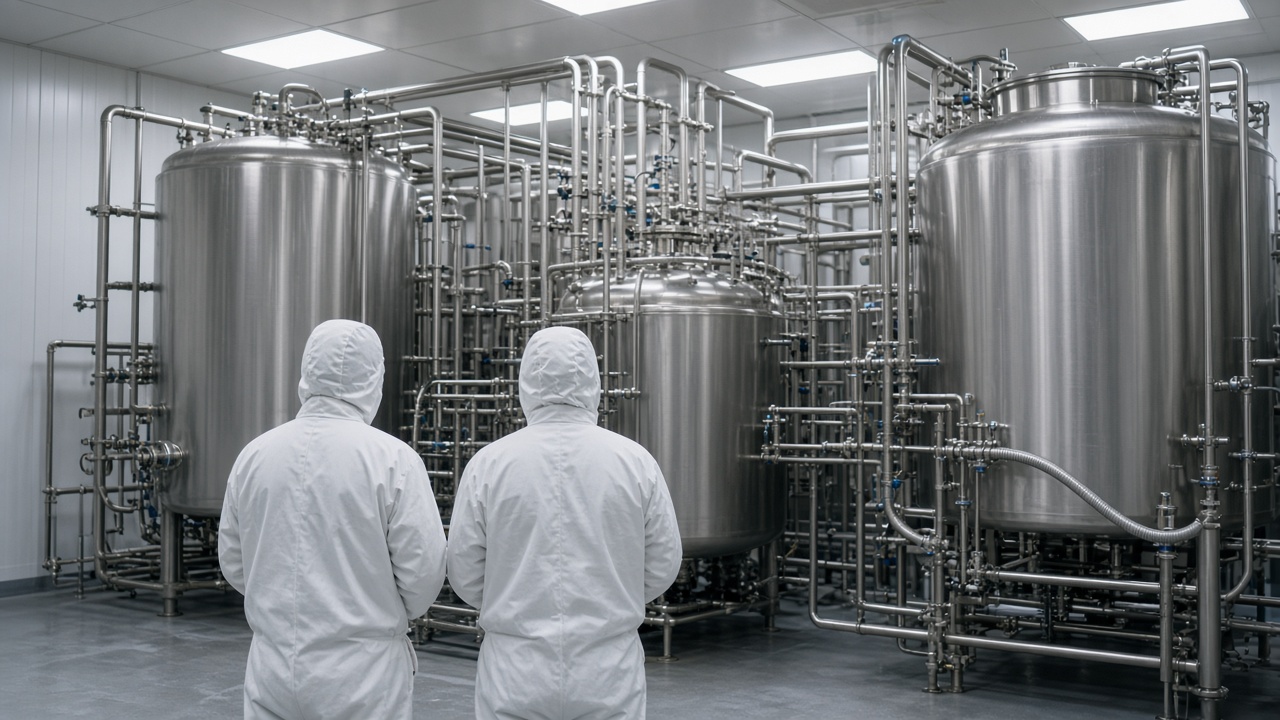
Samsung Biologics Co. shares rose in Seoul on Friday after the contract development and manufacturing organization confirmed it is in renewal talks with an existing U.S. pharmaceutical client for biologics production allocated at its Songdo campus through 2029. The disclosure, made in a regulatory filing and follow-up briefing, did not name the counterparty but pointed to line slots at Plant 5—the 180,000-liter facility that came fully online this year—as the bargaining chip.
Renewal versus new wins
Investors distinguish between fresh marquee contracts and renewals because renewals signal utilization without the marketing splash of a new logo. Samsung Biologics already booked roughly 5.2 trillion won in orders year-to-date after a 1.8 trillion-won U.S. deal in September and a 2.07 trillion-won European agreement in January, pushing cumulative orders since 2011 past $20 billion. Renewal chatter on Friday suggested the U.S. client seeks additional capacity for a monoclonal antibody program whose prior tranche runs through December 2029 under confidentiality clauses typical in CDMO filings.
Hyejin Lee’s read on trading desks showed foreign funds as net buyers of the name while the broader Kospi slipped on chip profit-taking, implying investors treat Samsung Biologics as a defensive growth compounder within healthcare. The stock’s premium to domestic peers reflects fill rates at Songdo and the group’s plan to lift total capacity toward 964,000 liters by 2027.
Tariff and geopolitical overlay
Management acknowledged in the briefing that U.S.–South Korea trade talks leave pharmaceutical tariffs unsettled even after broader agreements capped levies near 15 percent for other sectors. Samsung Biologics argued that renewal pricing already embeds logistics and compliance costs, and that clients prioritize supply-chain redundancy over short-term duty savings. Still, any renewal that shifts volume to U.S. fill-finish partners could cap upside; traders are watching whether the talks add net new liters or simply extend current batches.
Analysts covering the stock raised near-term revenue visibility if the renewal includes a modest price escalator tied to inflation indexes—a common CDMO term that would flow through to 2026 guidance without requiring a brand-new press release.
Songdo utilization metrics
Plant 5 integration lifted Samsung Biologics’ stated output to 784,000 liters across five plants, with three additional facilities slated by 2032. Renewal negotiations reportedly cover changeover windows between campaigns, a detail matters for yield and for investors modeling gross margin. The company partners with 17 of the world’s top 20 pharmaceutical firms; extensions with incumbents undergird the thesis that Songdo is default capacity for complex biologics rather than overflow.
Competitors in Europe and North America have reported post-pandemic slack, making Samsung’s streak of large deals an outlier. Renewal talk reinforces that contrast without guaranteeing signature—clients often use renewal seasons to rebid lines across vendors.
What investors watch next
Samsung Biologics said it targets signing before year-end, aligning with client budget cycles. Failure would be read as pricing pushback or a strategic shift, not operational failure, but would still pressure shares that have outperformed the Kospi healthcare cluster this quarter.
For the tape, Friday’s move is a reminder that CDMO names can decouple from chip volatility when contract visibility lengthens. Renewal talks are less glamorous than billion-dollar new logos, yet they pay the amortization on the bioreactors investors see from the Incheon bridge every morning.
Capacity competition in Asia
Regional CDMO peers in Singapore and China have pitched aggressive pricing to win U.S. biotech clients, yet Samsung Biologics’ renewal track record shows incumbents rarely switch vendors mid-validation. Quality audits and U.S. Food and Drug Administration inspection history at Songdo are part of the renewal negotiation, according to two sector bankers who asked not to be named because talks are private. Any expanded scope would likely utilize single-use bioreactor trains already qualified at Plant 4, limiting capex drag.
Equity research desks model renewal revenue as high-margin backlog rather than spot market pricing, supporting premium multiples even when the Kospi wobbles. Investors will parse the next DART filing for order intake updates at the November earnings call.