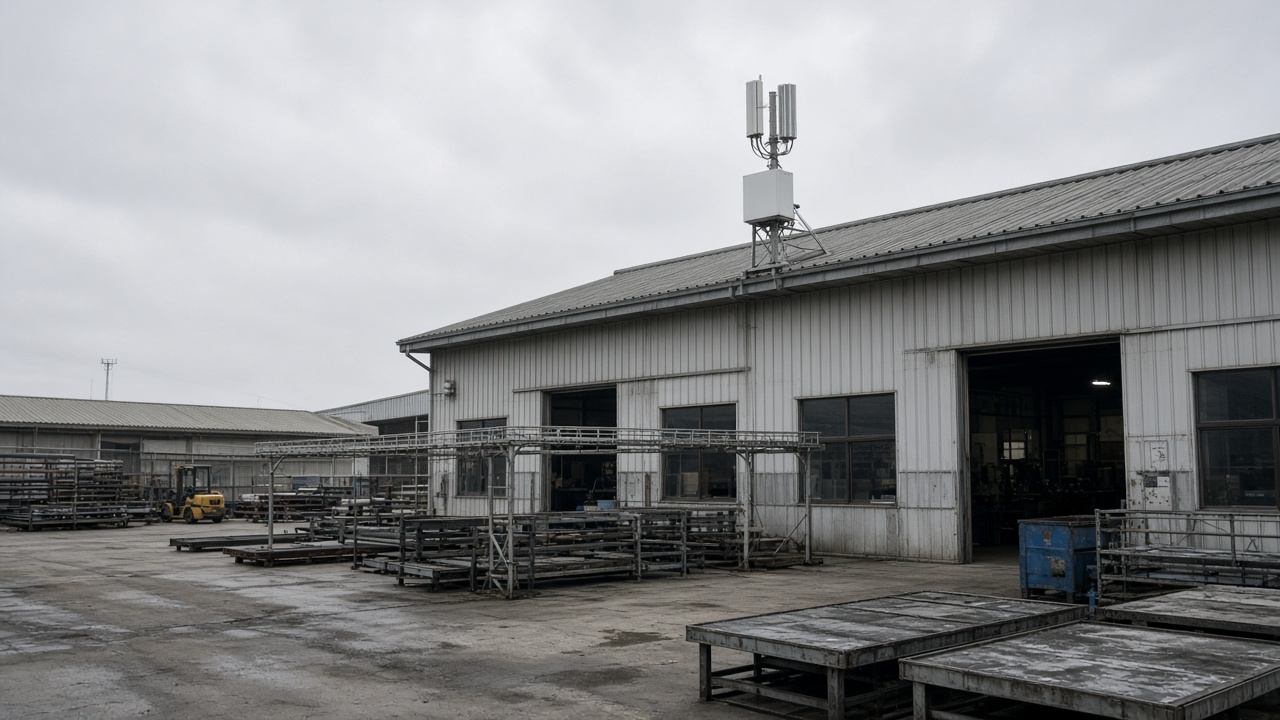
Taiwan Mobile Co. signed a three-year private 5G contract with an association of Taichung precision-tooling suppliers that runs dedicated-spectrum radios across two machining clusters and a shared logistics yard, according to term sheets circulated to members this week and reviewed by InfoHandle. The deal is modest in headline revenue but strategically loud: it is the carrier's first multi-tenant industrial mesh in central Taiwan aimed at CNC telemetry, automated guided vehicles, and shop-floor quality cameras—not showroom AR at a cultural park.
What the association bought
Members pooling the contract operate contract machining for automotive, bicycle, and semiconductor fixture orders. Their plants sit in Taichung's precision machinery belt, where Wi-Fi dead zones between metal bays and outdoor loading docks have forced technicians to carry USB sticks for machine logs. Taiwan Mobile will deploy a dedicated-spectrum 5G core with mobile edge compute at a neutral host site, then hang small cells on rooftops the association controls.
Service levels in the memo promise single-digit millisecond latency for on-premise applications and a 99.95 percent uptime target excluding typhoon-related power cuts. Monthly fees scale with the number of connected assets; the association negotiated a cap so smaller shops are not priced out when a large member adds dozens of AGVs.
Why tooling shops care now
Export customers auditing Taiwanese suppliers ahead of the fourth quarter asked for continuous spindle-vibration feeds and tool-wear alerts, not shift-end CSV dumps. A mid-size member that stamps aluminum housings for server builders said a U.S. buyer rejected a batch when vibration spikes were discovered only after pallets shipped. Private 5G is the plumbing to stream those sensors without running fiber through leased factory floors.
Taiwan Mobile's enterprise unit has marketed similar architectures at Songshan Creative Park and geothermal sites in Jinshan; the Taichung tooling bundle copies the radio playbook but strips the tourism demos. Field engineers will prioritize interference surveys near high-power CNC motors—a detail public-network sales decks often gloss over.
Inside the carrier
Enterprise revenue grew faster than consumer mobile service in recent quarters, and executives have told investors they want repeatable industrial templates rather than one-off smart-city pilots. The Taichung association deal gives account managers a reference when pitching Taoyuan and Tainan machining parks.
Capital spending is shared: members pay installation for in-building antennas; Taiwan Mobile owns the core and spectrum lease. That split mirrors MODA-backed testbed programs that encourage domestically produced radio units, though this contract does not require government co-funding.
Competition and regulation
Chunghwa Telecom and Far EasTone both sell private 5G to manufacturers; Far EasTone has publicized bicycle-assembly pilots in Taichung. The association chose Taiwan Mobile after a bake-off that measured handoff reliability between indoor and yard coverage, not raw download speeds. National Communications Commission rules on dedicated spectrum still require operators to document electromagnetic compliance at each small-cell site—paperwork the association secretariat agreed to coordinate.
What workers will notice
Shop stewards asked whether production targets tied to live dashboards would change break schedules. Taiwan Mobile's implementation partner scheduled union briefings for October, promising that vibration alerts go to maintenance tablets first, not directly to HR systems. Technicians will still sign off on tool changes manually; the network carries data, not autonomous shutdown commands, unless a member opts in later.
Next quarter
Installation starts after Mid-Autumn, with the first live CNC feeds targeted before year-end customer audits. If latency holds during a planned October typhoon drill, the association may extend coverage to a fourth park that machines medical implant prototypes. For Taiwan Mobile, the win is less about this quarter's ARPU and more about proving that private 5G can survive oil mist, steel dust, and the export compliance calendar that actually drives capex on Taiwan's factory floors.
Analysts covering Taiwan telecoms said the contract likely contributes a low single-digit percentage of enterprise revenue this fiscal year but improves win rates on RFPs where manufacturing references are mandatory. Taiwan Mobile shares were little changed Friday; investors treat private 5G as a long-cycle story tied to industrial policy rather than a consumer ARPU event.