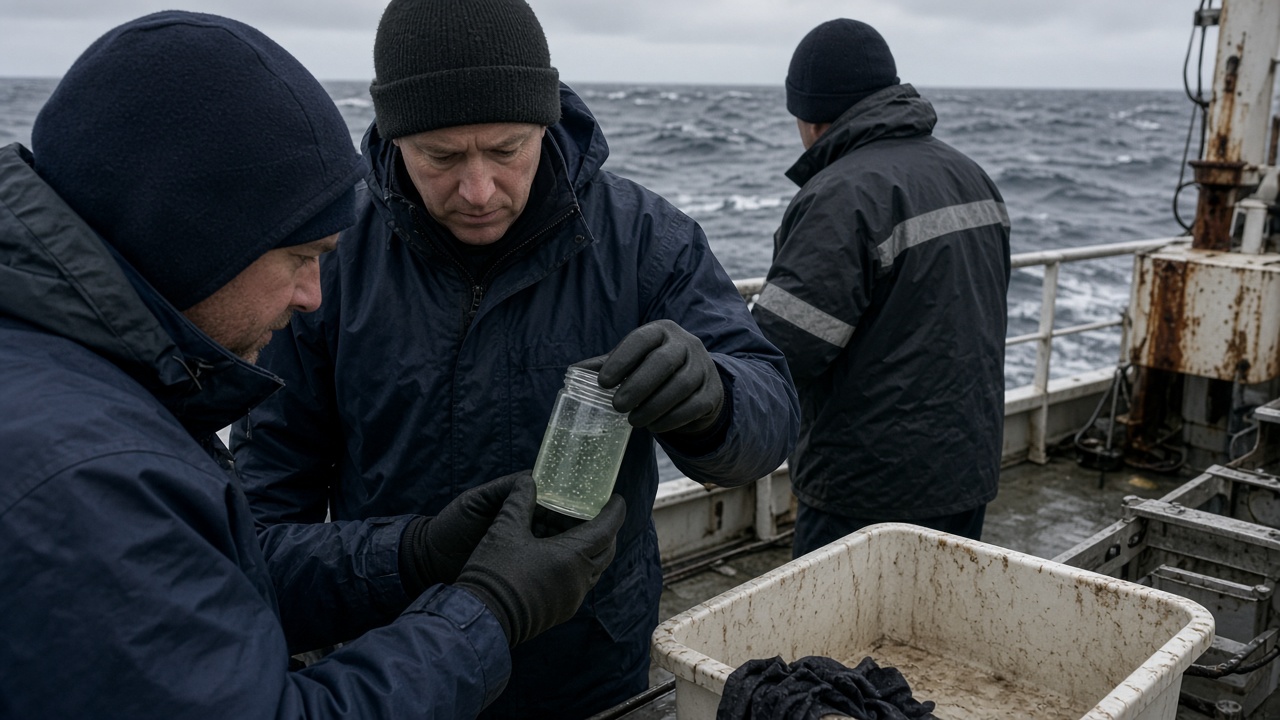
Bureau of Meteorology oceanographers published a bulletin this week tying a persistent Tasman Sea heat blob to southern rock lobster larval drift that reached northern New South Wales eddies a month earlier than the ten-year median, combining ARGO float temperatures with NSW Department of Primary Industries tagging models used to set trap seasons.
What the instruments measured
Sea-surface anomalies peaked at 2.3 degrees Celsius above the 1991–2020 baseline east of Eden in mid-September, while subsurface ARGO profiles showed warm water extending to 150 metres—deep enough to alter along-shelf currents that carry phyllosoma larvae north from Tasmanian spawning grounds. BOM’s Ocean Model Analysis and Prediction System replayed August winds and found two blocking highs that weakened the usual equatorward jet, letting larvae meander toward Port Stephens before metamorphosis.
DPI Fisheries scientists contributed drift simulations seeded with 2025 puerulus settlement counts from Tasmania; the merged dataset correlated heat-blob weeks with higher larval density in NSW survey tows at depths where commercial traps are set.
Methods and limits
The bulletin is observational, not a stock assessment. Larval counts in plankton nets vary with mesh size and night sampling; ARGO floats pass too infrequently to capture every eddy. Authors cautioned that one warm season does not prove a trend, though Indian Ocean dipole signals BOM flagged for spring could prolong the blob into early summer.
Replication would require additional ARGO deployments and genetic markers on larvae to distinguish Tasmanian origins from local spawning—work DPI said is budgeted but not complete.
What fishers might see
Commercial operators from Forster to Yamba were told to expect patchier legal-size catches if larvae settle early and grow faster in warm water, potentially shortening the window before quotas tighten. Recreational fishers face similar uncertainty: size limits may still apply even when local abundance feels higher, because total allowable catch is set on statewide models.
Tasmanian fishers worry that northern drift could signal fewer returning recruits to their southern zones in 2027—lag effects common in lobster life cycles.
Policy and monitoring
Fisheries ministers receive BOM marine heatwave alerts automatically; this bulletin adds species-specific drift overlays DPI requested after the 2016 blob shifted abalone settlement. No closure is proposed, but compliance officers may shift inspection patrols toward ports reporting unusual size distributions.
CSIRO collaborators noted the same heat blob influences salmon aquaculture feed timing in Macquarie Harbour, linking open-ocean physics to multiple industries.
What would change minds
If October ARGO passes show cooling and DPI tows find larvae back within historical lanes, the bulletin becomes a one-season footnote. If warmth persists through November, expect quota review meetings before Christmas—a calendar fishers watch as closely as storm warnings.
For now, the Tasman Sea heat blob is a measured patch of water with larvae riding it north; traps will tell whether the models guessed right.