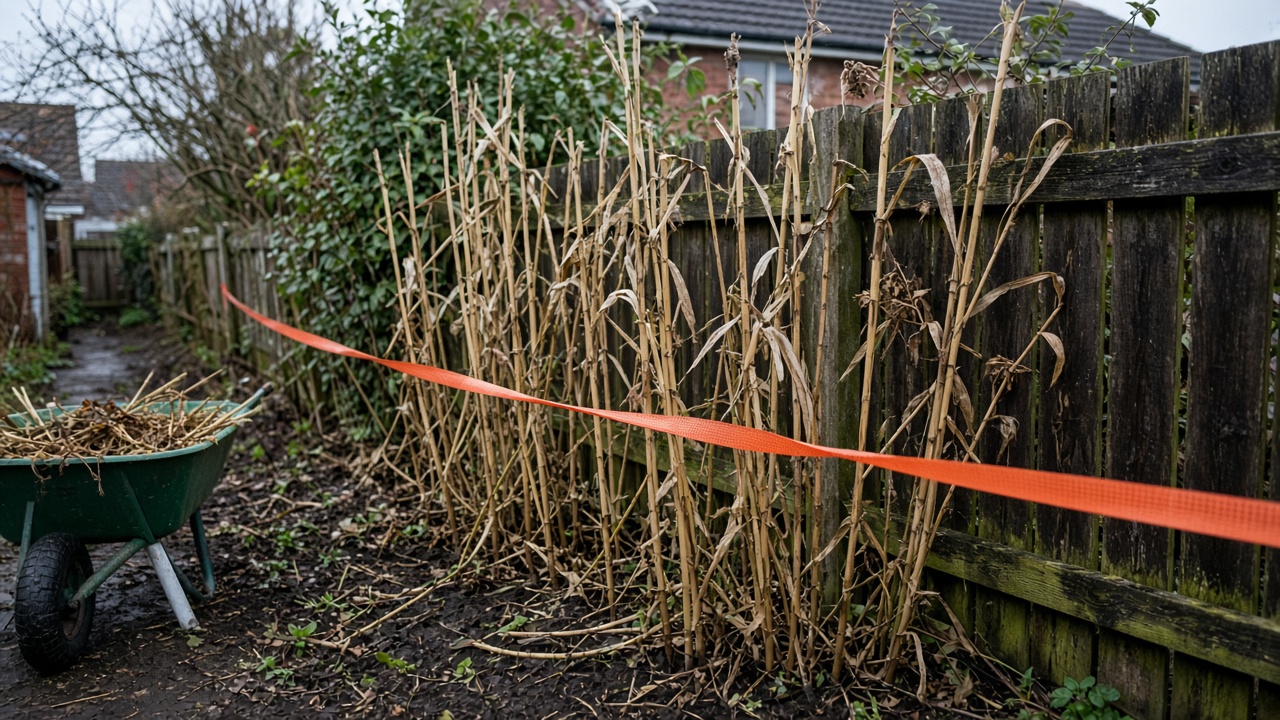
We should require Japanese knotweed survey bonds and insurance-backed guarantees to print the treating contractor’s PCA or INNSA membership number on the first page, because buyers cannot challenge worthless paperwork when licence details sit in appendices solicitors never download before exchange.
Why the bond front page matters
RICS guidance already expects mortgage lenders to see minimum five-year treatment plans from recognised trade-body contractors, often wrapped in insurance-backed guarantees if the original firm fails. In practice, estate agents forward branded PDFs where the insurer’s name appears in 14-point type while the actual sprayer’s credentials are buried in schedule three. When the contractor dissolves—as several regional operators did after the 2024 herbicide supply crunch—homeowners discover the bond names a shell company with no current NPTC certificates.
Front-loading membership numbers would let buyers cross-check PCA Invasive Weed Control Group or INNSA contractor lists before survey fees are spent. It would also expose “survey-only” firms that sell bonds but subcontract spraying to uncertified labour without PA1/PA6 supervision, a pattern INNSA’s code explicitly forbids.
The objection—and why it fails
Insurers argue membership numbers change when firms merge and that publishing them aids counterfeit bonds. Counterfeit bonds already circulate; visible numbers enable instant verification on trade-body websites, whereas opaque schedules help fraud. Data protection is not a barrier—membership IDs are business credentials, not personal data.
Some surveyors claim page-one clutter confuses lay readers. Mortgage offers already demand readable treatment maps; a single line reading “Contractor: PCA member 10482” is simpler than twenty pages of legalese.
What lenders and councils should do
Council planning enforcement teams should refuse bond-backed completion certificates that omit verifiable contractor IDs. UK Finance mortgage committees should amend knotweed retention instructions to treat missing membership numbers as defective security, triggering re-survey at seller cost. The Property Care Association and INNSA could host a shared lookup API; until then, PDF page one is the lowest-tech fix.
Solicitors must stop ticking “knotweed pack received” without opening attachments. Client care letters should state plainly that bonds without named, verifiable contractors may void lender conditions on the eve of completion.
What we are not saying
We are not arguing that every rhizome sighting blocks sales, or that chemical treatment is always superior to excavation. We are arguing that financial products sold as guarantees must identify who will honour them while money still changes hands.
Homebuyers facing autumn exchanges should ask for membership numbers before paying for bespoke surveys. If sellers refuse, treat the bond as decorative—and price the risk accordingly.
How conveyancers fit in
Law Society practice notes already warn that knotweed retentions should track live treatment plans, yet many firms still treat insurance PDFs as boilerplate. Requiring membership numbers on page one gives conveyancers a binary check: either the ID verifies on a trade-body register the day before exchange, or the retention stays in client account until it does. That is less glamorous than blockchain title deeds, but it stops the common failure mode where guarantees outlive the sprayers who signed them.
RICS valuers told us they would welcome a standard bond cover sheet; inconsistency across insurers wastes surveyor time reformatting identical information. A one-line contractor ID is the smallest intervention that aligns mortgage risk, insurance underwriting, and the PCA/INNSA codes already on the statute books of good practice.