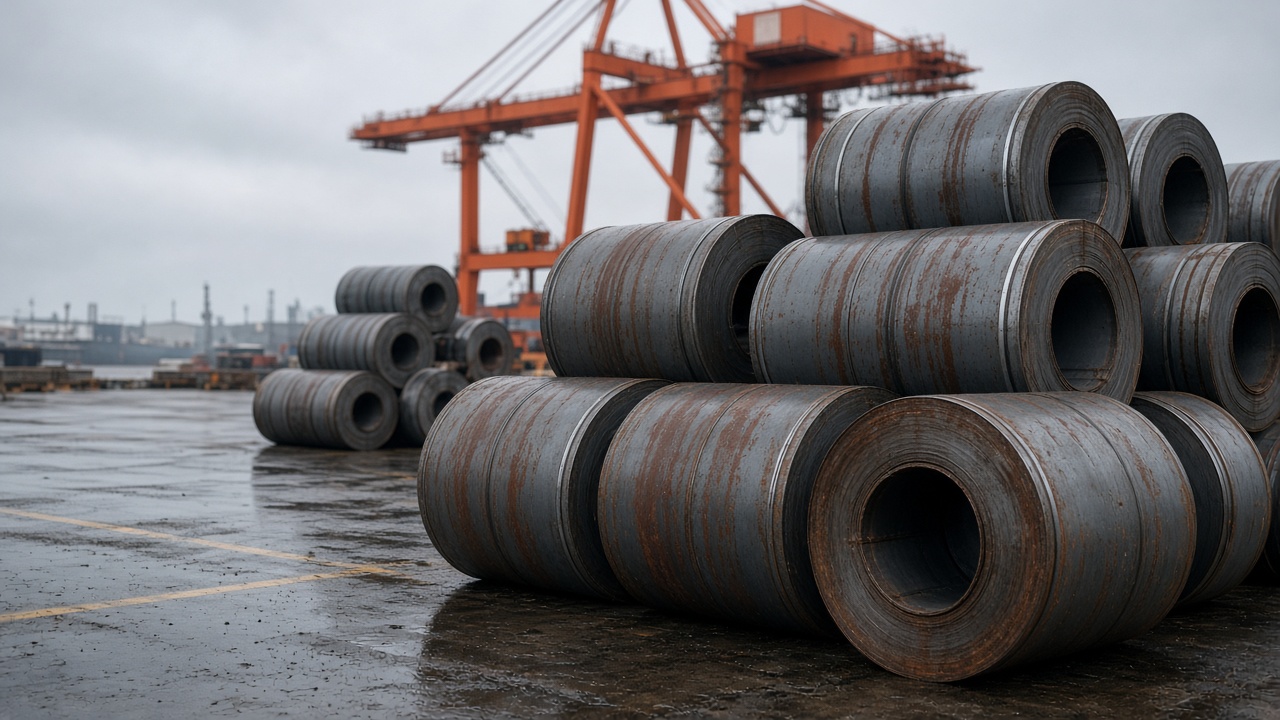
POSCO Holdings told export coordinators in Busan this week to keep hot-rolled coil liftings for Northeast Asian buyers near August levels, even as three Liaoning blast furnaces linked to long-term slab swaps enter overlapping maintenance windows that will trim inbound semi-finished feed for at least six weeks. The instruction, circulated internally on Thursday and described to InfoHandle by two people familiar with the coastal desk, is less about hiding a production shock than about signaling that Korea’s largest steelmaker still has coil to ship while Chinese partners cool furnaces for relining.
What Busan is moving
The group’s Busan cold-chain and coil staging yards—where traders often take title before vessels sail for Japan, Vietnam, and domestic fabricators in Ulsan—handled roughly the same tonnage in the first half of September as in the comparable 2025 period, according to berth schedules reviewed by InfoHandle. One coordinator said the desk prioritized contracts tied to automotive-grade sheet and electrical steel rather than commodity hot coil, reflecting POSCO’s push into higher-margin grades as trade barriers squeeze generic exports.
That mix matters for won revenue: POSCO Holdings reported in July that its steel segment lifted sales and operating profit quarter-on-quarter in the April–June window, helped by better pricing and volume even as raw materials rose. Export coordinators in Seoul said Busan remains the pressure valve when Gwangyang works throttle certain lines for the new electric arc furnace ramp and when Pohang shipments face typhoon-season delays.
Liaoning furnaces and the swap book
The Liaoning maintenance plan covers two furnaces at a POSCO-linked Chinese venture and a third partner site that typically returns slab under a multi-year swap arrangement, the people said. Each outage is scheduled for roughly 35–42 days, staggered so that only one furnace is fully offline at a time, but the combined effect still removes an estimated 180,000–220,000 metric tons of slab equivalent from the cross-border book through late October.
POSCO has not filed a public notice on the Liaoning schedule; the timing aligns with seasonal relining ahead of northern China heating season and with environmental inspections that often accompany autumn overhauls. Traders in Dalian said spot slab offers from the region firmed slightly this month, a pattern Seoul desks watch when deciding whether to redirect Gwangyang output to cover swap shortfalls or to let Busan exports absorb the gap.
Investor read in Seoul
On the Kospi, POSCO Holdings shares have traded in a narrow band as investors weigh export headwinds against resource gains in lithium and LNG. Analysts at local brokerages said the Busan flat-tonnage message is meant to reassure automotive customers that coil allocations will not be rationed while Chinese furnaces are down. Others noted that any prolonged slab shortfall could eventually pull Gwangyang hot strip toward domestic auto lines, tightening export availability regardless of Busan instructions.
The company’s public narrative has shifted toward decarbonization and overseas hubs—India, Indonesia, and the United States—while defending domestic share against Japanese coated products that may redirect into Korea when U.S. and European gates narrow. Busan coil flows are a near-term thermometer for that strategy: steady exports suggest Gwangyang still has slack; a sudden dip would signal the Liaoning outages are biting deeper than disclosed.
What filings and policy still owe
POSCO completed South Korea’s largest single electric arc furnace in Gwangyang in June, a 2.5-million-ton unit the group says can cut emissions sharply versus blast-furnace routes. Hybrid “Haptang” mixing of EAF and blast-furnace hot metal remains central to automotive sheet quality. None of that removes dependence on Chinese slab during furnace overhauls; it only gives planners more levers inside Korea.
Trade ministry officials in Seoul have not commented on the Liaoning schedule. POSCO’s next DART disclosures are expected to break out export volume by product; until then, berth data and swap-trader chatter in Busan are the clearest windows on whether September tonnage truly stays flat. Coordinators said they will revisit allocations after Chuseok, when furnace restart dates in Liaoning should be clearer and when Japanese import competition typically peaks ahead of fiscal half-year closes.