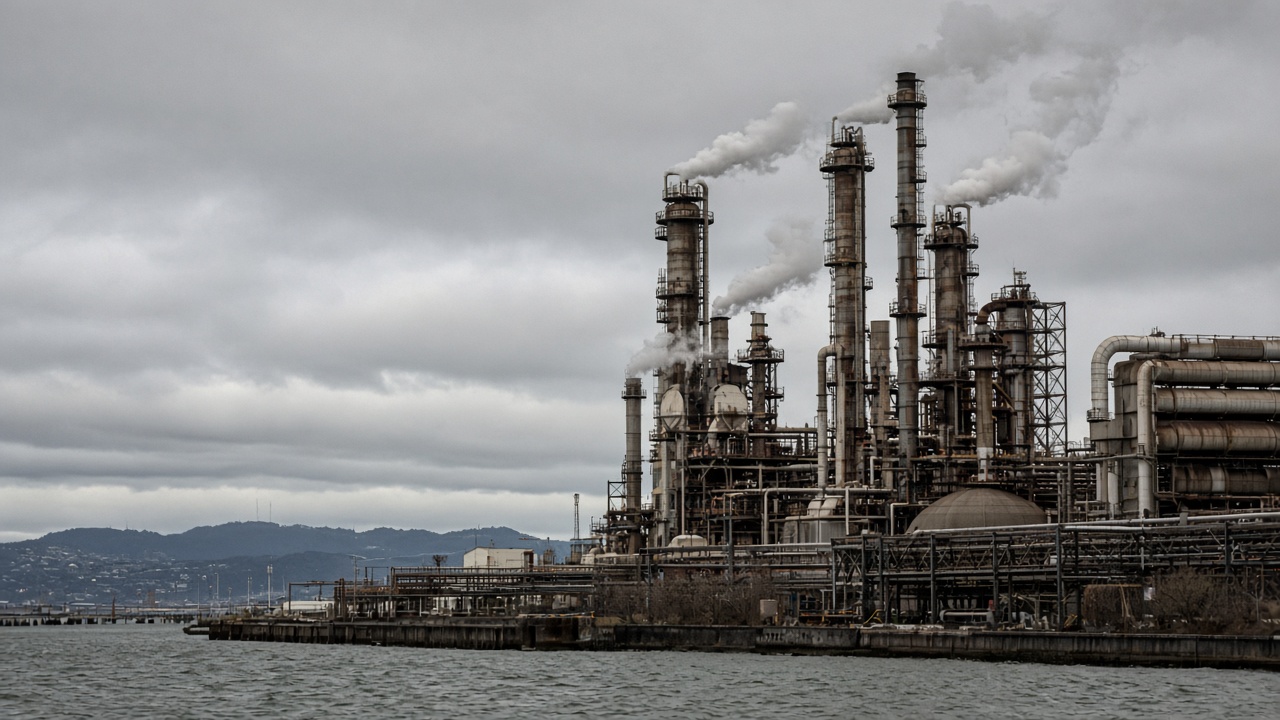
Chevron Corp. is running its Richmond, California, refinery near normal throughput even as the state’s gasoline premium over the rest of the country stretches to levels not seen since the Iran war scrambled crude routes in the spring, according to people familiar with West Coast supply meetings and public price data. For Chevron, the choice is less about chasing spot margins than about keeping a 130,000-barrel-per-day complex that feeds military bases and Northern California racks from becoming the next bottleneck in a market already short two large refineries.
Why California’s premium is widening again
AAA said on Sept. 18 that California regular gasoline averaged $6.08 a gallon, up 19 cents in a week and about $1.43 above year-ago levels, while the national average sat near $4.43. Diesel in the state averaged $8.35. The gap between California and the U.S. average—roughly $1.65 on that reading—is both a crude story and a local capacity story. Brent and WTI have traded around $100 a barrel for much of the summer as fighting around the Strait of Hormuz kept a risk premium in global benchmarks, and the California Energy Commission has said every $10 move in crude tends to show up at the pump.
Structural pressure predates the latest Hormuz shock. Phillips 66’s Wilmington refinery and Valero’s Benicia plant have exited conventional gasoline production, removing more than 17 percent of in-state capacity on some estimates. UC Davis economists warned in 2025 that those closures alone could add more than a dollar to retail prices by mid-2026 if replacements did not appear. Chevron’s Richmond unit is now one of the largest remaining producers of California-grade gasoline on the Bay.
California also imports a meaningful share of finished gasoline from Asia when local plants run flat out. The California Energy Commission has said wartime disruption to Middle Eastern crude flows forced in-state refiners to chase alternative cargoes even as Asian export economics tightened. That import exposure is why Walz warned lawmakers that a prolonged Hormuz closure could strand tankers and widen rack spreads faster than a simple crude rally would suggest.
What Chevron is doing at Richmond
Chevron refining head Andy Walz has told policymakers that the company is routing Gulf Coast crude through the Panama Canal to replace Middle Eastern barrels that previously supplied West Coast plants, and that tankers remain stuck on both sides of Hormuz. Richmond, which Chevron has spent years defending against local permitting fights, still processes a mix of imported and domestic crude into CARB-compliant gasoline and jet fuel. People familiar with operations said the plant has avoided the deep rate cuts some traders expected when Asian import economics worsened, in part because Chevron also supplies Travis Air Force Base and commercial racks in Oakland and San Jose from the site.
That throughput decision matters for margins. California gasoline differentials versus New York Harbor futures widened this month as traders priced in tighter West Coast balances. Chevron does not break out Richmond earnings, but the company’s downstream segment has benefited from wide coastal cracks even as corporate leaders warn that new California Air Resources Board rules could add hundreds of millions of dollars in compliance costs over five years.
Politics and the next quarter
Governor Gavin Newsom’s office has activated state price-monitoring teams and pushed back on refinery exit threats, while Chevron executives have said they may reconsider California refining if taxes and regulations keep climbing during a war-driven cost spike. Labor at Richmond remains a quiet variable: past strikes have trimmed Bay Area output within days. For now, union officials said maintenance was proceeding on schedule without a work stoppage.
Analysts who track West Coast inventories expect the premium to stay volatile through UN General Assembly week, when any diplomatic signal on Hormuz could move crude faster than refinery run rates adjust. Chevron’s public message has been consistent: keep plants running, diversify crude slates, and push Sacramento for relief. Richmond is the physical proof of that strategy—even when every barrel costs more to land.
Independent rack marketers said Northern California wholesale gasoline traded at a double-digit cent premium to Southern California again Friday, a spread that often signals Richmond and Bay Area terminals are fully booked. Chevron has not commented on spot sales, but the pattern fits a company prioritizing reliability over inventory builds while competitors import barrels at a loss.