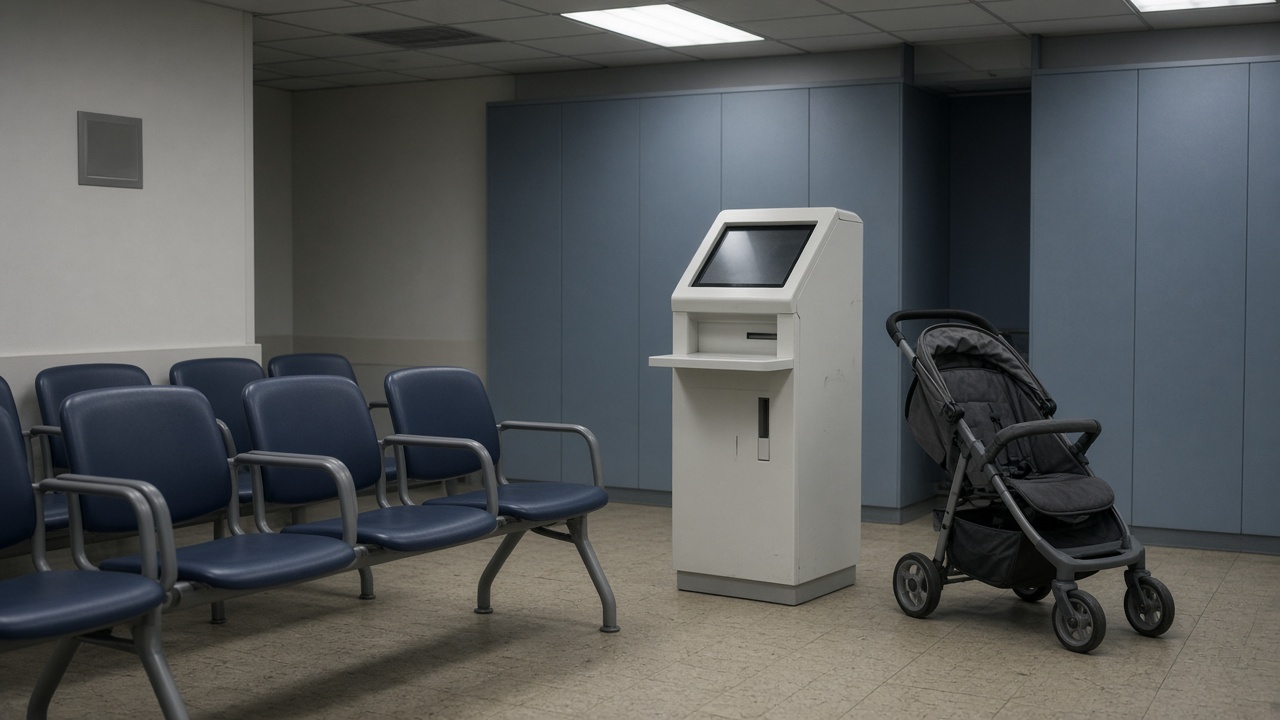
Samsung Medical Center has installed self-service respiratory syncytial virus triage kiosks at its Bundang shuttle drop-off and main pediatric reception, asking Seongnam and Bundang parents to log fever, wheeze, and feeding changes before nurses call infants under six months for same-day assessment. The kiosks do not replace KDCA notifiable-disease reporting; they add a nursery-referral lane as national sentinel data show RSV positivity climbing again after the post-COVID immunity-debt seasons described in KINRESS weekly reports.
What the kiosks capture
Each kiosk prints a numbered slip after a caregiver answers twelve yes-or-no prompts drawn from the hospital pharmacy’s October 2025 RSV prevention bulletin—cough duration, retractions, and whether the child already received nirsevimab. Nurses triage slips marked high concern to a fast track inside the pediatric emergency unit; low-concern cases receive hydration advice and a same-day outpatient slot if the child is older than six months and feeding normally.
The hospital said Bundang shuttle riders—roughly 1,200 weekday pediatric visits from Gyeonggi’s southern corridor—were waiting more than ninety minutes last autumn when RSV and rhinovirus overlapped. Kiosks aim to separate stable upper-respiratory visits from bronchiolitis risks before waiting-room exposure.
Nursery directors in Seongnam and Bundang receive fax templates when kiosk scores flag infants in group care; the forms omit names but include symptom onset time so centers can trace classroom exposures without breaking privacy rules.
Clinical and policy context
Korea’s RSV season runs October through March under Korean Pediatric Society guidance, with nirsevimab approved in 2024 and available from February 2025 for infants entering their first season. Samsung Medical Center researchers previously documented how RSV seasons vanished in 2020 and returned off-cycle in 2021 at the tertiary center’s warehouse data—patterns now mirrored nationally in JMIR analyses of KINRESS outpatient and virologic surveillance through 2024.
Absolute risk for healthy toddlers remains lower than for neonates, but bronchiolitis admissions still spike when emergency departments mix RSV with influenza. The kiosk workflow keeps high-risk infants masked and seated near oxygen ports while stable cases fill routine clinic queues.
Finance staff said kiosk data will not change National Health Insurance Service billing codes; the tools are operational, not revenue drivers. Fellows still confirm cases with multiplex PCR when parents consent, because kiosk answers are not laboratory proof of RSV.
What parents should expect
Caregivers should bring vaccination records and note whether nirsevimab was given at birth or scheduled for late September, per society recommendations for April–September births. A positive kiosk score is not an automatic admission; it triggers nurse callback within twenty minutes during weekday daylight hours. After-hours arrivals still use the existing pediatric hotline.
Shuttle buses from Bundang Jeongja Station run every twenty minutes during morning peak; parents who finish kiosks before boarding show slips at pediatric desk window four to skip duplicate questions.
What happens next
Hospital operations will compare kiosk scores with confirmed RSV PCR tests through November and share anonymised timing data with Gyeonggi provincial nurseries that refer febrile infants. If correlation holds, executives may extend kiosks to the Irwon campus shuttle gate before peak season; for now the operational story is paper slips, nursery referrals, and a Bundang corridor trying to stay ahead of October RSV traffic.