The Indian Space Research Organisation published thermal model datasets on Monday for the Chandrayaan-4 lander ahead of bench tests at the Vikram Sarabhai Space Centre, giving universities a snapshot of predicted heat flux through the lunar night the mission must survive.
What the release contains
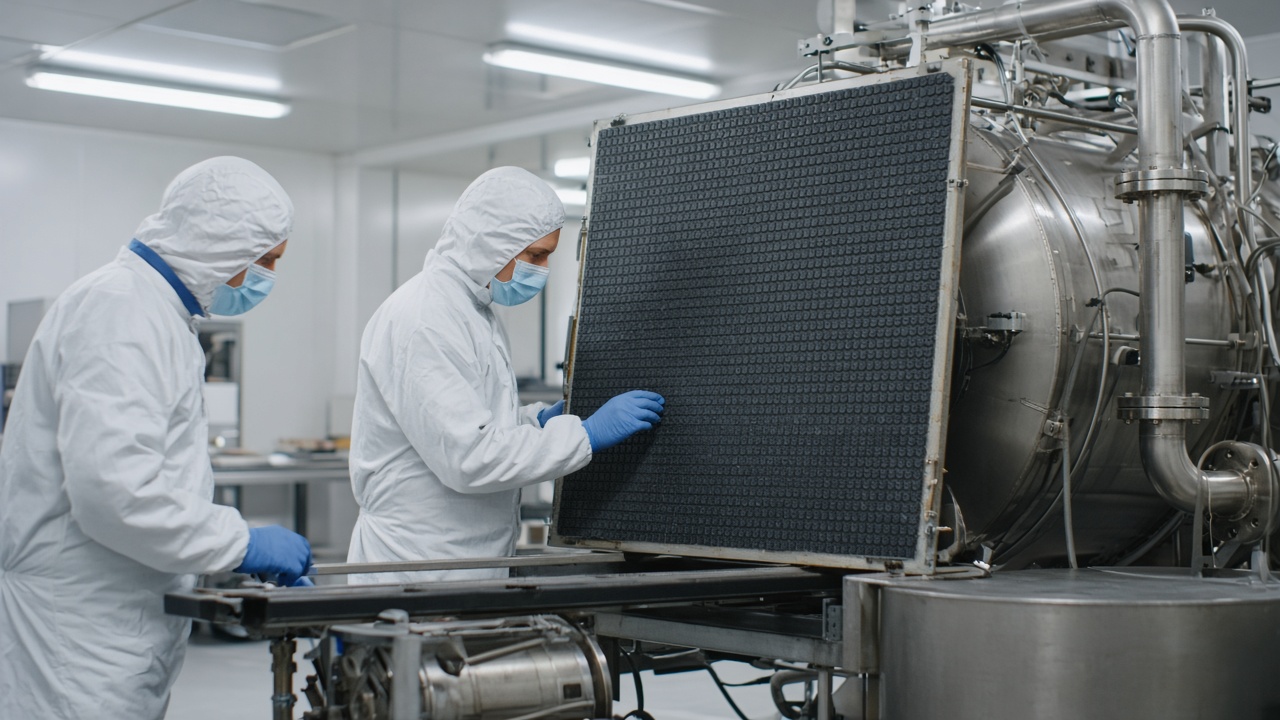
The package includes finite-element meshes, emissivity assumptions for multi-layer insulation blankets, and time-series predictions for battery bay temperatures when external surfaces fall below minus 150 degrees Celsius. ISRO said the drop is not flight software—controllers remain proprietary—but enough for peer review of conductive paths and radiator sizing before hardware enters the large vacuum chamber in Thiruvananthapuram later this quarter.
Why bench tests matter now
Chandrayaan-4 aims to return samples after a precision landing near the south polar region. Thermal engineers must balance minimal heater power against survivable electronics. Earlier missions validated descent; this phase stress-tests overnight endurance when solar arrays are shadowed. Programme managers told reporters that mismatches between model and bench readings beyond three degrees Celsius trigger redesign of blanket layups, not software patches.
Indian lab participation
IIT Bombay and IIST Thiruvananthapuram teams registered for the open review window, comparing their independent solvers to ISRO’s baseline. The agency will host a webinar on uncertainty bands for regolith contact conductance—a parameter still informed by Chandrayaan-3 instrument heritage rather than new surface samples.
What is still unknown
Launch vehicle scheduling and exact landing ellipse refinements were not part of Monday’s data drop. Foreign collaborators await export-control clearances before co-processing certain mesh files. For now, the headline is methodological transparency: ISRO is publishing numbers early enough for domestic institutes to catch thermal surprises on Earth, not on the lunar surface.
Bench timeline
VSSC engineers plan to cycle a qualification model through the large vacuum chamber in October, simulating two lunar nights with heater power capped at mission limits. Instrument pallets carrying spectrometers will join a later run; Monday’s dataset covers only the lander bus structure. Telemetry from Chandrayaan-3’s overnight survival, though shorter than Chandrayaan-4’s requirements, informed initial blanket thickness—differences show up mainly at the footpad interfaces where regolith contact is uncertain.
Replication expectations
Academic teams must sign usage notices acknowledging the meshes are not for commercial satellite bids. ISRO said positive feedback from the review window could expand to rover wheel thermal releases before integration tests at U R Rao Satellite Centre. If bench measurements diverge from models beyond the three-degree band, programme officials will brief the Space Commission on schedule risk—a step that has not been triggered yet but is already scripted for winter.
Science secretariat officials framed the release as part of a broader openness push after Chandrayaan-3’s public engagement, though defence-sensitive avionics remain closed. For students, the practical assignment is comparing predicted radiator glow during lunar dawn against archived telemetry—a classroom exercise that still depends on India’s own solvers, not imported defaults.