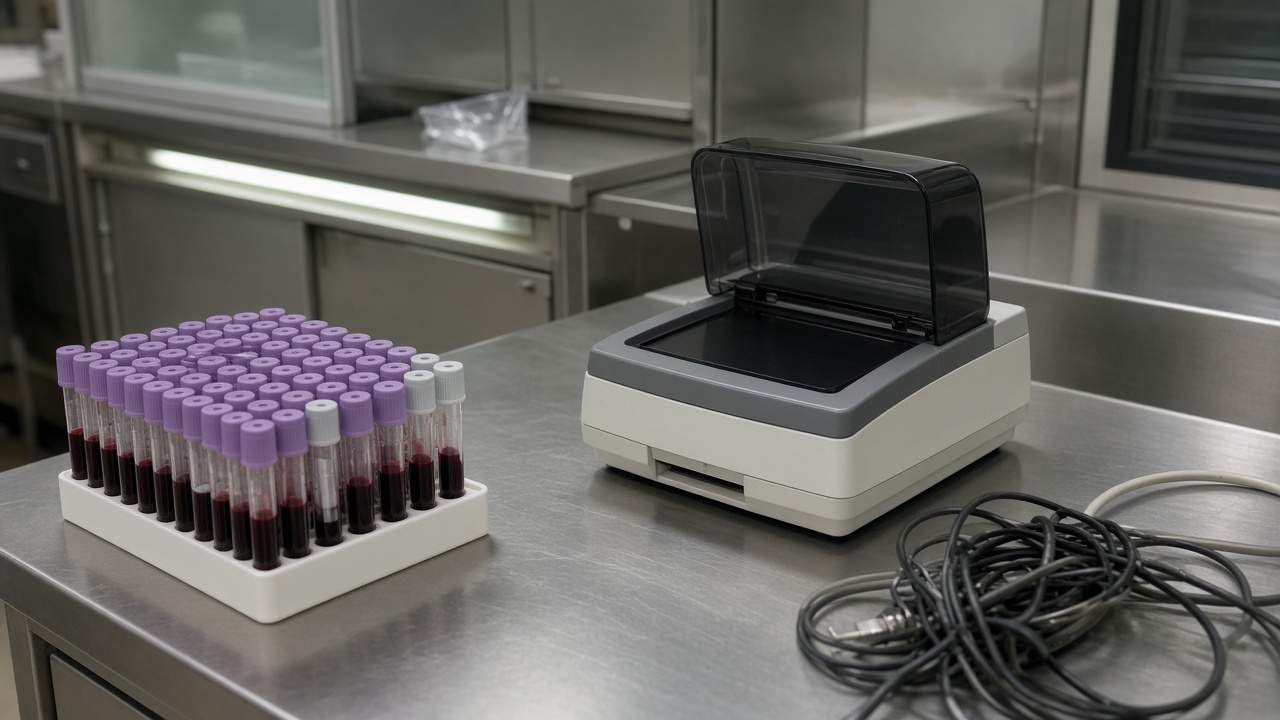
A Johns Hopkins Medicine team published a six-analyte plasma panel associated with post-exertional malaise severity in long COVID patients enrolled at its Baltimore clinic, offering clinical trial sponsors a standardized blood endpoint while explicitly stopping short of marketing a home test for individual diagnosis.
What the study measured
Researchers followed 214 adults with clinician-documented long COVID for six months, drawing fasting samples before and after a supervised exertion protocol. A panel combining complement split products, inflammatory chemokines, and mitochondrial stress markers separated severe fatigue trajectories from milder cases with modest but statistically significant effect sizes in the primary analysis. The preprint, posted Monday with supplemental validation on a 68-patient replication set, describes assay kits compatible with hospital core labs already running ELISA workflows.
What authors claim—and do not
Lead authors told InfoHandle the panel is intended as a trial enrichment tool, not a standalone diagnostic. They warn against using thresholds to deny disability claims or insurance coverage; regulatory qualification would require separate FDA biomarker pathways. The study does not establish causation—only association between analyte shifts and symptom scores after controlled exercise.
Limits and replication
Cohort demographics skewed white and insured; urban clinic recruitment may miss rural patients without access to post-exertion testing. Analyte levels overlapped between groups, so sensitivity for any single marker was insufficient for screening. External labs have not yet reproduced the panel under CLIA conditions; Hopkins plans to share protocols with NIH RECOVER sites evaluating common data elements.
What happens next
Pharmaceutical sponsors running symptom-modifying trials can adopt the panel as a secondary endpoint if independent monitors agree on cutoffs. Hopkins is negotiating tech transfer with a reference lab vendor but has not announced commercial pricing. NIH reviewers may fold the analytes into upcoming multisite grant calls if replication holds this winter.
Comparison with prior endpoints
Earlier long COVID studies relied on patient-reported outcome scales alone, complicating cross-site comparisons when exercise tolerance tests differ. Hopkins investigators argued composite blood scores could stabilize enrollment in multisite trials even if individual markers drift with antiviral use or reinfection. Competitor academic groups cautioned that complement markers fluctuate in other post-viral syndromes; the Hopkins team included sensitivity analyses excluding recent infections to address that critique.
Patient-facing caution
Clinic patients should not expect immediate ordering; most health systems lack validated cutoffs. Providers should continue symptom-based management while trials accumulate evidence. Disability attorneys asked for clarity that biomarker shifts alone cannot rebut symptom testimony; Hopkins authors agreed in an accompanying ethics note.
The practical takeaway is methodological: long COVID fatigue research gains a shared blood ruler, not a miracle test—and the authors are careful to keep that distinction visible for clinicians and regulators alike.